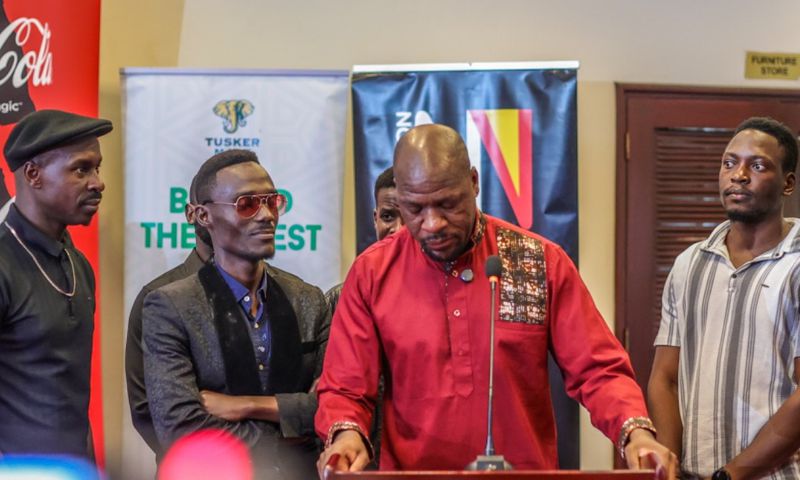
Uganda’s creative arts community is mourning one of its most influential figures after veteran playwright, actor and theatre practitioner Alex Mukulu died at the age of 72.
News that Alex Mukulu dies at 72 emerged on Saturday, August 15, 2026, prompting tributes from performers, fans and members of Uganda’s entertainment industry. Mukulu spent decades shaping theatre in the country as a playwright, actor, director, author and mentor to younger performers.
His death closes a remarkable chapter in Ugandan performing arts, but the stories he created, the artists he influenced and the standards he demanded on stage are likely to remain part of the country’s cultural memory for generations.
Alex Mukulu Dies as Uganda Mourns a Theatre Giant
Mukulu’s death was confirmed by Ugandan media on Saturday. New Vision reported that he was 72 and said the announcement triggered an outpouring of tributes across the entertainment industry.
Details about the circumstances surrounding his death remained limited at the time of publication. Another report said people close to his family had confirmed his passing but that further information was still expected, while funeral arrangements had not yet been publicly detailed.
For many Ugandans, however, the news immediately brought back memories of a man whose career stretched far beyond a single stage production.
Mukulu was a storyteller who used theatre to examine Uganda’s politics, culture, history and everyday social life. His work often blended entertainment with questions about the country and the people living through its changing times.
Who Was Alex Mukulu?
Alex Mukulu was born in 1954 in Misebe, Ssingo County, Buganda.
He was the son of Paulo Kayizi Lugaizi and Victoria Ndagire, who was a daughter of Prince Yokana Kimbugwe of Lungujja.
His interest in performance developed while he was still young. According to a biographical account published following his death, he attended Namilyango Primary School before studying at Kololo Secondary School, where he became president of the school’s drama club.
His path into the arts was not entirely conventional.
Mukulu once recalled leaving school after Senior Four and joining the Rwenzori Band, spending roughly three years pursuing music before returning to education. He later attended Caltec Academy and eventually studied performing arts at Makerere University.
Those early experiences would help shape a career that crossed theatre, music, television, writing and performance.
Alex Mukulu Built a Career That Spanned Decades
Mukulu’s professional stage history can be traced back to the 1970s.
New Vision reports that his first play, Muzukulu wa Kabangala, was produced in 1977. His body of work would continue for decades, with The People’s President produced in 2022.
That longevity alone made him an unusual figure in Uganda’s creative industry.
Across periods of political change, shifting entertainment trends and the rise of television and digital media, Mukulu remained closely associated with theatre and storytelling.
His best-known works include 30 Years of Bananas, Wounds of Africa and Guest of Honour. The productions explored subjects ranging from politics and national history to social behaviour and the experiences of ordinary Ugandans.
‘30 Years of Bananas’ Became One of His Defining Works
Among Mukulu’s most recognised creations was 30 Years of Bananas.
The stage production reflected on Uganda’s first three decades after independence, using theatre to examine the country’s complicated political and social journey.
Mukulu also published a book with the same title in 1993.
The work demonstrated one of the qualities that defined his career: his willingness to use performance not simply for amusement but as a way of examining Uganda itself.
His stories could be humorous, uncomfortable, political and deeply observant at the same time.
That ability helped make his productions relevant to audiences who saw elements of their own country and experiences reflected on stage.
Alex Mukulu Took Ugandan Theatre to CHOGM
One of the biggest moments in Mukulu’s career came in 2007 when Uganda hosted the Commonwealth Heads of Government Meeting in Kampala.
His production Journey to Self-Realization was performed during the opening ceremony of CHOGM, putting his theatrical work before a major international audience.
For an artist who had spent years developing Ugandan theatre, the performance represented more than another stage appearance.
It placed local creative expression at the centre of one of the most internationally visible events Uganda had hosted.
The production remains one of the major milestones associated with Mukulu’s career.
Television Audiences Knew a Different Alex Mukulu
Although theatre formed the heart of his career, a younger generation of Ugandans came to know Mukulu through television.
He became widely recognised as a judge on Bukedde TV’s talent programme Yolese Ekitone.
His judging style was difficult to ignore.
Mukulu developed a reputation for giving direct, sometimes tough assessments to contestants when he believed their performances were below the standard expected of them. That uncompromising personality became part of his public identity.
Behind the stern television persona was a veteran performer who understood how much preparation successful stagecraft required.
For aspiring performers, his criticism could be intimidating. Yet it also reflected the seriousness with which he treated the performing arts.
Alex Mukulu Continued Performing Late in His Career
Mukulu did not simply live on memories of his earlier productions.
In 2024, after years away from regular theatre performances, he returned to the National Theatre stage with an African adaptation of William Shakespeare’s Romeo and Juliet.
The production was announced as part of World Theatre Day celebrations, with performances scheduled at the National Theatre in Kampala.
His return demonstrated the deep connection he maintained with live theatre even after decades in the industry.
By then, many younger actors had entered Uganda’s creative scene, but Mukulu remained a reference point for discussions about professional theatre and the country’s artistic heritage.
Why Alex Mukulu’s Legacy Matters
When Alex Mukulu dies, Uganda loses more than a familiar actor or playwright.
It loses someone whose career documented different eras of the country through performance.
Mukulu worked during a period when theatre was one of Uganda’s strongest forms of popular storytelling. Long before social media and streaming platforms became dominant, stages provided spaces where Ugandans could laugh at themselves, question society and confront difficult political realities.
His productions helped demonstrate that Ugandan stories could stand on their own.
They did not have to imitate foreign narratives to matter.
Characters, language, history and experiences familiar to Ugandan audiences could become the foundation of serious theatre.
That contribution helped create space for the performers and playwrights who followed him.
A Teacher Through Art and Performance
Mukulu’s influence also extended beyond the scripts he wrote.
Over decades in theatre, acting and television, he became an influential figure for performers who encountered him directly or simply studied his work. Reports following his death described him as a drama educator as well as an actor, director and playwright.
His insistence on high standards became one of his defining characteristics.
Whether judging emerging talent on television or developing a theatre production, Mukulu treated performance as a craft that demanded preparation and discipline.
That philosophy is part of the legacy he leaves behind.
Tributes Follow News That Alex Mukulu Dies
News of Mukulu’s death quickly generated messages of grief and appreciation from across Uganda’s entertainment community.
New Vision reported tributes describing him as a giant of Ugandan theatre, storytelling and the creative arts, while Sqoop noted that fans, friends and fellow entertainers were sharing condolences with his family.
The reaction reflects how widely Mukulu’s career reached.
Some audiences remember his major plays.
Others remember his uncompromising television appearances.
For another generation, his name is associated with the National Theatre and an era when Ugandan stage productions occupied a particularly important place in popular culture.
All of those memories belong to the same remarkable career.
Uganda Says Farewell to Alex Mukulu
Alex Mukulu leaves behind a body of work stretching from Muzukulu wa Kabangala in 1977 to productions created more than four decades later. His career included celebrated works such as 30 Years of Bananas, Wounds of Africa and Guest of Honour, as well as the internationally showcased Journey to Self-Realization at CHOGM 2007.
Few artists remain active and culturally relevant across so many different periods.
Mukulu managed to do exactly that.
His passing at 72 is therefore not simply the death of a veteran entertainer. It marks the loss of an important custodian of Uganda’s theatre history—a writer and performer who spent much of his life putting the country’s stories on stage.
As Uganda mourns Alex Mukulu, his greatest tribute may be found in the artists who continue writing, acting, directing and telling distinctly Ugandan stories long after the curtain has fallen on his own extraordinary career.