Uganda continues to lose significant potential income by selling agricultural commodities and other resources before enough value is added locally, renewing calls for faster investment in processing and manufacturing.
The debate around Uganda raw exports is not simply about how much the country sells abroad. It is increasingly about how much of the final value remains in Uganda after farmers, producers and traders have done the hardest part of producing the raw material.
Uganda’s merchandise exports have been growing strongly. In January 2026 alone, export earnings reached about $1.5 billion, up 77.6% from $844.6 million a year earlier, according to Finance Ministry data reported by Reuters. Coffee, gold, industrial products, beans and other commodities contributed to that increase.
Yet policymakers and industry players argue that Uganda could earn considerably more if a greater proportion of its commodities were processed, packaged and branded before leaving the country.
Uganda Raw Exports Leave Value in Foreign Markets
The challenge is easy to understand.
When Uganda exports an agricultural commodity in a relatively unprocessed form, much of the additional income generated through processing, packaging, branding, distribution and retailing is earned elsewhere.
That means Uganda may receive payment for the raw commodity while other countries capture additional jobs, taxes and profits further along the value chain.
The government itself acknowledges this problem. In its 2026/27 Budget Speech, the Finance Ministry said Uganda’s future prosperity would not come from simply producing more raw commodities. Instead, it identified higher productivity, agro-processing, value addition and improved market access as priorities.
The same budget states that Uganda wants to shift from exporting raw commodities toward higher-value agricultural products.
Leather Sector Shows the Cost of Limited Value Addition
Uganda’s leather industry provides one of the clearest examples of what can be lost when processing remains limited.
The Ministry of Trade, Industry and Cooperatives reported in 2025 that more than 95% of leather exports were leaving the country in raw or semi-processed form. It estimated that this resulted in about $273 million in potential export revenue being lost annually.
Instead of exporting mainly hides or partly processed leather, a stronger domestic industry could convert the material into finished leather and products such as footwear, bags and other manufactured goods.
Those additional stages require factories, designers, technicians, logistics companies and retailers.
As a result, value addition is not only about increasing the price of an exported product. It can also create employment and develop industries around the original commodity.
Coffee Highlights Uganda’s Value Addition Opportunity
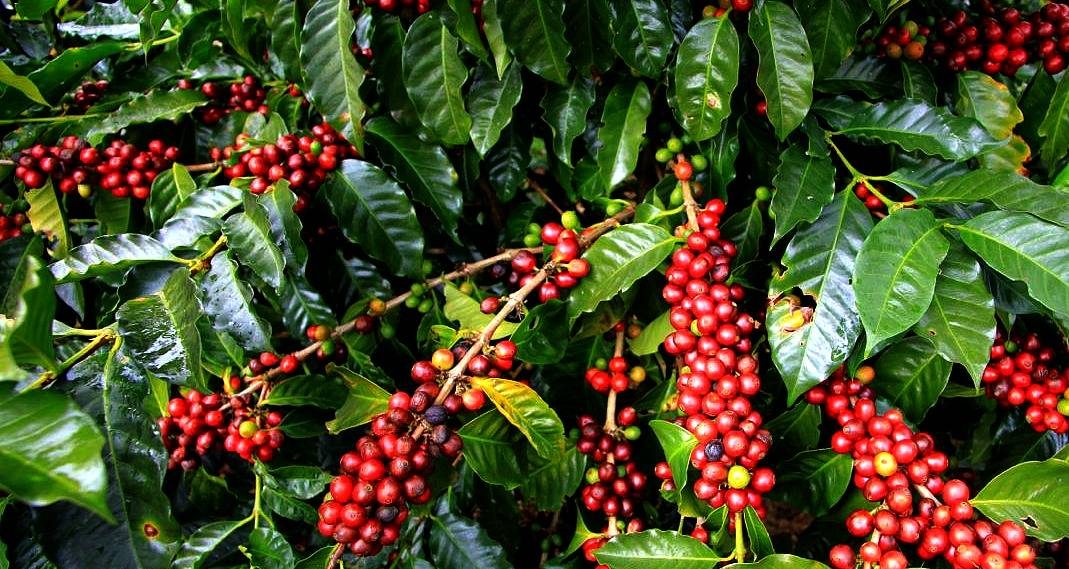
Coffee is another important part of the Uganda raw exports discussion.
Uganda has established itself as one of Africa’s major coffee exporters, but the government wants the country to capture a greater share of the final value of the coffee consumed around the world.
In July 2026, President Yoweri Museveni backed plans for the $200 million Nonda Coffee Park in Nakaseke District. The proposed facility is designed to process up to 42,000 metric tonnes of coffee annually rather than relying primarily on exports of less-processed beans.
Developers project that the facility could generate more than $800 million in annual revenue once operational, although that figure remains a projection rather than guaranteed future earnings.
The project reflects a wider strategy of roasting, grinding, packaging and branding more Ugandan coffee before it reaches international consumers.
That approach could allow Uganda to participate in more stages of the global coffee business instead of earning mainly from the commodity at an earlier stage of the supply chain.
Raw Agricultural Exports Can Expose Farmers to Lower Earnings
The challenge extends well beyond coffee.
Uganda produces pineapples, cocoa, tea, dairy products, fish, grains, fruits, vegetables and livestock products that can potentially generate greater returns when processed.
The United Nations noted in May 2026 that Uganda has historically exported many agricultural commodities in raw form, leaving producers vulnerable to price fluctuations, post-harvest losses and relatively low earnings.
Processing can change that equation.
A pineapple, for example, can be sold fresh. But it can also be dried, canned, turned into juice or incorporated into other food products.
Each additional stage can potentially increase the product’s market value while extending its shelf life and creating work for people beyond the farm.
Uganda Raw Exports Also Mean Exporting Jobs
One of the biggest hidden costs of Uganda raw exports is employment.
Processing commodities locally requires workers.
Factories need engineers, machine operators, accountants, drivers, technicians, quality-control specialists, warehouse staff, marketers and managers.
Packaging creates another industry. Transport creates another. Branding, distribution and retail create still more economic activity.
When most of those processes happen outside Uganda, many of the jobs associated with them are effectively created outside the country as well.
This explains why value addition has become an important part of Uganda’s industrialisation strategy.
The government says agriculture already provides raw materials for industry and supports millions of livelihoods, but argues that expanding processing is necessary if those resources are to generate substantially more wealth.
Government Pushes Manufacturing and Industrialisation
Uganda is now directing more resources towards domestic manufacturing.
The 2026/27 national budget places industrial development, manufacturing and value addition among the government’s economic priorities. It notes that Uganda had accumulated 10,437 formal factories, including 690 operating within industrial parks.
The government has also been investing through the Uganda Development Corporation in industries including textiles, agro-processing and pharmaceuticals.
For the 2026/27 financial year, the government allocated Shs1.03 trillion to the manufacturing programme, with value addition to agricultural products and minerals among the priority interventions.
The strategy also includes expanding industrial parks, supporting access to markets and improving the environment for Ugandan-made products.
Quality Must Improve Alongside Value Addition
Processing a product locally does not automatically guarantee success.
Ugandan manufacturers must also meet the quality, safety, consistency and certification requirements demanded by domestic and international markets.
This is particularly important as businesses seek to expand through the East African Community, COMESA and the African Continental Free Trade Area.
Government policy therefore combines value addition with stronger standards and certification systems.
The 2026/27 budget says authorities are investing in standards, quality assurance, certification and market intelligence to improve the competitiveness of Ugandan products.
Without competitive quality, locally processed goods may still struggle against established international brands.
Regional Markets Offer Uganda a Bigger Opportunity
Uganda does not need to depend only on distant markets in Europe, Asia or North America.
Neighbouring countries provide a potentially large customer base for processed Ugandan goods.
The East African Community, COMESA and AfCFTA give manufacturers access to wider regional and continental markets, although businesses must still overcome challenges involving logistics, standards and competition.
Uganda’s Finance Ministry has set an ambitious long-term goal of increasing the export value of agro-industrial products to $20 billion as part of the country’s Tenfold Growth Strategy.
Reaching such a target would require Uganda to sell substantially more high-value products instead of relying heavily on primary commodities.
Turning Ugandan Resources Into Ugandan Wealth
Uganda’s raw materials are not the problem. They are an economic advantage.
The bigger question is how much value the country can create from them before they leave its borders.
Coffee can become packaged consumer brands. Milk can become cheese and other dairy products. Hides can become finished leather goods. Fruits can become juices and dried products. Grains can become processed foods, while minerals can undergo further processing before export.
Each step creates another opportunity for businesses, workers and government revenue.
Uganda’s 2026/27 economic strategy reflects this shift, with the government stating that prosperity depends on transforming raw materials into higher-value products rather than relying mainly on their export in basic form.
The challenge now is execution.
Uganda already has the farms, raw materials and growing regional market. Expanding reliable electricity, affordable financing, industrial infrastructure, skills, technology and quality standards could determine whether the country moves further up global value chains.
Reducing Uganda raw exports will therefore require more than restricting commodities from leaving the country. It will depend on building competitive industries capable of turning those resources into finished products that buyers at home and abroad actually want.
If that transition succeeds, Uganda could retain more of the wealth generated by its own resources while creating jobs and strengthening its position as a manufacturing and export hub in the region.