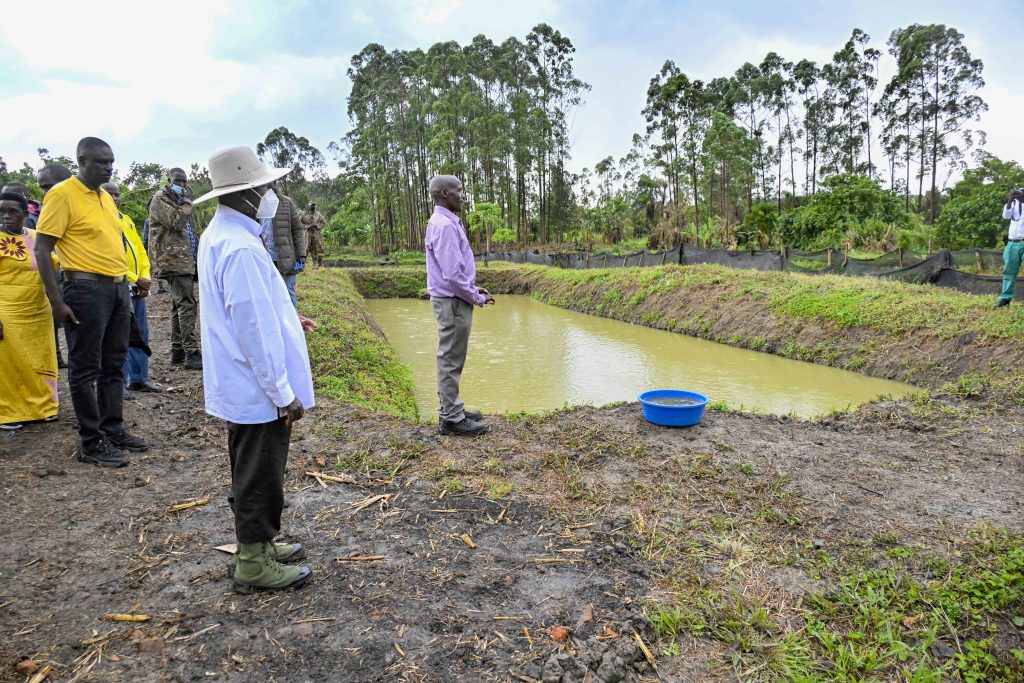
The Museveni fish farming project aims to transform Uganda’s wetlands into engines of growth. President Yoweri Museveni unveiled the plan during the NRM retreat in Kyankwanzi. As a result, he positioned it as a key step to boost incomes and improve food security.
For years, Uganda has underused its wetlands. In many cases, communities either neglect them or use them poorly. However, the Museveni fish farming project seeks to change this pattern by promoting structured aquaculture. Instead of scattered efforts, it will focus on organized systems.
Museveni stressed that current programs cannot support large-scale fish farming. For example, the Parish Development Model offers limited funding. Therefore, Shs1 million cannot cover equipment, pond construction, or management costs. Because of this gap, the state will take the lead.
In addition, the government plans to provide machinery, planning, and technical support. This approach will ensure consistency across regions. At the same time, it will help farmers adopt modern practices. Consequently, the Museveni fish farming project will depend on coordination rather than isolated investment.
Moreover, the plan targets environmental protection. Wetlands often face degradation due to poor land use. However, controlled fish farming can protect these ecosystems. It offers a productive yet sustainable alternative. For this reason, the Museveni fish farming project supports both economic growth and conservation.
Even so, Museveni admitted that implementation may take time. Currently, the government is preparing for major events like the Africa Cup of Nations. These priorities require funding and attention. As a result, the project may roll out after the current financial year. Nevertheless, the commitment remains firm.
Meanwhile, the Museveni fish farming project fits into a wider plan to modernize agriculture. Agriculture Minister Frank Tumwebaze said Uganda still uses a small portion of its land fully. In fact, productivity remains low due to limited inputs and outdated methods. Therefore, he urged farmers to adopt intensive practices.
At the same time, Tumwebaze promoted the four-acre model for smallholders. This system combines different income sources. For instance, farmers can integrate poultry, dairy, and fish farming. Within this framework, the Museveni fish farming project plays a central role. As a result, it offers high returns even on small land sizes.
In addition, he called for stronger links between small and large farmers. Each group contributes differently to growth. On one hand, smallholders can supply local markets. On the other hand, large farms can focus on exports and processing. Therefore, fish farming can bridge this gap and strengthen supply chains.
However, Uganda continues to export many raw agricultural products. Because of this, the country loses potential income and jobs. The Museveni fish farming project can help reverse this trend. By encouraging investment in fish processing and packaging, it promotes value addition. Consequently, earnings can increase while new jobs emerge.
Beyond agriculture, Museveni also addressed governance at the district level. Specifically, he ordered better communication between officials and political leaders. From now on, all funds must be shared with Members of Parliament and local chairpersons. As a result, this step will improve accountability and coordination. It will also support the success of the Museveni fish farming project.
Furthermore, security remains a key pillar of development. Plans for a military barracks in Bulambuli highlight this focus. Security Minister Jim Muhwezi said stability drives economic progress. In other words, safe environments attract investment and support growth. Therefore, rural projects like fish farming depend on this stability.
At the same time, Uganda continues to strengthen its global presence. Ambassador Adonia Ayebare urged leaders to align with foreign policy goals. He highlighted opportunities in trade, technology, and investment. As a result, these efforts could open new markets for fish exports. This adds global value to the Museveni fish farming project.
Overall, the Museveni fish farming project reflects a shift toward structured development. It focuses on using natural resources more effectively. In particular, wetlands now stand as a major opportunity for growth. If managed well, they can transform rural livelihoods.
However, success will depend on execution and strong leadership. The government must ensure proper funding and support. In addition, farmers will need training and guidance. If these elements align, the Museveni fish farming project can deliver lasting impact.
In conclusion, Uganda stands at a critical point. With the right approach, aquaculture can drive the next phase of growth. Therefore, the project offers a clear path to higher incomes and sustainable development.