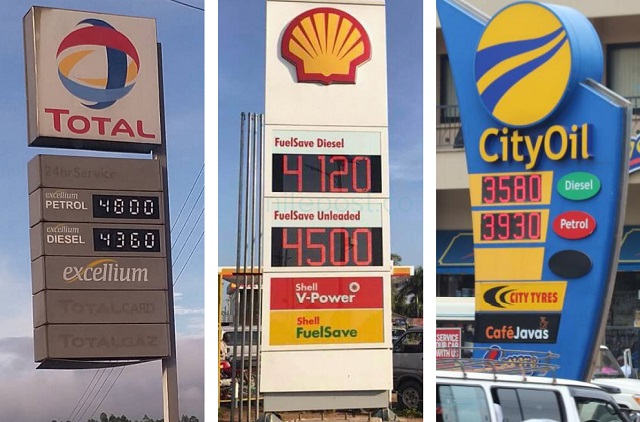
Fuel price warning signals a tougher stance from Uganda’s government as authorities move to protect consumers from unjustified increases. The Minister of Energy, Ruth Nankabirwa, has cautioned fuel dealers against raising pump prices arbitrarily. She insists that the government now controls fuel importation and understands the true cost structure.
According to the minister, all oil marketing companies currently procure fuel through the Uganda National Oil Company. As a result, this system allows the government to absorb global logistical pressures. In turn, it reduces the need for sudden price hikes at fuel stations.
Speaking while accepting her role as the Third Abeto Peace Club Goodwill Ambassador, Nankabirwa issued a strong fuel price warning to dealers. She stressed that regulators closely monitor pricing trends. Therefore, companies must align pump prices with actual import costs.
“We know we are operating under a liberalised economy where we don’t fix prices,” she said. “However, oil marketing companies should know that I am your regulator and your licensee.”
She added that authorities will summon non-compliant dealers. “When I warn you and you don’t heed, next time you will be at my table,” she stated. Consequently, the government expects transparency and fairness in fuel pricing.
The fuel price warning comes at a time when Ugandans face frequent fluctuations at the pump. In many cases, global crises often trigger sudden increases. However, the minister explained that the current system limits such shocks.
She noted that the government knows the exact cost of importing fuel. Therefore, dealers cannot justify arbitrary price adjustments. Instead, they must reflect the actual supply price passed on through official channels.
At the centre of this strategy lies the government-to-business model. Under this framework, UNOC oversees bulk fuel imports on behalf of the country. As a result, Uganda has improved supply stability and pricing predictability.
Moreover, the minister highlighted the role of Vitol, the contracted supplier. The company sources fuel from multiple global reserves. Because of this, Uganda remains insulated from disruptions caused by geopolitical tensions.
For instance, ongoing conflicts in the Middle East have not significantly affected local prices. The diversified supply chain ensures that shortages do not translate into sudden spikes. Therefore, the fuel price warning reinforces confidence in the system.
When asked about possible sanctions, Nankabirwa clarified the government’s approach. She said authorities prefer cooperation over punishment. However, enforcement mechanisms remain in place for those who fail to comply.
“There are no direct sanctions as such,” she explained. “However, as a regulator, we have ways of dealing with such companies.” Consequently, repeated warnings may lead to stricter action.
At the same time, she emphasized continuous engagement with oil marketing companies. Authorities aim to maintain stability in the sector while protecting consumers. Therefore, dialogue remains a key tool in enforcing compliance.
Beyond the fuel price warning, the minister also took on a new public role. The Abeto Peace Club appointed her as its Goodwill Ambassador during a ceremony held yesterday. The event recognized her contributions to national service and leadership.
The ceremony also honored several senior government officials. These included Permanent Secretaries from key ministries such as tourism, ICT, energy and lands. Officials from the Office of the President and Internal Affairs also received awards.
According to Abeto Peace Board chairman Moses Musana, the organization has a long history. It was founded in 1996 following a call during a Commonwealth Heads of Government Meeting. The late Queen of England had urged member states to promote peace after the Rwandan genocide.
Musana encouraged the awardees to champion peace-building initiatives. He stressed that leadership extends beyond government roles into community engagement. Therefore, such recognitions aim to inspire broader national unity.
Meanwhile, the fuel price warning continues to dominate public discussion. Many consumers have welcomed the minister’s firm stance. They hope it will lead to more stable and fair fuel prices across the country.
For businesses, fuel costs remain a critical factor in operations. Transport, production and distribution all depend on predictable pricing. Therefore, any effort to stabilize the market carries wide economic impact.
In conclusion, the fuel price warning reflects a broader shift in Uganda’s energy policy. The government now plays a central role in fuel importation and oversight. As a result, authorities expect dealers to follow fair pricing practices.
Ultimately, the success of this approach will depend on compliance and enforcement. However, for now, the message from the government remains clear. Fuel prices must reflect real costs, not speculation or opportunistic increases.