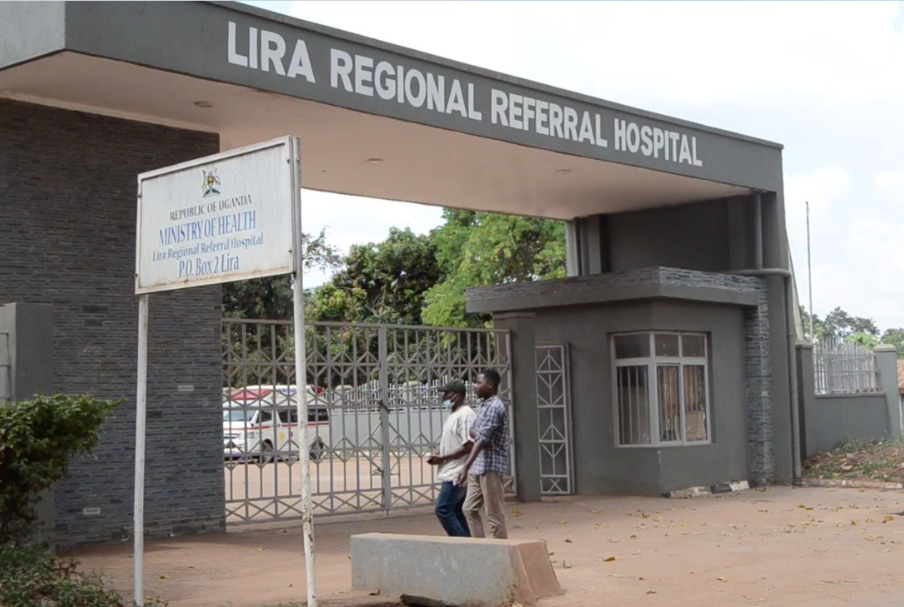
Lira Hospital staff boost plans will transform healthcare delivery in northern Uganda. The facility will recruit more than 150 health workers in the 2026/2027 financial year. As a result, the government has allocated Shs4.8 billion to strengthen staffing and improve services.
Hospital director Dr Andrew Odur announced the plan during the first State of the Hospital Address. He explained that the recruitment will reduce pressure on current staff. In addition, it will improve patient care across departments.
The Lira Hospital staff boost will bring in consultants, associate consultants, nurses, midwives and allied health professionals. Consequently, these additions will increase the workforce from about 320 to nearly 500 staff. This expansion, therefore, marks a major step in strengthening the hospital’s capacity.
Dr Odur noted that the facility has struggled with limited staffing as patient numbers continue to rise. However, the new funding now gives the hospital a chance to improve efficiency. At the same time, it will enhance overall service delivery.
“In the next financial year, we are going to recruit more than 150 staff following the allocation of an additional Shs4.8 billion,” he said.
The Lira Hospital staff boost aligns with ongoing infrastructure upgrades. For instance, the hospital will construct a new ward complex to expand bed capacity. In addition, management will reclaim 10.4 acres of hospital land to support future growth.
Moreover, leaders will complete perimeter fencing to improve security. They will also build staff housing to attract and retain skilled professionals. As a result, the hospital expects better staff stability.
The Lira Hospital staff boost will also support specialised medical services. Specifically, the hospital is strengthening care in fertility treatment, neonatology, cardiology, neurotrauma and endoscopy. Therefore, recruiting skilled personnel remains essential.
Meanwhile, several projects are already near completion. The hospital is expanding the private wing to serve more patients. At the same time, workers are remodelling and paving part of Police Road to improve access.
In addition, the hospital is equipping the theatre with modern medical tools. Teams are also installing canopies along major walkways. This will protect patients and staff from harsh weather conditions.
Dr Odur highlighted key achievements from the past year. For example, the hospital built a fully functional satellite unit to expand outreach. It also expanded a 45-bed gynaecology ward to meet rising demand.
Furthermore, the facility launched its Intensive Care Unit to handle critical cases. Medical teams also performed 174 surgeries during the same period. As a result, the hospital improved its ability to handle complex conditions.
Despite these gains, the Lira Hospital staff boost remains urgent due to a high disease burden. For instance, the hospital recorded 7,592 malaria cases, which continue to strain resources. In addition, health workers treated 1,742 urinary tract infections.
The hospital also managed 1,038 cases of sickle cell disease. Therefore, these figures show the heavy workload facing staff. Consequently, they highlight the need for more personnel.
Bosco Omongo, Speaker of the Hospital Parliament, urged the government to increase funding. He stressed that the hospital must expand further to meet growing demand.
Notably, Lira City will host matches during the Africa Cup of Nations 2027. As a result, this event will increase demand for quality healthcare services. Therefore, the Lira Hospital staff boost will help the facility prepare.
In addition, Omongo raised concerns about mortuary capacity. Currently, the facility holds only 12 bodies, which limits its effectiveness. For this reason, he called for the construction of a modern city mortuary.
Lira Regional Referral Hospital serves as a key referral centre for nine districts in northern Uganda. Moreover, it supports a catchment population of about 2.5 million people.
The hospital operates 401 beds and receives funding from the Uganda Ministry of Health. In addition, it offers specialised services in obstetrics, gynaecology, surgery and internal medicine.
The Lira Hospital staff boost will improve service delivery across all departments. As a result, more staff will reduce waiting times and improve patient outcomes.
Overall, the plan reflects broader efforts to strengthen Uganda’s healthcare system. As the population grows, demand for healthcare services continues to rise. Therefore, investments like this remain critical.
For residents in northern Uganda, this development brings renewed hope. It shows clear progress toward better access to quality healthcare.
In conclusion, the Lira Hospital staff boost marks a strong step toward building a resilient and efficient health system in the region.