The Uganda Ebola outbreak has drawn international attention, but President Yoweri Museveni says there is no reason for panic. Speaking at the Pearl of Africa Tourism Expo in Kampala, Museveni assured tourists, investors, and Ugandans that the government remains in control of the situation.
Museveni said Uganda continues to rely on scientific measures to contain the virus while keeping the economy open. He criticised sections of the international media for what he described as exaggerated reporting about the outbreak.
“I was watching CNN spreading fear through ignorance,” Museveni said during his address at Munyonyo Resort Hotel. He argued that Ebola is easier to control than Covid-19 because it spreads through direct body contact instead of airborne transmission.
The President stressed that Uganda has not recorded a nationwide outbreak. According to him, the confirmed cases involve Congolese nationals who entered Uganda from the Democratic Republic of Congo.
The World Health Organisation declared the outbreak after a Congolese national died while receiving treatment at Kibuli Hospital. Health officials later confirmed a second Congolese patient remains under treatment. Authorities have also isolated individuals who came into contact with the infected patients.
Museveni defended Uganda’s experience in handling infectious diseases. He pointed to the country’s Covid-19 response as evidence that Uganda can manage health emergencies effectively. He said Uganda has developed strong systems for isolation, tracing, and treatment during previous Ebola outbreaks.
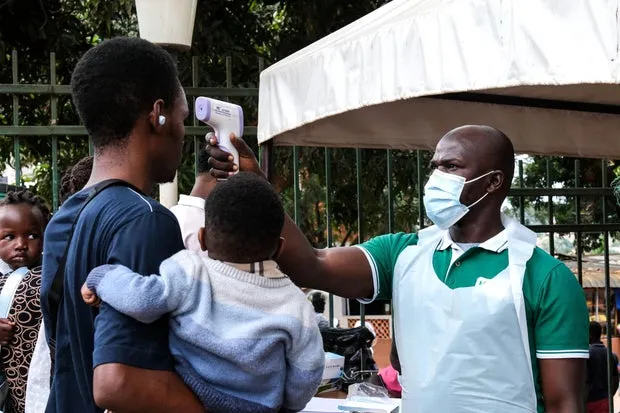
The President encouraged citizens to avoid handshakes and follow hygiene guidelines. He said early detection and quick treatment remain critical in controlling Ebola infections.
Government officials appear determined to protect Uganda’s tourism sector from negative international perceptions. Tourism remains one of Uganda’s leading sources of foreign exchange and employment. Officials fear widespread panic could reduce visitor numbers and weaken investor confidence.
The Pearl of Africa Tourism Expo, widely known as POATE, has attracted international buyers, tourism operators, exhibitors, and investors from different countries. The event serves as one of Uganda’s most important tourism marketing platforms.
Uganda Tourism Board Chief Executive Officer Juliana Kagwa reassured visitors that Uganda remains open and safe. She said tourism activities, hotels, transport services, conference venues, and national parks continue operating normally.
Kagwa also highlighted Uganda’s international reputation for controlling Ebola outbreaks quickly. She urged tourists and investors to observe basic hygiene measures such as regular handwashing and using sanitisers.
Tourism officials believe strong communication will help prevent economic damage. The sector continues to recover from the heavy losses caused by the Covid-19 pandemic. Government leaders want to avoid another major disruption to travel and investment.
Doreen Katusiime, Permanent Secretary at the Ministry of Tourism, Wildlife and Antiquities, described tourism as a major driver of economic growth. She said the industry supports youth employment, community development, conservation efforts, and foreign exchange earnings.
The Ebola concerns emerged while Kampala hosts several international gatherings. Alongside POATE, Uganda is also hosting the Pan African Convention of royals, investors, and diaspora leaders. The meetings have attracted monarchs, diplomats, investors, and African diaspora representatives from different parts of the world.
Organisers say the convention aims to strengthen African partnerships and encourage investment opportunities across the continent. The meetings also focus on cultural identity, economic cooperation, and regional development.
Ugandan authorities continue to emphasise calm and scientific management of the outbreak. Officials believe panic could damage tourism and investor confidence more than the outbreak itself.
Health experts, however, continue urging vigilance. Uganda remains vulnerable to imported Ebola cases because of its proximity to eastern Congo, where outbreaks have occurred repeatedly over the years.
The debate surrounding the Uganda Ebola outbreak now extends beyond public health alone. It has become a test of Uganda’s ability to protect both public safety and economic stability during a sensitive period for tourism and international investment.