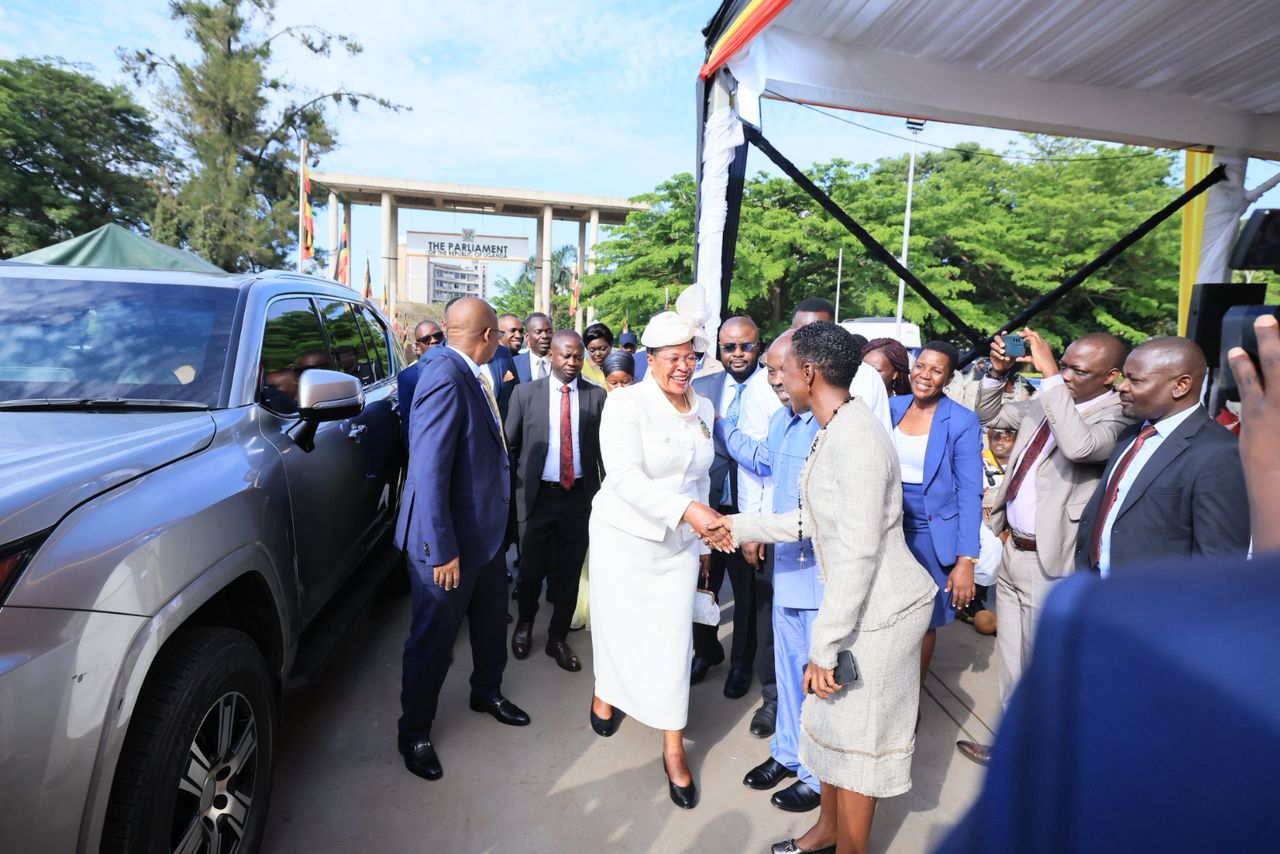
The debate over Anita Among retirement benefits has intensified political tensions in Uganda and revived public anger over government spending. Critics argue that the retirement package offered to the outgoing Speaker of Parliament reflects deep problems within Uganda’s political system.
Under Uganda’s Parliamentary Pensions law, former Speakers and Deputy Speakers qualify for generous state-funded benefits. These benefits include a pension equal to 60 percent of the current Speaker’s salary, a large lump-sum payment, luxury vehicles, security guards, domestic workers, medical care, and utility allowances. Reports suggest the total package could cost taxpayers hundreds of millions of shillings.
Public criticism has grown because the debate comes at a difficult economic moment. Many Ugandans continue to face rising living costs, unemployment, and pressure on public services. Critics say the scale of the benefits shows how disconnected political leaders have become from ordinary citizens.
The controversy surrounding Anita Among retirement benefits has also drawn attention because of ongoing corruption allegations linked to Parliament. Political analysts say the retirement package damages public confidence in government efforts to fight corruption and improve accountability.
Uganda’s Parliamentary Pensions (Amendment) Act allows senior leaders to receive retirement benefits from multiple offices they held during their careers. Critics consider this one of the law’s biggest weaknesses because it allows former officials to collect several taxpayer-funded packages at the same time.
Former Speaker Edward Ssekandi became one of the most prominent examples of the system. He reportedly received benefits connected to his service as Deputy Speaker, Speaker, and Vice President. Former Speaker Rebecca Kadaga also qualifies for retirement benefits linked to several leadership positions she previously occupied.
Opposition politicians and governance activists argue that lawmakers created a system that mainly benefits political elites. They say Parliament ignored warnings about conflicts of interest and excessive public spending when it approved the retirement laws.
Former Forum for Democratic Change leader Nandala Mafabi criticized what he called “the greed of retiring leaders.” He argued that Parliament failed to correct loopholes that allow leaders to receive overlapping pension payments.
Former Nyendo-Mukungwe MP Mathias Mpuuga also questioned the law. He said Uganda should amend the legislation so leaders only receive benefits from the highest office they served in rather than collecting several packages simultaneously.
The dispute has become larger than a pension debate. Many Ugandans now view the issue as a symbol of unequal access to state resources and weak institutional accountability. Critics argue that leaders cannot convincingly campaign against corruption while benefiting from expensive state privileges.
Former Kira Municipality MP Ibrahim Ssemujju Nganda said Parliament has known about the contradictions in the retirement law for years. He explained that some lawmakers attempted to push reforms, but those efforts failed to produce major legislative changes.
Former Tororo County MP Geoffrey Ekanya argued that the arrangement conflicts with Uganda’s Public Service Standing Orders. Those rules prevent public officers from receiving payment from more than one government office simultaneously.
Supporters of the retirement packages defend them as recognition for national service. Anita Among previously argued that parliamentary leaders who served during difficult political periods deserved proper retirement support. In 2023, she defended amendments that extended pension benefits to former Speakers and Deputy Speakers who had previously been excluded.
Among said the reforms recognized leaders who helped stabilize Uganda during politically difficult periods. The amendments also extended support to families of former parliamentary leaders who died while serving the country.
Critics remain unconvinced. They argue that retirement support should not include luxury SUVs, domestic workers, permanent security details, and expensive maintenance programs funded by taxpayers. Many believe the benefits exceed reasonable retirement protection.
The controversy has become more sensitive because it coincides with broader investigations into Parliament’s financial management. Recent reports involving CID summonses for parliamentary officials and the recall of parliamentary vehicles linked to former leaders increased scrutiny on spending within the institution.
Women’s rights activists also entered the debate. Some warned against using Anita Among’s controversy to judge all female leaders. They argued that corruption and abuse of office affect political systems broadly and should not become gender-based attacks.
The political consequences of the controversy could continue long after Anita Among leaves office. Several lawmakers already support amendments that would restrict overlapping retirement benefits for senior government officials.
For many Ugandans, the issue reflects a deeper frustration with political privilege and unequal access to public resources. The controversy over Anita Among retirement benefits now stands as a broader test of Uganda’s willingness to pursue transparency, accountability, and meaningful institutional reform.
READ: Uganda Dog Shelter Scam Exposed After BBC Investigation