The Museveni rise to power reached a defining moment on January 29, 1986, when a guerrilla leader stepped into State House as Uganda’s president.
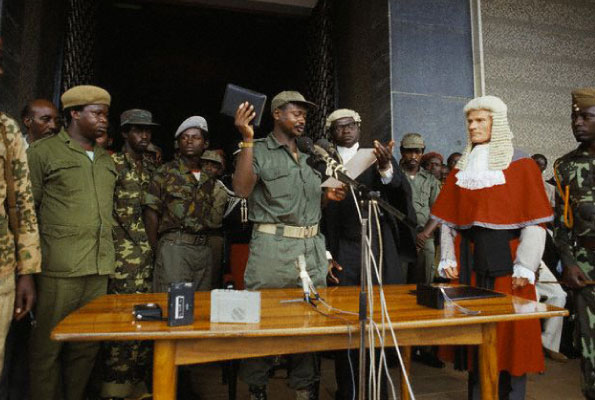
On that day, a lean man in green military fatigues stood at the entrance of Parliament and took the oath of office. His sleeves were folded, and he wore a simple green cap. In that moment, Mr Yoweri Museveni transitioned from rebel commander to head of state.
The ceremony did more than formalize leadership. It marked the end of a violent chapter and the start of a new political order. For many Ugandans, the Museveni rise to power symbolized both relief and uncertainty after years of conflict.
Just days earlier, his National Resistance Army had taken control of Kampala. The force pushed out soldiers of the Uganda National Liberation Army and their allies. As a result, it ended a five-year armed struggle that had reshaped the country.
The war began on February 6, 1981, with an attack on Kabamba Military Barracks. At the time, Museveni rejected the outcome of the 1980 General Election. He argued that the process lacked credibility and fairness. Consequently, he chose armed resistance over political compromise.
Throughout the early stages, the guerrilla campaign faced severe challenges. The fighters lacked resources and operated in difficult terrain. However, they built support among rural communities, especially in central Uganda. Over time, this local backing strengthened their position and allowed them to expand operations.
Meanwhile, the government forces struggled to contain the insurgency. Reports of human rights abuses and internal divisions weakened their standing. As the conflict dragged on, public trust in the existing leadership eroded. Therefore, the Museveni rise to power gained momentum not only through military success but also through shifting public sentiment.
By the mid-1980s, the balance had changed. The National Resistance Army increased its territorial control and advanced toward key urban centers. Eventually, the capture of Kampala became inevitable. When government forces retreated, the path to power opened for Museveni and his allies.
After taking office, Museveni addressed a nation exhausted by war. He emphasized stability, security, and national unity. He also pledged to rebuild institutions that had suffered years of neglect and conflict. In addition, he called for discipline within the armed forces and respect for civilians.
At the same time, the new administration faced immediate pressures. The economy required urgent recovery, and infrastructure needed repair. Furthermore, political divisions remained deep, especially among groups that had supported previous governments. As a result, the early years of leadership demanded careful balancing between reform and consolidation.
Nevertheless, the Museveni rise to power reshaped Uganda’s political trajectory. His government introduced a new system that limited party competition in its early phase, arguing that it would reduce sectarian conflict. Supporters viewed this approach as necessary for stability. Critics, however, questioned its impact on democratic development.
Over the years, Museveni’s leadership has remained a central force in Ugandan politics. His rise from guerrilla commander to president continues to influence debates about governance, legitimacy, and long-term leadership.
Today, the events of January 1986 still resonate. They represent both a turning point and a foundation for modern Uganda. The Museveni rise to power stands as a reminder of how conflict, strategy, and political vision can converge to reshape a nation’s history.