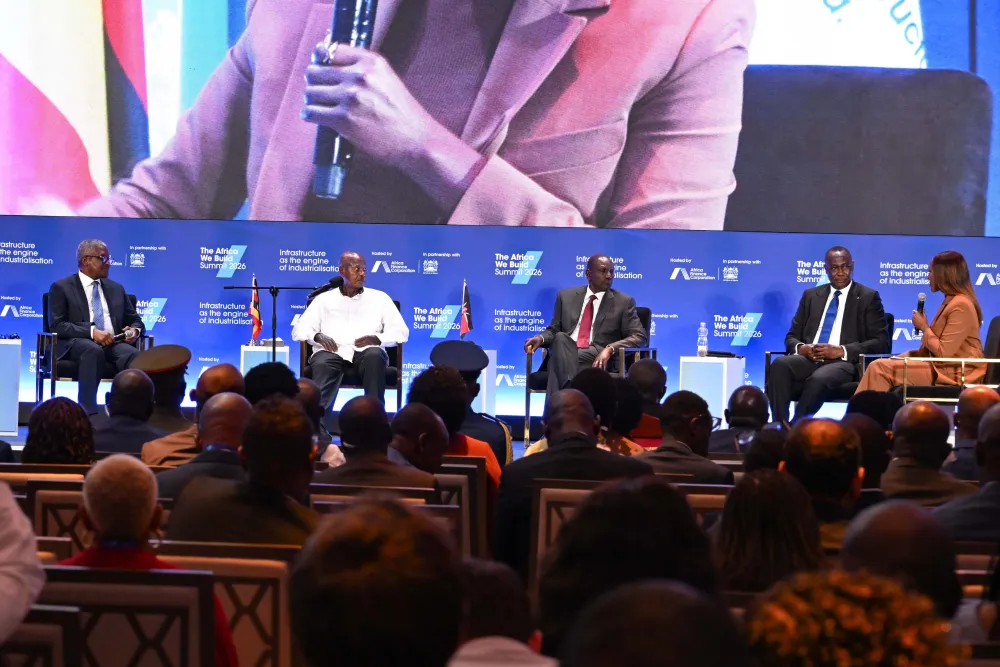
The Africa infrastructure summit opened in Nairobi with a clear call for action from regional leaders. At the same time, President Yoweri Kaguta Museveni joined other heads of state and industry leaders to push for faster economic transformation. As a result, the meeting immediately set a decisive tone for Africa’s development agenda.
The summit took place at the JW Marriott Hotel Nairobi and brought together policymakers, investors, and private sector players. In particular, the Africa Finance Corporation organised the event with support from the Kenyan government. Consequently, leaders focused on accelerating projects that can reshape Africa’s economy.
President Museveni stressed that infrastructure must work as a connected system. For example, he said roads, railways, ports, and energy networks should support production sectors. These sectors include agriculture, tourism, and small businesses. Therefore, he warned that isolated projects rarely deliver lasting impact.
He described infrastructure as the “bone marrow of the economy.” In other words, strong systems support growth over time. Similarly, this view aligns with the growing push for integrated development across Africa. As a result, leaders now focus on efficiency rather than expansion alone.
Africa still faces a gap between potential and output. Although the continent has vast resources and a young population, growth remains uneven. Museveni blamed weak institutions and political instability for slowing progress. Consequently, these issues continue to limit economic expansion.
He warned that sectarian politics and insecurity hurt investment. In addition, they delay key projects and reduce investor confidence. Investors need stability and clear policies before they commit long-term capital. Otherwise, development slows down significantly.
President William Ruto echoed these concerns in his keynote speech. He noted that Africa’s manufacturing sector has remained stagnant for years. For instance, it still contributes about 10 percent of total output. Therefore, he called for urgent action to expand industrial capacity.
The Africa infrastructure summit highlighted the need for value addition. In particular, leaders agreed that exporting raw materials limits growth. Museveni pointed to cotton, coffee, minerals, and oil as key sectors. Accordingly, he said Africa must process these resources locally.
Local processing creates jobs and boosts revenue. Moreover, it reduces dependence on foreign markets and strengthens domestic industries. As a result, many leaders see this shift as critical for long-term stability. The summit reinforced this message across all discussions.
Museveni also addressed how governments use borrowed funds. Specifically, he urged leaders to invest in productive sectors rather than recurrent expenditure. These include electricity, railways, and fuel pipelines. Consequently, such investments generate returns and support industrial growth.
Regional integration formed another key theme at the Africa infrastructure summit. For instance, leaders stressed the need to connect markets across borders. Strong connections allow industries to scale and compete globally. Therefore, integration remains essential for sustained growth.
Museveni reaffirmed Uganda’s commitment to regional projects. These include energy, petroleum refining, and steel production. In turn, he said these investments will benefit East Africa and beyond. They will also strengthen trade links across the continent.
Leaders also highlighted the African Continental Free Trade Area. In particular, they said it offers a platform for expanding intra-African trade. By reducing trade barriers, countries can increase market access and boost competitiveness. As a result, this approach attracts investors and supports large industries.
Private sector leaders showed strong interest in Africa’s growth agenda. For example, Nigerian businessman Aliko Dangote praised policies that support local processing. He welcomed Uganda’s decision to restrict exports of unprocessed minerals.
Furthermore, Dangote pledged support for refinery development in East Africa. His commitment signals confidence in the region’s future. As a result, private investors often follow clear and consistent policies. Therefore, governments must maintain this direction to attract more capital.
The Africa infrastructure summit also highlighted the role of leadership. Both Museveni and Ruto stressed the need for strong political will. Notably, they said many projects fail due to poor coordination rather than lack of funds.
Ruto called for better planning and execution. In addition, he said governments must work closely with investors and institutions. This collaboration ensures that projects move from planning to completion. Therefore, coordination remains a critical success factor.
The Africa infrastructure summit reflects a shift in Africa’s development strategy. Instead of relying on raw materials, leaders now focus on building systems that support industrial growth. As a result, the continent aims to create more resilient and diversified economies.
Africa has the resources and population to compete globally. However, success depends on execution and coordination. The summit showed that leaders understand the challenges ahead.
If countries act on these commitments, Africa can unlock real growth. Ultimately, the Africa infrastructure summit may mark a turning point. It sets the stage for stronger industries, better trade, and long-term economic independence.
READ: Supreme Court Criticises DPP for Not Taking Job Seriously in Defilement Case