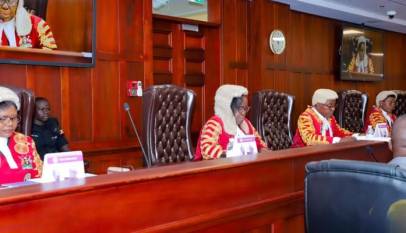
The Supreme Court has criticized the Director of Public Prosecution for not taking the job seriously. The court used unusually tough language in its ruling. The DPP is responsible for all criminal prosecutions in the country. The court expressed dismay at the DPP’s failure to respond to an appeal despite clear directives. The DPP simply did not file any submission. Therefore, the DPP criticised by Supreme Court ruling carries significant weight.
“At the hearing Mr. Muwonge Emmanuel represented the Appellant while Assistant D.P.P Nabisenke Vicky appeared for the respondent,” the judges observed. “Only the Appellant filed written submissions. To date, the respondent has not filed any submission having been guided to file by 15th April, 2025.” The justices stated that parties must comply with court-mandated deadlines. They must take their professional responsibilities seriously. This avoids disappointing their clients. It also hinders the fair and prompt administration of justice.
Justices Warn Government Representatives
“This is especially important and particularly true for representatives from government offices, such as the Director of Public Prosecutions. Such conduct is a disservice to the judicial process and the rule of law,” the justices ruled. The DPP criticised by Supreme Court ruling came from five Justices. They include Lilian Tibatemwa-Ekirikubinza, Percy Night Tuhaise, and Mike Chibita. Stephen Musota and Christopher Madrama also joined the ruling. Their unanimous voice underscores the gravity of the DPP’s failure.
The justices upheld a 28-year sentence for Byaruhanga Alex. He defiled a six-year-old girl in 2015. Byaruhanga had argued that the victim did not testify. He also claimed the police did not conduct an identification parade. He said these failures rendered both the conviction and sentence invalid. The Court of Appeal had already upheld the High Court conviction. High Court Justice Jane Frances Abodo had originally convicted Byaruhanga.
Facts of the Defilement Case
Byaruhanga defiled a six-year-old girl. The child was the granddaughter of Margaret Bukirwa. Bukirwa lives in Nawanku Zone in Makindye Division, Kampala. On January 18, 2015, Byaruhanga went to Bukirwa’s drinking joint. He purchased waragi and consumed it. He then bought soda and cookies for the six-year-old. In the evening, he forcefully took the child away. She had been attending a birthday party with friends.
The child returned home the following day. She told her grandmother that an “uncle who had bought her soda” forced her to have sex. Police arrested Byaruhanga shortly after. Authorities charged him with aggravated defilement. The High Court found him guilty and sentenced him to 32 years. The court deducted three years for the time he spent on remand. This left a 28-year sentence. Byaruhanga appealed the conviction and sentence. He claimed the court relied on unreliable evidence.
Supreme Court Upholds Conviction on Circumstantial Evidence
The Court of Appeal dismissed his appeal. Byaruhanga then appealed again to the Supreme Court. The Supreme Court upheld the Court of Appeal judgement. The court held that courts can rely on circumstantial evidence. They may do so provided there is sufficient reason. “The synchronized and immediate account given by a minor to responsible adults at the first reasonable opportunity may be permitted,” the justices ruled. This applies especially if other independent evidence corroborates the account.
The court further held that third-party testimony can support a conviction. This remains true even when the victim cannot testify. Courts must show great caution regarding the child’s account. They must evaluate the circumstances carefully. “Sufficient reason in this case was given by the courts for dispensing with the victim’s testimony,” the justices wrote. “The evidence of the victim’s grandmother was crucial given that the child immediately after the incident detailed the occurrences that transpired.”
Identification Parade Not Required in This Case
The Supreme Court also addressed the identification parade issue. Such parades help when the victim does not know the perpetrator. They also help when the accused challenges the witness’s recognition. However, failing to conduct a parade does not automatically weaken the case. “Identification parades help to support the witness’s claim that the person identified at the crime scene is the same,” the justices ruled. “In this case, the witnesses’ memories were clear, even without an identification parade, as both the victim and the grandmother had observed the appellant in broad daylight prior to the incident.”
The justices therefore held that overwhelming circumstantial evidence supported the identification. The DPP criticised by Supreme Court ruling did not affect the outcome. The evidence against Byaruhanga was already overwhelming. “We find that this is a disguised appeal against the severity of the sentence prohibited by law,” the judges concluded. “The sentence imposed on the appellant by the trial Judge and upheld by the Court of Appeal is hereby confirmed.” The DPP’s office must now address its internal procedures to prevent future failures.