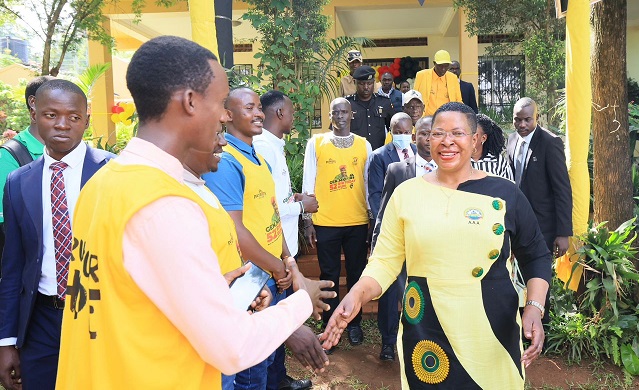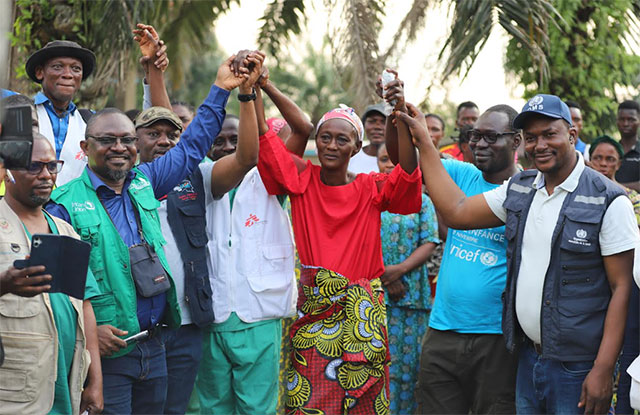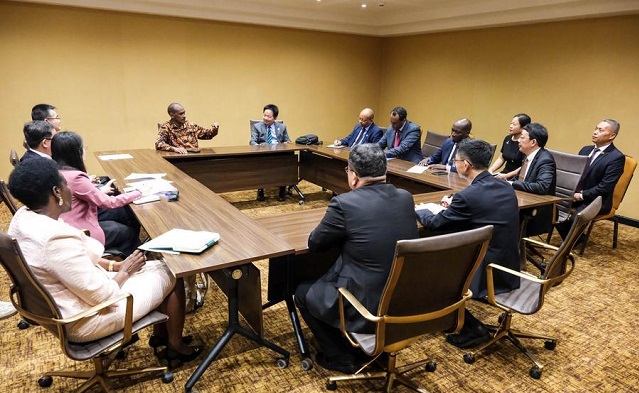
China’s transfer of skills and technologies is transforming agricultural production in Uganda. Officials said here on Thursday that this demonstrates how Global South countries can accelerate development through South-South cooperation. The remarks came at a review workshop marking the completion of the third phase of the Food and Agriculture Organization of the United Nations (FAO)-China-Uganda South-South Cooperation project. According to Uganda’s Ministry of Agriculture, since the project began in 2012, China has dispatched more than 60 agricultural experts to Uganda.
These experts share knowledge and skills with smallholder farmers and local specialists. They help Ugandan farmers transition from subsistence to commercial farming. The project also boosts production and household incomes. Therefore, the South-South cooperation agriculture model has proven effective in real-world conditions.
Minister Praises Project Alignment with Uganda’s Priorities
Frank Tumwebaze, Uganda’s minister of agriculture, animal industry and fisheries, told the meeting that the project demonstrates how Global South countries can collaborate to share knowledge and technology. This collaboration helps transform agrifood systems across the region. Tumwebaze praised China’s cooperation with Africa, saying the project aligns with Uganda’s priorities on agro-industrialization, food security, and rural livelihoods.
“It supports strategic value chains such as rice, millet, sorghum, chili, livestock and fisheries, which are critical to livelihoods enhancement, food and nutrition security,” the minister said. His comments underscore the broad impact of the South-South cooperation agriculture initiative. The project addresses multiple food systems rather than focusing on a single crop.
Ye Anping, director of FAO’s South-South and Triangular Cooperation Division, said that amid declining donor support due to the current geopolitical situation, the tripartite project has demonstrated potential. Global South countries can lift millions out of poverty through the sharing of knowledge and skills. This point is particularly important as traditional donors reduce funding.
Chinese Experts Introduce High-Yielding Rice Variety
Wu Xiuqiang, a representative of the Sichuan Provincial Department of Agriculture and Rural Affairs, said the project’s three phases have contributed to the modernization and industrialization of Uganda’s agricultural sector. The project serves as a model for China-Africa agricultural cooperation and broader South-South collaboration. Fan Xuecheng, charge d’affaires ad interim of the Chinese Embassy in Uganda, said the transfer of knowledge and skills has helped cultivate a new generation of Ugandan agricultural professionals.
This ensures that the project’s achievements are locally owned and sustained. Fan added that more than 100,000 Ugandans have benefited from training and technical support provided by Chinese experts over the years. Under the project, three agricultural technology transfer hubs were established. These hubs focus on crop varieties, livestock, and fisheries.
One key achievement in the crop sector is the introduction of WDR-73, a high-yielding, drought-resistant rice variety now being promoted nationwide. This variety has benefited nearly 5,000 households. It has significantly increased both production and average household income. The South-South cooperation agriculture project thus delivers measurable results for rural communities.
Farmer Testimonials Confirm Tangible Benefits
Robert Sagura, a rice farmer with over 40 years of experience, is among the beneficiaries. He told Xinhua that more than 500 rice farmers in his home district of Butaleja in eastern Uganda have adopted techniques introduced by Chinese experts. “They gave us new technologies on how to improve our rice farming, such as line transplanting, pest management, and growing high-yielding hybrid rice compared to our local varieties,” Sagura said.
“We used to get about 500 kg per acre per season, but now, because of their skills and technology, we can get over 2,000 kg per acre per season,” he added. This fourfold increase in yield demonstrates the transformative power of South-South cooperation agriculture. Farmers who were barely surviving now produce surplus for market sale.
The FAO-China-Uganda project represents a successful triangular cooperation model. The FAO provides technical coordination. China supplies expertise and funding. Uganda contributes local knowledge and implementation capacity. Together, these three partners achieve what none could accomplish alone. The project’s third phase has now concluded, but its impact will continue for years. The technology transfer hubs remain operational. Trained farmers continue to share their knowledge with neighbors. The South-South cooperation agriculture approach has created lasting change in Uganda’s farming communities. Other countries in Africa and beyond can learn from this example.