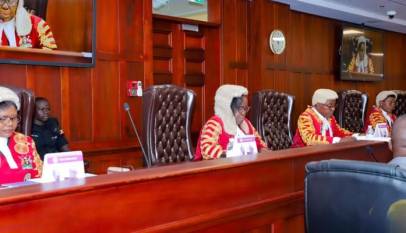
KAMPALA: The Constitutional Court has ruled that the Computer Misuse (Amendment) Act, 2022 was enacted in violation of parliamentary procedure. The court declared the provisions challenged in three consolidated petitions null and void. A panel of five justices delivered the unanimous judgement. Justice Irene Mulyagonja wrote the lead judgement. Justices Ketra Kitariisibwa Katunguka, John Mike Musisi, Jesse Byaruhanga Rugyema and Esta Nambayo concurred with her.
The petitions came from a coalition of civil society organisations, lawyers and journalists. Alternative Digitalk, the Uganda Law Society and the Human Rights Network for Journalists filed the challenges. They contested both the procedure used by Parliament to pass the law and several of its substantive provisions. The Computer Misuse Act nullified by this ruling represents a significant victory for digital rights advocates.
Parliament Violated Its Own Rules
The court found that Parliament passed the Computer Misuse Bill on September 8, 2022 without complying with Rule 24(3) of its Rules of Procedure. This rule requires verification of quorum before voting on legislation. The court held that the Speaker’s omission was inconsistent with Articles 88 and 89 of the Constitution. These articles govern the conduct of parliamentary business.
Justice Mulyagonja stated that compliance with procedural rules is a constitutional requirement. Failure to observe them renders the legislative process defective. The court concluded that enacting the law without confirming quorum meant Parliament passed it contrary to the law. The Computer Misuse Act nullified by this procedural finding sets a significant precedent for future legislation.
Provisions Declared Void
The nullified provisions include several sections that activists had long criticized. Section 11(1) relates to unauthorised access or interception of data and information Section 23 criminalises the sharing of information about children, Section 26 prohibits sharing information likely to ridicule, degrade or demean a person or group.
Section 27 addresses sending or sharing unsolicited information, Section 28 covers the offence of sharing malicious information, Section 29 criminalises certain forms of anonymous communication and publication under false identity. The court declared all these provisions void because they were enacted without following proper procedure.
Arguments by Petitioners
The applicants argued through their lawyers including Eron Kiiza, George Musisi, Kato Tumusiime, Kakuru Tumusiime and Jonathan Elotu. They contended that the provisions were vague, overly broad and imposed unjustifiable limitations on constitutional rights. These rights included freedom of expression, access to information and the right to practise a profession.
They also challenged the legislative process itself. Parliament did not ensure quorum and did not conduct adequate public consultation. This was particularly problematic for provisions on misuse of social media. The Computer Misuse Act nullified by the court had faced sustained criticism from civil society since its passage.
Court Addresses Legal Principles
Although the court’s primary finding rested on procedural impropriety, it also addressed legal principles raised in the petitions. These focused particularly on clarity and precision in criminal law. According to the Constitutional Court, a valid law creating criminal offences must meet the principle of legality. It must be clear, precise and foreseeable.
The justices noted that vague and ambiguous provisions make it difficult for individuals to regulate their conduct. People cannot understand what is prohibited. The court referred to international human rights standards, including the International Covenant on Civil and Political Rights. This requires that limitations on rights such as freedom of expression must be clearly defined in law.
African Charter Standards Applied
The judgement relied on principles developed under the African Charter on Human and Peoples’ Rights. Any limitation must be prescribed by law, serve a legitimate aim, and be necessary and proportionate in a democratic society. The court found that many provisions failed this test.
The Computer Misuse Act nullified by this ruling had been challenged precisely on these grounds. Rights groups had long argued that vague language allowed for arbitrary enforcement. Journalists and ordinary citizens faced uncertainty about what online speech might trigger prosecution.
Criminal Defamation Also Struck Down
In the same judgement, the court examined Section 162 of the Penal Code Act, which criminalises defamation. The justices found that the definition of “libel” under Section 163 is vague and ambiguous. It does not meet the required standard of precision in criminal law. Justice Mulyagonja held that the definition fails to clearly specify prohibited conduct. A person of ordinary intelligence should know in advance what conduct is criminal.
The court observed that while defamation laws may protect reputation, criminal sanctions are more restrictive than civil remedies. Criminal defamation can have a chilling effect on freedom of expression. Journalists and media practitioners may resort to self-censorship to avoid prosecution. The judgement cited comparative jurisprudence discouraging criminal sanctions for defamation. Civil remedies are less restrictive and more appropriate.
Proportionality and Necessity
The court found that Section 162 does not meet the test of necessity and proportionality under international human rights law. It held that the provision is inconsistent with Uganda’s obligations under the African Charter. It also conflicts with the National Objectives and Directive Principles of State Policy in the Constitution.
The court declared that Section 162 contravenes Article 9 of the African Charter. The definition of defamation under Section 163 does not meet the required legal standard. It is therefore unconstitutional to that extent. This finding extends the significance of the ruling beyond the Computer Misuse Act.
Attorney General Opposition
The attorney general had opposed all three petitions. Government lawyers argued that Parliament followed proper procedure and that the substantive provisions were constitutional. They maintained that the laws served legitimate public interests in regulating online conduct and protecting reputations.
The court rejected these arguments entirely. The unanimous decision represents a significant rebuke of parliamentary process. It also signals judicial willingness to enforce constitutional standards against legislative overreach. The Computer Misuse Act nullified by this decision had been a cornerstone of government efforts to regulate online speech.
Implications of the Ruling
The judgement has immediate practical effects. Prosecutions pending under the nullified provisions may now face challenges. Individuals convicted under the law could seek review of their cases. Police and prosecutors must cease enforcing sections declared void.
The ruling also sends a message to Parliament about procedural compliance. Future legislation must follow constitutional requirements for quorum and public participation. Failure to do so risks similar judicial intervention. Civil society organizations celebrated the decision as a victory for rule of law and fundamental rights.
Text of the Judgement
“I would therefore find that when Parliament passed the Computer Misuse (Amendment) Bill, 2022 into an Act of Parliament, it did not comply with the provisions of rule 24 (3) of the Rules of Procedure of Parliament made under Article 94 of the Constitution,” the judgement reads. “Further, that the passing of the Bill into an Act of Parliament was inconsistent with Articles 88 and 89 of the Constitution, making the Computer Misuse (Amendment) Act, 2022, null and void.”
“It follows that all of the impugned provisions of the Computer Misuse Act that were challenged in the three petitions are null and void and there is no need to interpret them as against the stated provisions of the Constitution.” The three petitions were consolidated after court found that they raised similar issues regarding both the enactment and substance of the Computer Misuse (Amendment) Act, 2022.