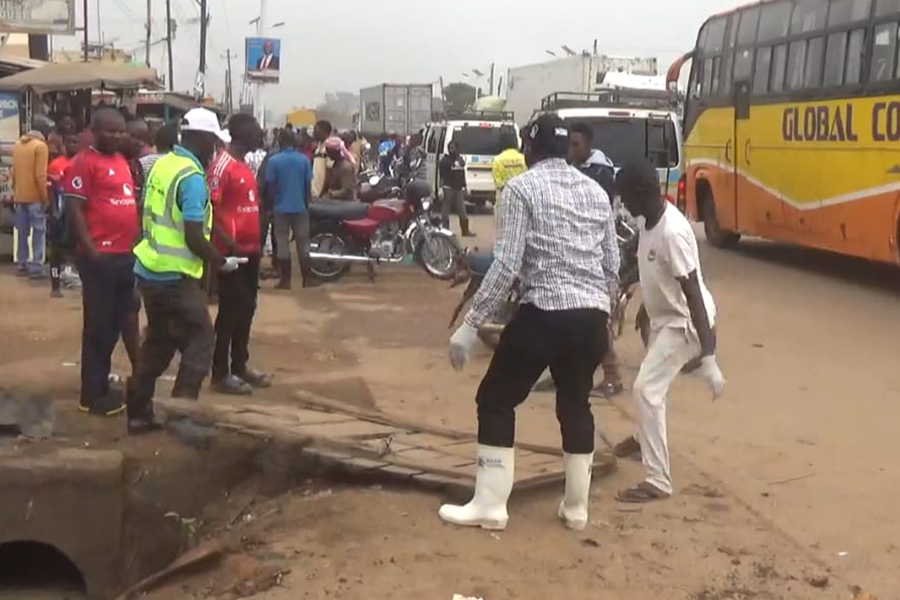
Kayabwe roadside traders evicted in a major clean-up exercise after local authorities in Kayabwe Town Council, Mpigi District, removed more than 300 vendors operating illegally along the Kampala–Masaka Highway. The operation aimed to restore order, improve drainage, and enhance public safety on the busy transport corridor.
The exercise targeted makeshift structures built within the road reserve. These included storage houses, iron-sheet workshops, timber sheds, and roadside stalls selling soft drinks, roasted meat, cooked food, and other merchandise. Many of the structures had blocked drainage channels and encroached on pedestrian pathways, contributing to flooding and sanitation concerns.
The Kayabwe roadside traders evicted operation was conducted peacefully following directives from Works and Transport Minister Gen Edward Katumba Wamala. Local leaders emphasized that the move was not sudden but implemented in response to ministerial instructions to clear all illegal developments within road reserves. Authorities insisted that restoring proper road usage and maintaining public infrastructure remains a top priority.
Kayabwe Town Council chairperson Zed Kasule confirmed that the directive came directly from the minister. According to him, the council received clear instructions that anyone operating within the road reserve must vacate immediately. He stressed that the council had no option but to comply with national guidance aimed at protecting public infrastructure. The Kayabwe roadside traders evicted exercise, therefore, followed a structured administrative decision rather than spontaneous enforcement.
Michael Lutalo, the principal township officer, explained that officials deliberately adopted a non-confrontational strategy. He acknowledged that many traders had operated in the area for years, creating economic reliance on roadside business activity. However, he noted that forceful removal could have led to chaos and potential property destruction. Instead, authorities applied the Bulungi Bwansi communal work method, encouraging cooperation rather than confrontation. This approach helped prevent clashes and ensured the Kayabwe roadside traders evicted operation proceeded smoothly.
Residents widely welcomed the clean-up. Several community members reported that drainage channels had become heavily clogged with garbage dumped by roadside vendors. During rainy seasons, blocked drains often caused flooding, damaging nearby properties and disrupting traffic flow. With the Kayabwe roadside traders evicted, locals expressed optimism that water will now flow freely and sanitation conditions will improve.
Kayabwe Ward councillor Siraje Kaweesi stated that the traders had compromised the town’s aesthetic appeal. According to him, the visual clutter and accumulation of rubbish undermined efforts to maintain a clean and organized urban environment. Fellow councillor Maliceri Ssenyondo from Buseese Ward echoed similar concerns, highlighting ongoing garbage collection challenges. He pointed out that the council’s garbage truck frequently breaks down, and the loss of a previously donated vehicle worsened waste management capacity. In that context, clearing roadside encroachments became an urgent necessity.
Despite broad support, not all reactions were positive. Some affected vendors criticized the process, arguing that they received insufficient notice and no clear relocation plan. Several traders claimed they depend entirely on daily roadside sales to support their families. They expressed concern that without alternative trading sites, the Kayabwe roadside traders evicted decision could push them into financial hardship.
Economic displacement remains a sensitive issue in enforcement operations of this nature. Informal trade often thrives in high-traffic zones such as highways because of steady customer flow. While authorities focus on public order and safety, traders emphasize livelihood survival. Balancing these interests presents a persistent governance challenge in many growing towns.
Boda boda riders and transport operators strongly supported the crackdown. Their chairperson, Huzaifa Kirevu, stated that clearing the road reserve improves accessibility and reduces congestion along the Kampala–Masaka Highway. Riders often struggle with obstructed entry points, parked stalls, and scattered waste. From their perspective, the Kayabwe roadside traders evicted exercise enhances both safety and operational efficiency.
Local leadership also used the opportunity to issue broader compliance directives. Property owners with commercial premises were cautioned to pave their yards to minimize dust and mud accumulation. Additionally, all business entities were instructed to form leadership structures to coordinate operations within Kayabwe Town Council. Officials argued that structured representation can improve communication between traders and authorities in the future.
Chairperson Kasule criticized certain government departments for neglecting drainage maintenance despite allocated funds. He noted that while local leaders face public scrutiny, infrastructure oversight involves multiple layers of responsibility. Nonetheless, he emphasized that clearing encroachments forms the first step toward restoring effective drainage systems. The council now intends to monitor compliance for 30 days to ensure that the cleared road reserve remains free from illegal structures.
The Kayabwe roadside traders evicted operation reflects a broader national push to protect road infrastructure and prevent encroachment. Across Uganda, authorities have increasingly focused on clearing road reserves to reduce accidents, prevent flooding, and maintain organized urban growth. Road reserves exist to ensure visibility, pedestrian movement, and infrastructure maintenance access. Encroachment undermines those objectives and often leads to safety hazards.
Going forward, the sustainability of the clean-up will depend on consistent enforcement and practical solutions for displaced vendors. Authorities may need to designate alternative trading zones or develop structured markets to absorb affected traders. Without long-term planning, informal activity could resurface along the highway.
For now, the Kayabwe roadside traders evicted exercise marks a decisive intervention by local authorities in Mpigi District. Residents anticipate improved drainage, better traffic flow, and a more organized town center. Traders, however, hope for inclusive dialogue that addresses their economic concerns. As the 30-day monitoring period begins, all stakeholders will be watching to see whether Kayabwe maintains its renewed order or faces renewed tensions over roadside trade.