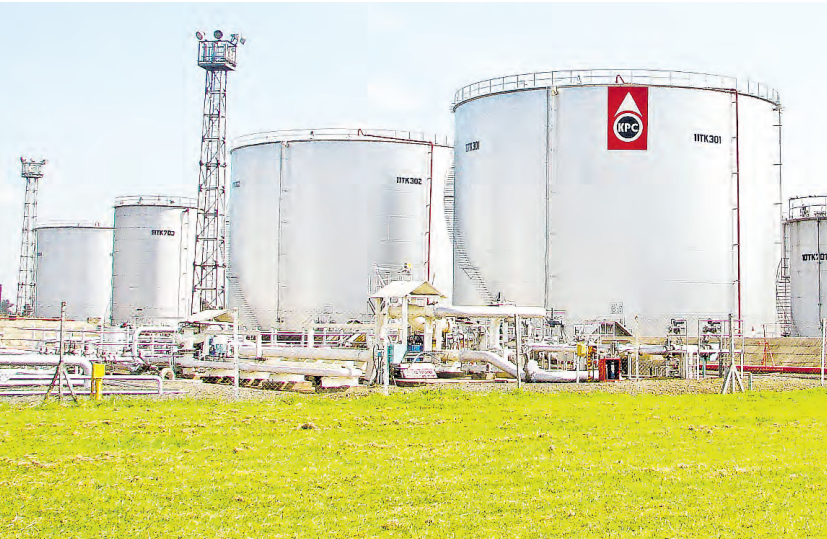
Uganda is expected to receive more than Shs30 billion in dividend income from Kenya Pipeline Company (KPC), following a strong financial year in which the regional petroleum transporter recorded higher profits and increased revenue.
The anticipated Kenya Pipeline dividend comes after the company’s net profit rose by 13% to KSh11.58 billion for the financial year ending June 30, 2026, compared with KSh10.24 billion in the previous year.
Following the improved performance, KPC’s board proposed a KSh5.9 billion dividend payout to shareholders, a development that could see Uganda receive approximately KSh1.19 billion, equivalent to about Shs33.3 billion.
Uganda holds a 20.15% stake in the company through the Uganda National Oil Company (UNOC), which acquired the shares during KPC’s partial privatisation earlier this year.
The dividend remains subject to shareholder approval and eligibility requirements.
Kenya Pipeline Dividend Marks Early Return on Uganda’s Investment
For Uganda, the proposed payout is significant because it comes just months after the government invested billions of shillings to become one of Kenya Pipeline Company’s largest shareholders.
Through UNOC, Uganda acquired its 20.15% shareholding at an estimated cost of KSh33.8 billion, equivalent to approximately Shs946 billion.
The investment gave Uganda a direct financial interest in a company whose infrastructure has supported the movement of petroleum products from Kenya’s coastal facilities to inland markets for decades.
Until recently, Uganda’s relationship with KPC was largely that of a customer relying on regional infrastructure to move imported fuel.
Its position has now changed.
As a shareholder, Uganda can participate in the company’s financial success and benefit from dividends when profits and distribution decisions allow.
The proposed payment provides an early indication of the financial returns that this investment could generate.
However, it should not be mistaken for a guaranteed annual income stream. Future dividends will depend on company performance, investment needs and shareholder decisions.
Kenya Pipeline Profit Rises on Stronger Petroleum Demand
Kenya Pipeline Company’s latest financial results show that the business benefited from increased petroleum transportation and improved operational efficiency.
Group revenue climbed by 9%, rising from KSh39.5 billion to approximately KSh43 billion.
The increase was largely supported by a 7% rise in petroleum volumes transported through the company’s network, covering both domestic consumption in Kenya and supplies destined for neighbouring countries.
Profit before tax also increased to KSh17.54 billion, reflecting the company’s ability to generate stronger earnings despite challenges facing international petroleum markets.
Speaking during the release of the financial results on October 14, 2026, KPC Acting Managing Director Pius Mwendwa attributed the performance to growing revenue, better operational efficiency and stronger cash generation.
The results represent the company’s first full-year financial announcement since its listing on the Nairobi Securities Exchange in March 2026.
Kenya Pipeline Company’s Financial Performance
The latest results illustrate how the petroleum infrastructure operator performed during the 2025/2026 financial year.
| Financial indicator | FY 2024/25 | FY 2025/26 |
|---|---|---|
| Revenue | KSh39.50 billion | KSh42.98 billion |
| Profit after tax | KSh10.24 billion | KSh11.58 billion |
| Profit before tax | KSh16.17 billion | KSh17.54 billion |
| Dividend per share | — | KSh0.32 proposed |
| Total proposed dividend | — | KSh5.9 billion |
The figures reflect stronger earnings and a growing transportation business. For Uganda and other shareholders, those improvements form the basis of the proposed dividend.
How Much Will Uganda Receive From the Kenya Pipeline Dividend?
Based on Uganda’s reported 20.15% ownership stake, its estimated share of KPC’s proposed KSh5.9 billion dividend is approximately KSh1.19 billion.
That translates to about Shs32 billion to Shs33.3 billion, depending on the exchange rate used.
KPC has recommended a first and final dividend of KSh0.32 per ordinary share.
If shareholders approve the distribution, eligible investors appearing on the company’s register at the close of business on November 30, 2026, will qualify for the payment.
The amount Uganda ultimately receives will depend on its qualifying shareholding and the applicable payment arrangements.
For UNOC, the anticipated income could provide additional financial resources for operations and future investments, subject to how the company and government allocate the proceeds.
Why Uganda Invested in Kenya Pipeline Company
Uganda’s decision to acquire a stake in KPC was not driven by dividend income alone.
The country has long depended on transport corridors through Kenya to import petroleum products.
Much of the fuel consumed in Uganda enters the East African region through the Port of Mombasa before being transported inland using pipelines and road tankers.
That arrangement makes Kenya’s petroleum transportation infrastructure important to Uganda’s economy.
Any major disruption in regional fuel logistics can affect supply chains, transportation costs and businesses that depend on petroleum products.
By becoming a KPC shareholder, Uganda has secured a financial and strategic interest in the infrastructure supporting this trade.
The investment also gives Uganda opportunities to participate in discussions about the company’s future expansion.
Through its shareholding, Uganda secured two board seats, occupied by Treasury Permanent Secretary Ramathan Ggoobi and Ministry of Energy Permanent Secretary Irene Bateebe.
Kenya Pipeline Dividend Comes Amid Regional Expansion Plans
Beyond the improved financial results, Kenya Pipeline Company is preparing to expand its business and increase revenue in the coming years.
The company is targeting annual revenue of approximately KSh68 billion by 2030, compared with nearly KSh43 billion in the latest financial year.
Achieving that goal will require additional investment in petroleum transportation, storage and other commercial activities.
One of the projects under consideration is an extension of the pipeline network towards Uganda.
Plans outlined in KPC’s investment documents include an Eldoret–Malaba–Kampala pipeline, which could strengthen petroleum transportation connections between Kenya and Uganda.
Such infrastructure could potentially reduce reliance on long-distance road transportation, improve fuel logistics and support growing regional demand.
However, these benefits will depend on successful project financing, regulatory approvals and implementation.
For Uganda, the country’s ownership stake provides exposure to KPC’s future commercial growth, although major infrastructure projects also come with considerable costs and operational risks.
Uganda’s Energy Security Remains a Major Consideration
The importance of Kenya Pipeline Company extends beyond its latest earnings announcement.
Uganda is a landlocked economy, and access to reliable petroleum import infrastructure remains critical for transport, agriculture, manufacturing and other commercial activities.
Fuel supply disruptions can affect the cost of doing business, particularly when transportation companies and industries face higher operating expenses.
Greater cooperation over pipeline infrastructure could help Uganda strengthen its long-term petroleum logistics.
The country is also preparing for developments in its domestic oil industry, making investment in energy infrastructure an increasingly important consideration.
Nevertheless, ownership in KPC does not eliminate the risks associated with international petroleum prices, supply disruptions or transportation bottlenecks.
It instead gives Uganda another avenue through which to participate in regional energy infrastructure development.
Stronger Financial Position Supports KPC’s Growth
Another important aspect of KPC’s latest performance is its financial position.
The company reported improvements in cash generation and operational efficiency, helping support its profitability.
Its operating business continues to generate revenue from transporting and storing petroleum products, an activity closely linked to economic demand across East Africa.
As regional economies expand, petroleum consumption and demand for efficient transportation infrastructure may create further business opportunities.
However, growth will not necessarily translate into higher dividends every year.
Infrastructure companies must balance shareholder payouts against maintenance costs, capital expenditure and expansion requirements.
For KPC, the coming years will test its ability to maintain profitability while investing in new facilities and transportation networks.
Investors, including Uganda, will be interested in whether the company can deliver consistent returns without compromising its long-term financial stability.
What the Kenya Pipeline Dividend Means for Uganda’s Economy
The expected dividend adds a new dimension to Uganda’s growing involvement in regional commercial investments.
Instead of relying exclusively on domestic public enterprises, the government has acquired an ownership interest in infrastructure operating across national borders.
The financial return may be modest compared with the original investment, but it still represents income generated from an asset rather than a loan or tax collection.
There are also broader economic implications.
Uganda’s shareholding may strengthen cooperation between the two countries on petroleum transportation, infrastructure planning and energy-related investments.
The relationship is particularly important because Uganda and Kenya share extensive trade links, with petroleum products forming part of the commercial activity connecting the two economies.
Successful regional investments can demonstrate how countries benefit from jointly participating in infrastructure that serves several markets.
At the same time, the government will need to assess whether the long-term financial returns justify the capital committed to the investment.
That assessment should consider both direct dividends and the wider strategic value of the shareholding.
Will Uganda Continue Receiving Kenya Pipeline Dividends?
The latest proposed payout creates expectations that Uganda could receive additional dividends in future years.
However, there is no certainty that the same amount will be paid annually.
KPC’s future financial performance will depend on petroleum transportation volumes, tariffs, operating expenses and regional market conditions.
Expansion projects could also influence how much profit the company retains for reinvestment.
If demand continues to grow and the company maintains strong operating margins, shareholders could benefit from further distributions.
Conversely, weaker earnings or major investment commitments could result in smaller payouts.
For Uganda, the investment will therefore need to be assessed over several years rather than on the strength of a single proposed dividend.
Conclusion
Uganda’s expected Shs33 billion dividend from Kenya Pipeline Company is an important early financial outcome of its investment in the regional petroleum transporter.
The payout follows a 13% increase in KPC’s annual profit, driven by higher petroleum transportation volumes and improved operational performance.
For Uganda, the financial benefits are accompanied by a strategic opportunity to participate more directly in petroleum infrastructure that supports its fuel supply.
The proposed dividend still requires shareholder approval, but the latest results provide an encouraging indication of the company’s earning capacity.
As Kenya Pipeline Company pursues new investment opportunities and regional expansion, Uganda’s attention will increasingly turn to whether the business can deliver sustainable dividends while supporting more reliable and efficient energy infrastructure across East Africa.