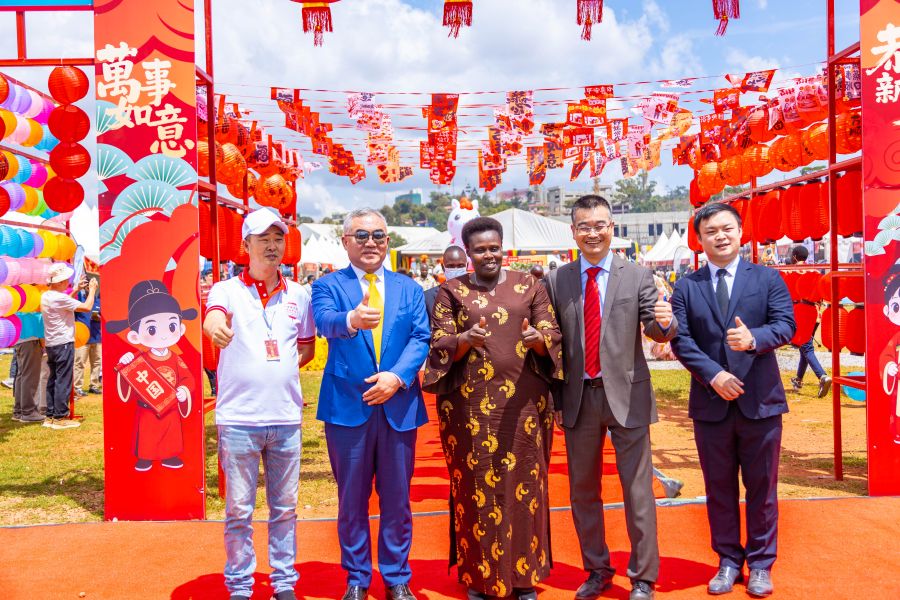
The launch of the Uganda China People to People Exchange in 2026 marks a new era for bilateral relations. Consequently, Vice President Jessica Alupo inaugurated this year long initiative at the Millennium Grounds Lugogo. She framed the project as a vital bridge between cultural understanding and economic cooperation. Previously, the decades of this partnership focused on engineering projects and loans. Now, however, the strategic shift prioritizes human connections. This evolution helps sustain long term trade. Furthermore, it ensures that the social fabric of both nations remains strong. Uganda and China are signaling a move toward an integrated economic union. Ultimately, the future of their strategic cooperative partnership depends on mutual literacy and shared values.
A central objective of the Uganda China People to People Exchange is the correction of the trade imbalance. Therefore, the initiative integrates Ugandan producers directly into the vast Chinese marketplace. This project arrives at a critical moment for the region. For example, Beijing recently granted Uganda 100 percent zero tariff treatment on exports. Vice President Alupo believes this exchange year will catalyze local business growth. In particular, the agricultural sector already shows great promise. Recent milestones include the launch of aquaculture exports and expanded coffee trade. As a result, Ugandan companies now establish direct links with Chinese firms. This shift provides a substantial boost to the national economy. These developments prove that cultural exchange and economic prosperity work together. Thus, Ugandan entrepreneurs now have a platform to thrive in an accessible global market.
Similarly, the Belt and Road Initiative remains essential to the Uganda China People to People Exchange success. Infrastructure projects led by Chinese firms have already transformed Uganda. For instance, the Kampala Entebbe Expressway and the Karuma hydropower plants turned a landlocked nation into a land linked hub. However, the 2026 initiative goes further. It also enhances the education sector through new scholarships. Meanwhile, the ideological ties between the National Resistance Movement and the Chinese Communist Party continue to grow. Benchmarking programs in China allow local leaders to study effective governance practices. This unified front extends to the global stage as well. Consequently, Uganda relies on Chinese support to reform the United Nations Security Council.
Economic data from the past year reinforces the Uganda China People to People Exchange framework. Specifically, Ugandan exports to China surged to 84 million dollars in the first half of 2025. This clear indicator shows that zero tariff policies yield results. In addition, Fan Xuecheng noted that the Chinese market remains hungry for Ugandan agricultural products. Chinese led industrial parks continue to generate thousands of local jobs. These industrial hubs serve as sites of cultural and professional intersection. Moreover, Paul Zhang of the Tian Tang Group emphasizes that manufacturing requires mutual understanding. Cultural festivals and temple fairs facilitate these important heart to heart connections. Therefore, the initiative ensures that the human element of production remains a top priority.
The Uganda China People to People Exchange also emphasizes vocational training and language literacy. For instance, the Confucius Institute plays a pivotal role in fostering technical expertise. Many Ugandan students now pursue advanced degrees in China. Similarly, Chinese students seek academic experiences within Uganda. This academic reciprocity builds a foundation of trust for future generations. Additionally, the Year of the Horse symbolizes action and resilience for both nations. Leadership recently signed commemorative symbols to reaffirm their commitment to a shared future. They believe economic gaps close through the power of cultural and educational collaboration.
In conclusion, the Uganda China People to People Exchange represents a maturation of international diplomacy. Infrastructure provides the skeleton of a partnership but people to people bonds provide the lifeblood. Uganda and China are building an all weather community through youth and education. Additionally, the initiative blends traditional celebrations with modern economic goals. This creates a holistic approach to national development. As the 2026 exchange year progresses, the focus remains on deepening these connections. Both nations want to ensure the partnership remains beneficial for their populations. Finally, this vision of prosperity sets a new standard for Global South solidarity.
READ: Kamuli Police Killings Spark Investigation and Outrage