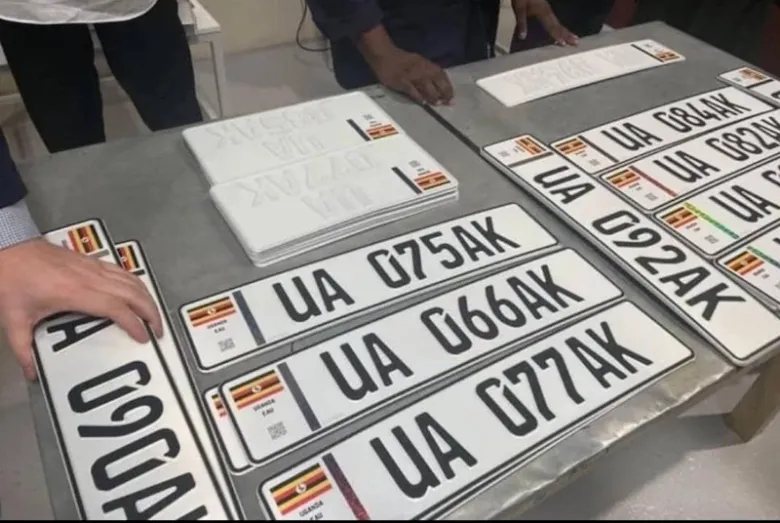
The digital number plate backlog that frustrated motorists and vehicle dealers in Uganda has been cleared, according to information presented by the Ministry of Works and Transport to Parliament.
The improvement marks a significant turnaround for a programme that had faced complaints over plate shortages, long waiting periods and difficulties completing vehicle registrations.
Government figures show that the average time needed to register a vehicle and fit a digital number plate at Kampala vehicle bonds fell from 19 days in December 2025 to just two days in September 2026.
At the same time, authorities say the digital registration system has contributed to improved compliance and stronger revenue collection. During the first financial year in which digital registration plates were implemented, tax collections increased by 17%, while overall government revenue rose by 16.4%, according to the Ministry report presented to Parliament.
Digital Number Plate Backlog Cleared After Months of Delays
The digital number plate backlog had become one of the main concerns surrounding Uganda’s Intelligent Transport Monitoring System, or ITMS.
Earlier in 2026, motorists, vehicle dealers, clearing agents and other industry players complained about delays in obtaining plates. The Ministry of Works and Transport acknowledged those problems in July and described the delays as unacceptable.
The ministry subsequently announced measures including an assessment of the contractor’s production capacity, investigations into delayed plate issuance, improved communication with stakeholders and a review of registration procedures.
According to the latest report presented to Parliament, shortages of components used to manufacture and install the digital plates had been resolved by August.
The backlog was also cleared during that month.
Commissioner for Transport Regulation and Safety Winston Katushabe told lawmakers that conditions had improved considerably, although he acknowledged that occasional system-related problems could still occur.
Registration Time Falls From 19 Days to Two
One of the clearest signs of improvement is the amount of time motorists now spend waiting for registration.
In December 2025, vehicles processed through Kampala bonds waited an average of 19 days before receiving their digital plates.
By July 2026, the average registration and installation period had fallen to around six days.
In September, it dropped further to two days.
The number of cases completed within two calendar days has also risen considerably. Around 33% of cases were completed within that period in July, compared with 72% in September.
At border points, processing is reportedly even faster. Vehicles entering Uganda through the Malaba and Mutukula One Stop Border Posts can now have digital plates installed in approximately three hours, according to the government report.
For vehicle buyers and dealers, faster processing could mean less time with newly imported vehicles sitting in bonds while registration is being completed.
Digital Number Plate Backlog Had Put Pressure on Vehicle Dealers
The progress comes after months of pressure from businesses operating in Uganda’s motor vehicle industry.
Vehicle dealers and clearing agents had warned that shortages of plates were preventing vehicles from leaving bonds even after the necessary taxes had been paid.
Parliament’s Committee on Physical Infrastructure launched an investigation into the programme in September after receiving complaints from industry stakeholders.
At the time, lawmakers heard claims that difficulties with the digital plate programme were contributing to government revenue losses estimated at more than Shs4 billion per week.
Stakeholders argued that vehicles remaining in storage because of registration delays affected more than individual motorists. Dealers had capital tied up in vehicles they could not deliver, while slower sales reduced economic activity associated with transport, vehicle imports and related services.
The latest figures suggest that at least the backlog component of that problem has now been substantially addressed.
Government Revenue Rises 16.4%
The government is also pointing to stronger revenue performance as one of the benefits associated with the digital registration system.
According to information presented to Parliament, tax revenue increased by 17% during the first financial year in which digital plates were implemented.
Overall government revenue increased by 16.4%.
The Ministry attributed part of that increase to stronger compliance enforcement made possible by requiring digital registration plates for motor vehicles declared by clearing agents.
Connecting registration information more closely with vehicle declarations can make it easier for authorities to identify inconsistencies and ensure that vehicles moving through the registration process have complied with applicable requirements.
The Uganda Revenue Authority has separately been strengthening digital controls around vehicle identification. In September, URA introduced enhanced ASYCUDA validation requirements intended to improve the accuracy of vehicle plate information used during Customs processing.
Digital Number Plates Are Also Being Used in Police Investigations
Revenue collection is only one part of the digital plate programme.
The system was designed to give authorities improved tools for vehicle identification and tracing.
Government officials told Parliament that police have already used the digital system in investigations involving stolen motorcycles and other property.
The technology can help investigators trace registered vehicles or motorcycles when their information becomes relevant to an investigation.
That capability has been one of the government’s main arguments for replacing conventional registration plates with digitally connected alternatives.
However, implementation has remained under parliamentary scrutiny, particularly over costs, reliability and whether the programme is delivering sufficient value to motorists and taxpayers.
Questions About the Digital Number Plate Programme Remain
Clearing the digital number plate backlog does not mean every concern surrounding the programme has disappeared.
Parliament’s Physical Infrastructure Committee has continued examining the implementation of the system.
Recent hearings have focused on plate production capacity, installation equipment, costs and the decline in plate issuance recorded earlier in the year.
Separate concerns have also emerged over what motorists are charged during the registration process.
Authorities recently identified cases in which some intermediaries were allegedly charging motorists above the official cost of a new digital registration plate. The gazetted price for a new vehicle digital plate is Shs714,300.
That means improvements in production will need to be accompanied by transparency and consistent enforcement if motorists are to fully feel the benefits of faster registration.
What the Improvement Means for Motorists
For an ordinary motorist buying or importing a vehicle, the most noticeable change should be shorter waiting times.
A process that once took weeks at some Kampala vehicle bonds is now averaging about two days, according to the Ministry’s figures.
Dealers may also be able to release vehicles faster, reducing the time vehicles remain tied up in storage while waiting for registration.
Meanwhile, faster processing at border points could help improve the flow of newly imported vehicles into Uganda’s registration system.
The improvement is particularly important because plate availability had become a bottleneck affecting several parts of the motor vehicle trade.
Digital Number Plate Backlog Progress Faces Continued Parliamentary Scrutiny
The clearing of the digital number plate backlog represents a major operational improvement for Uganda’s digital vehicle registration programme.
Moving average registration and fitment times from 19 days in December 2025 to around two days in September 2026 is a significant change for motorists and dealers who had experienced lengthy delays.
Government’s reported 16.4% increase in overall revenue and 17% growth in tax collections also provides an indication of the broader financial benefits authorities associate with improved registration and compliance systems.
Still, Parliament’s continuing investigation means attention will now shift from simply clearing the backlog to whether the programme can maintain reliable supplies, keep processing times low, prevent overcharging and demonstrate long-term value.
For motorists, the real test will be whether the current two-day registration performance becomes the normal experience rather than a temporary improvement.