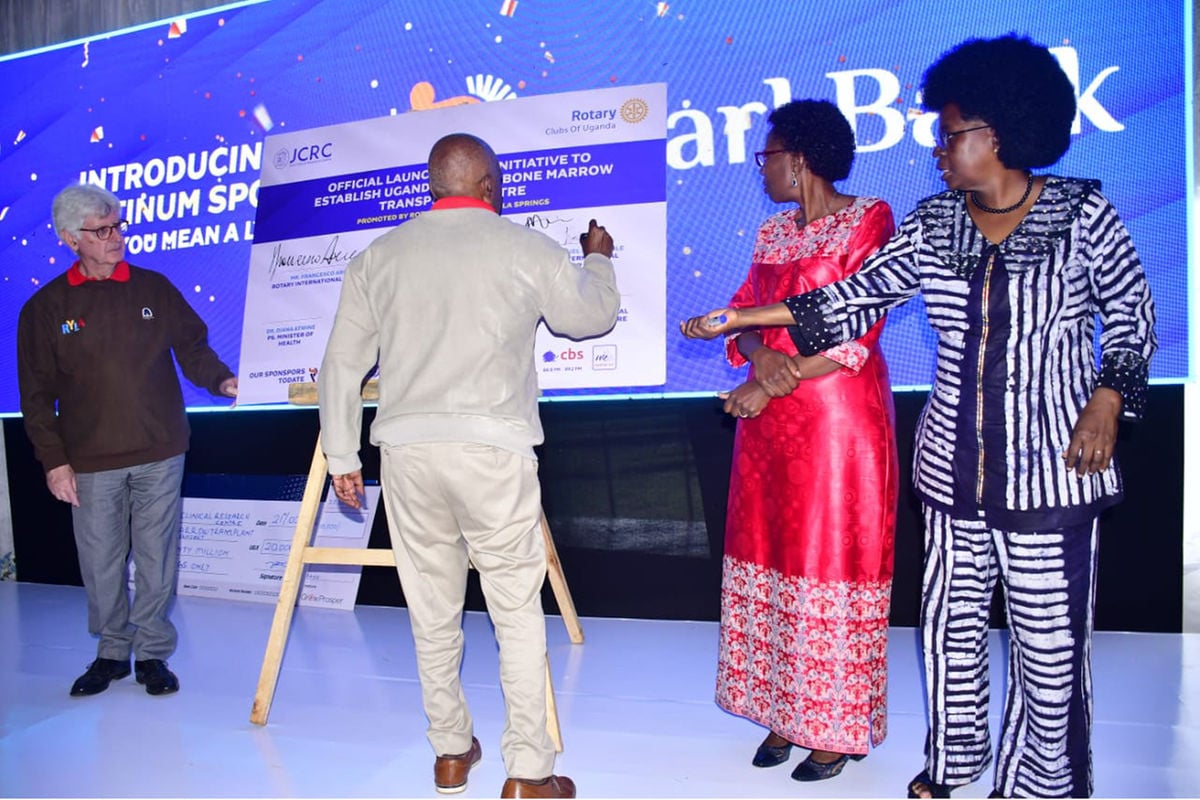
Rotary International now champions bone marrow transplant Uganda efforts through a new fundraising initiative. Consequently, the organization accepted leadership in mobilizing resources. Specifically, this supports the country’s first transplant unit. Furthermore, the facility operates at the Joint Clinical Research Centre. This location is in Wakiso District. Thus, patients with blood disorders access life-saving treatment locally. Moreover, this partnership demonstrates effective collaboration. Global organizations meet national health priorities. Indeed, the impact will be significant. In addition, community trust grows through transparency. Therefore, sustainable health solutions become possible.
Rotary’s Commitment to bone marrow transplant Uganda Fundraising
Rotary International President Francisco Arezzo commended Uganda’s collaborative approach. He noted this strategy aligns with Rotary Foundation grants. Specifically, community partnerships strengthen global grant applications. Therefore, approval processes become more efficient. Moreover, corporate institutions have already contributed funds. Banks and insurance companies support this vital initiative. Additionally, community participation signals strong public trust. Hence, Rotary can confidently endorse this project. The organization views this model as replicable. Ultimately, sustainable funding ensures long facility operation. In fact, this approach sets a new standard. Similarly, other nations may adopt this framework. Consequently, global health security improves significantly.
Medical Benefits of bone marrow transplant Uganda Unit
Bone marrow transplant treats multiple serious diseases. Notably, this procedure is also called cell therapy. Furthermore, it has cured nine HIV/Aids patients. Over 32 medical professionals received specialized training. Consequently, additional funding will expand this critical program. Sickle cell disease affects one percent of the population. Approximately 20,000 children are born with this annually. Therefore, eligible patients urgently need transplant services. This unit will provide comprehensive care. Post-transplant monitoring becomes significantly more accessible. Thus, survival rates improve substantially. Medical experts emphasize early intervention enhances success. Likewise, local treatment reduces travel costs. In particular, rural families benefit from proximity. Hence, economic burdens decrease for vulnerable households.
Funding Targets and Current Contributions
The facility requires $4 million to commence operations. To date, donors have contributed $1.34 million. Specifically, these funds covered essential infrastructure preparations. Moreover, ongoing fundraising aims to bridge the financial gap. Rotary International’s involvement accelerates donor confidence. Consequently, corporate partners are more likely to commit resources. Additionally, individual donors respond positively to transparent goals. Therefore, the campaign targets diverse contribution levels. Every donation directly supports equipment procurement. Hence, progress remains measurable and accountable. Ultimately, reaching the target ensures timely completion. In addition, funds support staff training programs. Meanwhile, financial audits ensure proper fund usage. Thus, donor trust remains intact throughout the process.
National Health Strategy and Future Expansion
Health Minister Dr. Ruth Aceng highlighted strategic importance. When operational, post-transplant care becomes accessible nationally. Furthermore, the government plans a second unit. This expansion addresses growing demand for specialized treatments. Specifically, sickle cell patients require timely interventions. Therefore, decentralized services reduce travel burdens. Additionally, local capacity building strengthens health system resilience. Consequently, medical tourism potential increases for regional patients. The ministry emphasizes preventive care alongside treatment. Thus, comprehensive strategies improve population outcomes. Ultimately, these services represent a national priority. Meanwhile, international partners continue to offer support. In fact, regional collaboration enhances medical expertise. Therefore, bone marrow transplant Uganda services expand further.
Conclusion on bone marrow transplant Uganda Project
Rotary International’s leadership catalyzes transformative development. The organization’s global network amplifies local fundraising. Moreover, community engagement fosters sustainable project ownership. Therefore, the unit exemplifies successful public-private partnership. Medical advancements directly benefit vulnerable populations. Furthermore, trained professionals strengthen national healthcare capacity. Consequently, Uganda advances toward universal health coverage. The Joint Clinical Research Centre serves as an innovation model. Hence, continued collaboration ensures lasting impact. Ultimately, this initiative saves lives and restores hope. The commitment reflects shared humanitarian values. Rotary’s involvement guarantees rigorous oversight. Therefore, donors can trust their contributions. This project demonstrates how partnerships address health gaps. Ultimately, every child deserves accessible treatment. The bone marrow transplant Uganda unit makes this vision achievable. Finally, the region benefits from improved health security. In conclusion, collective effort drives meaningful change.
READ: Police Bust passport fraud Soroti Ring, Seize 261 Passports