Uganda Billionaire Fortunes now exceed $10 billion, a figure that highlights how deeply private wealth is shaping a $65 billion frontier economy. While Uganda’s stock market remains relatively small, asset-backed fortunes have expanded rapidly through property, petroleum distribution, manufacturing and telecom equity.
In this structure, the Uganda Billionaire Fortunes story is not about listed portfolios but about tangible assets. Commercial real estate, industrial plants, fuel networks and strategic land holdings form the backbone of valuation. As a result, capital accumulation has moved faster than capital market development, concentrating significant economic influence within a small circle of private asset holders.
Uganda’s Economic Context and Wealth Concentration
Uganda’s nominal GDP stands at roughly $65 billion, according to World Bank data (https://data.worldbank.org/country/uganda). However, per capita income remains near $1,070, and a large share of economic participation still occurs within informal sectors.
Against this backdrop, the top 15 members of the Uganda Billionaire Fortunes ranking collectively control an estimated $10.3 billion. That equals nearly one-sixth of national output. For a frontier economy of Uganda’s scale, this concentration is material and structurally significant.
This wealth is not abstract. It is anchored in buildings, factories, distribution channels and equity stakes. Ownership of income-producing assets remains the primary multiplier.
Real Estate as the Core Wealth Engine
Commercial property remains the dominant driver behind most Uganda Billionaire Fortunes. Kampala’s central business district, where land scarcity intersects with dense retail activity, serves as a valuation engine.
Developers such as Hamis Kiggundu have built high-density commercial complexes and mixed-use towers across strategic corridors. His estimated fortune of about $1.35 billion reflects reinvestment through successive construction cycles, land banking and early-stage industrial infrastructure projects.
Similarly, John Bosco Muwonge, Drake Lubega, Mansour Matovu and Haruna Ssentongo represent a rent-intensive class of CBD landlords. Their portfolios rely on:
Prime land positioning
High tenant occupancy
Continuous rental turnover
Long-term lease stability
Because commercial land in Kampala appreciates steadily, these assets provide recurring income and capital preservation. This explains why property remains the single largest anchor within the Uganda Billionaire Fortunes landscape.
Conglomerate Diversification Beyond Property
Not every fortune is purely land-driven. Some members of the Uganda Billionaire Fortunes ranking operate diversified conglomerates.
Sudhir Ruparelia, estimated at around $1.2 billion, controls hospitality, education, insurance and floriculture through the Ruparelia Group. Hospitality assets such as Speke Resort Munyonyo generate operational revenue, though they remain sensitive to tourism cycles and exchange rate movements.
Karim Hirji blends hospitality with automotive distribution and commercial property under the Dembe Group. His Imperial Hotels portfolio anchors tourism exposure, while Cham Towers stabilizes valuation through rental income.
Godfrey Kirumira offers a hybrid distribution-driven model. Petroleum retail provides steady liquidity, which he reinvests into real estate, telecom infrastructure and manufacturing. Unlike property-only magnates, his wealth structure begins with operational cash flow.
Industrial and Equity-Based Wealth Models
A smaller segment of Uganda Billionaire Fortunes is driven by industrial production and corporate equity.
Amos Nzeyi’s Crown Beverages Limited, the Pepsi bottler in Uganda, represents manufacturing-led capital formation. Production scale, market share and consumer demand define his valuation more than land appreciation alone. Food processing and hospitality add diversification.
Ahmed Omar Mandela built a vertically integrated system around City Oil, Café Javas and agro-processing operations. Petroleum distribution supplies liquidity, while milling captures downstream industrial value.
Charles Mbire stands apart with an equity-driven model. As one of the largest individual shareholders in MTN Uganda, his wealth fluctuates with corporate performance, dividends and market pricing. His structure contrasts sharply with asset-heavy landlords and reflects exposure to capital market performance (Uganda Securities Exchange: https://use.or.ug).
Infrastructure and Telecom Expansion
Telecommunications and energy liberalization also contributed to the rise of Uganda Billionaire Fortunes.
Patrick Bitature leveraged telecom distribution through Simba Telecom before expanding into power generation via Electro-Maxx. Energy infrastructure offers stability but introduces regulatory sensitivity.
Tom Kitandwe similarly transitioned from trade-based capital formation into commercial property before adding agribusiness and telecom-linked investments. This layered expansion reflects a broader trend: reinvesting early trading profits into durable, income-producing assets.
Structural Implications for Uganda’s Economy
The scale of Uganda Billionaire Fortunes reflects structural realities rather than anomalies. Tangible assets compound more rapidly than wages in an economy where ownership remains concentrated.
Urbanization amplifies this effect. As Kampala expands, transport corridors intensify and retail density increases, CBD property values rise further. Land acquired decades ago multiplies in value, reinforcing concentration.
The critical issue is not the existence of wealth but the mechanics of its generation. Capital formation occurs primarily through:
Control of prime urban land
Ownership of distribution networks
Industrial production scale
Strategic corporate equity stakes
These drivers create high entry thresholds. Access to financing, regulatory approvals and scale-based advantages limit broader participation in asset appreciation cycles.
The Future of Uganda Billionaire Fortunes
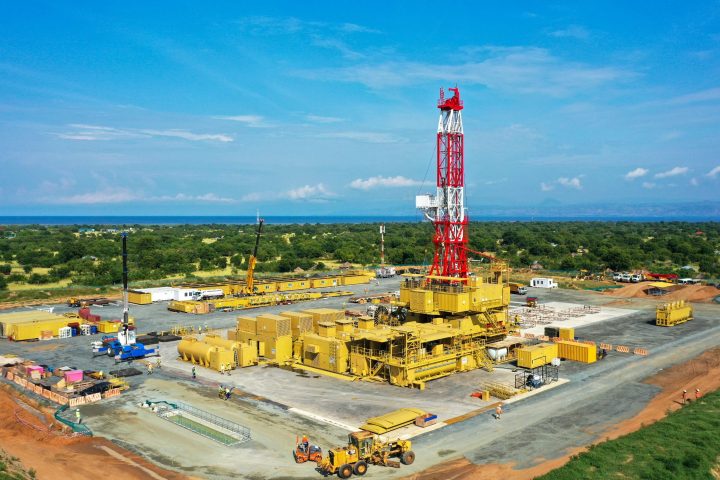
As Uganda moves toward commercial oil production and deeper digital finance adoption, the architecture of the Uganda Billionaire Fortunes ecosystem may evolve. Industrial scaling and fintech integration could gradually diversify wealth structures beyond property concentration.
However, if commercial land and distribution dominance remain central, capital consolidation could deepen. The direction Uganda takes will shape not only its skyline but also its long-term economic inclusivity.
For further insights, see our related analysis on Kampala Real Estate Trends and our review of Emerging East African Economies.
Ultimately, Uganda Billionaire Fortunes illustrate how private capital can expand faster than formal markets in a frontier economy. Asset ownership remains the defining lever of influence, and its distribution will determine how broadly future growth is shared.