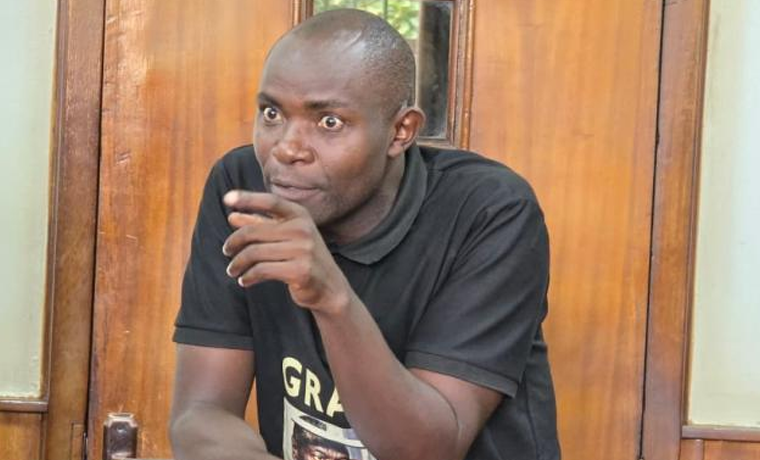
Male Mabirizi bail application has triggered strong opposition from the State at Buganda Road Chief Magistrate’s Court. Prosecutors argue that the lawyer failed to meet key constitutional bail requirements. They insist that he did not satisfy rules on identification, residence, and surety qualification.
Chief State Attorney Richard Birivumbuka told court that the prosecution does not block the right to seek bail. However, he stressed that every applicant must meet mandatory standards under the Constitutional Bail Guidelines. He argued that the Male Mabirizi bail application lacks proper proof of identity.
Birivumbuka said Mabirizi did not submit a national identity card, passport, or any valid identification document. He described that omission as fatal to the application. He also criticized a Local Council introduction letter presented in court. According to him, the letter lacked a photograph and did not confirm a fixed residence.
The State maintains that these gaps raise the risk of absconding. Prosecutors argued that the court must verify identity and residence before granting bail. They warned that uncertainty creates enforcement challenges if the accused fails to return to court.
The Male Mabirizi bail application comes after the lawyer spent about 24 days on remand. He faces four counts under the Computer Misuse Act. Prosecutors accuse him of publishing malicious information and hate speech on TikTok. The alleged posts targeted Chief Justice Flavian Zeija and Court of Appeal Justice Musa Ssekaana. Mabirizi denies all charges.
Birivumbuka also asked the court to consider Mabirizi’s past imprisonment. He said the lawyer previously served more than a year at Luzira Prison. According to the State, courts must assess an applicant’s antecedents when deciding bail. Prosecutors argued that past conduct may affect credibility and reliability.
The State further questioned Mabirizi’s claim that he serves as a civil servant activist. Birivumbuka said no evidence supports attachment to any organization. He also criticized Mabirizi’s admission that he does not hold a passport. He described this as irresponsible or deceptive.
Prosecutors suggested that the applicant might use the bail process to escape justice. They insisted that the court must weigh the risk of absconding carefully. The Male Mabirizi bail application, they argued, fails to remove that risk.
The State also challenged the proposed sureties. Birivumbuka objected to lawyer Nasser Kibazo standing as surety. He noted that Kibazo earlier appeared as counsel for Mabirizi. He described that dual role as unprofessional and a conflict of interest.
Prosecutors added that some sureties presented expired identification documents. They also questioned their financial ability and fixed residences. According to the State, substantial sureties must prove stable income and clear identification. They argued that biological relationships alone do not guarantee reliability.
Birivumbuka further raised concerns about Mabirizi’s social media activity. He described him as a habitual online user. He warned that unrestricted access to digital platforms could affect witnesses or investigations. Prosecutors claimed that Mabirizi has shown repeated disrespect toward judicial officers.
Defence lawyer Obadiya Kamukama rejected those claims. He argued that the charge sheet already lists the applicant’s full details. He asked how the State could prosecute someone whose identity it claims not to know and insisted that expiry of a national ID does not cancel citizenship.
Kamukama also dismissed the requirement to prove a surety’s financial status. He said no law demands that proof. He argued that a surety’s character does not determine whether an accused person attends court. According to him, the Male Mabirizi bail application meets constitutional standards.
Addressing the court directly, Mabirizi denied being a convict. He said his prior imprisonment arose from civil contempt proceedings, described that matter as non-criminal in nature and added that the decision remains under appeal.
Mabirizi also rejected claims that his internet use threatens investigations. He said the State presented no evidence to show interference. He stressed that no law forces a citizen to hold a passport. In his view, the objections rely on speculation rather than proof.
Chief Magistrate Ritah Neube Kidasa adjourned the case to March 6. The court will rule on the Male Mabirizi bail application and mention the main case on that date. Until then, Mabirizi remains on remand.
The case has drawn national attention because it involves senior judicial officers and alleged online speech. It also highlights growing debate around digital expression and the Computer Misuse Act. The upcoming ruling will clarify how courts balance constitutional bail rights with prosecutorial concerns.