The Ant Smuggling Kenya case has drawn fresh attention to a growing form of wildlife trafficking after authorities caught a man carrying more than 2,200 live ants at Nairobi’s main airport. The unusual seizure highlights a rising black market in insects that conservation experts say could threaten fragile ecosystems.
Authorities arrested 27-year-old Chinese national Zhang Kequn at Jomo Kenyatta International Airport earlier this week as he attempted to leave Kenya. Court filings show that immigration officers flagged his passport because a stop order had been issued after he allegedly evaded arrest in the country last year.
Consequently, the incident has intensified scrutiny around Ant Smuggling Kenya, which investigators now believe may involve organised trafficking networks. Wildlife authorities say the growing demand for rare insects has created a new frontier for wildlife crime.
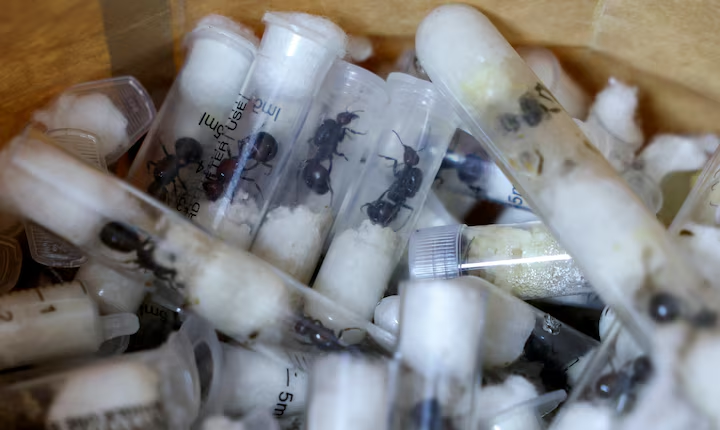
During a search of Zhang’s luggage, investigators recovered 2,238 live ants. Officers counted 1,948 insects packed inside test tubes. Meanwhile, traffickers had hidden the remaining ants in three rolls of soft tissue paper.
The discovery immediately raised alarm among conservation authorities. Kenya Wildlife Service officers told the court that traffickers had concealed the insects in ways meant to avoid detection. As a result, the seizure has become one of the most unusual wildlife crime cases recorded in recent years.
Although ant trafficking may seem minor compared with ivory smuggling, experts warn that the ecological risks remain serious. Insects such as garden ants support soil health and maintain ecosystem balance. Therefore, removing them in large numbers can damage local biodiversity.
However, collectors around the world willingly pay large sums for rare ant species. Hobbyists maintain colonies inside transparent containers called formicariums. These containers allow enthusiasts to observe the social structures and behaviour of ant colonies.
Because of this niche market, Ant Smuggling Kenya has begun attracting more attention from investigators and environmental experts. Specialists say traffickers have started shifting their focus from iconic wildlife trophies to smaller species.
For instance, authorities last year fined four men $7,700 each after catching them trying to traffic thousands of ants from Kenya. At the time, conservationists warned that the case signalled an emerging pattern in wildlife crime.
Now, the arrest of Zhang Kequn suggests that traffickers may be expanding these operations. Investigators say Zhang spent roughly two weeks in Kenya before officers arrested him at the airport.
During questioning, Zhang reportedly mentioned three accomplices who supplied the ants. Consequently, investigators suspect that the Ant Smuggling Kenya case may involve a wider network operating within the country.
Authorities also seized electronic devices belonging to the suspect. Kenya Wildlife Service officers recovered an iPhone and a MacBook during the arrest.
Investigators plan to examine these devices to uncover communication records and transaction data. Such information could reveal how the trafficking network operates.
Meanwhile, prosecutors told the court that investigators need additional time to complete the inquiry. Digital forensic teams must analyse the seized devices before authorities can determine the full scope of the operation.
The investigation has gained further urgency because officials recently intercepted another shipment of ants abroad. Wildlife authorities confirmed that officials seized a similar consignment in Bangkok earlier this week.
According to investigators, that shipment originated from Kenya. Consequently, officials now suspect the presence of an organised international trafficking chain linked to Ant Smuggling Kenya.
Environmental experts say insects often receive little attention in conservation debates. Yet these species perform essential roles in natural ecosystems. Ant colonies aerate soil, recycle nutrients, and support plant growth.
Therefore, large-scale removal of ants from natural habitats can weaken ecological systems. In some situations, such disruptions may even affect agriculture and surrounding biodiversity.
Because of these risks, wildlife agencies have increased monitoring of insect trafficking. Authorities now recognise that wildlife crime continues to evolve beyond traditional targets such as ivory and rhino horn.
Kenya enforces strict conservation laws that protect species considered vital to the country’s ecosystem. Therefore, investigators continue to treat the Ant Smuggling Kenya case as a serious wildlife crime.
The case also highlights how global collectors increasingly seek rare insects for private collections. As demand grows, traffickers continue to search for new species that can fetch high prices on international markets.
For now, investigators remain focused on uncovering the network behind the seized insects. Authorities hope the ongoing investigation will expose those who organise and profit from the illegal trade.
Ultimately, the Ant Smuggling Kenya investigation shows that wildlife trafficking can target even the smallest species. However, its environmental impact can still be significant.