Arsenal Most Likely to win became the feeling at half-time after Kai Havertz’s early goal gave Mikel Arteta’s side a 1-0 lead over Paris Saint-Germain in the Champions League final.
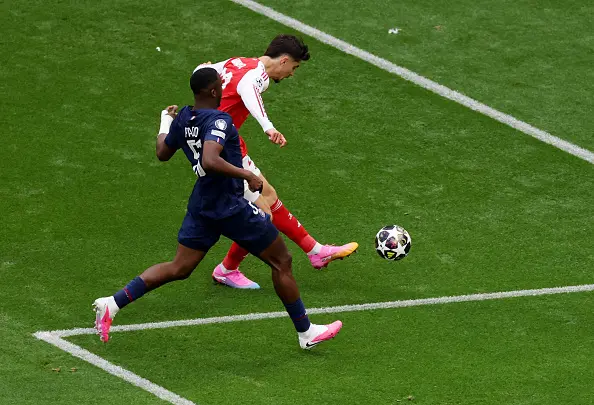
Arsenal started with purpose, energy, and belief. Within six minutes, they had their reward as Havertz produced a brilliant effort under pressure from Marquinhos to put the London side ahead.
From that moment, the final changed. PSG had more of the ball, but Arsenal had the better structure, sharper discipline, and stronger sense of control. At the break, the Premier League champions looked 45 minutes away from a historic first Champions League title.
Arsenal Most Likely to Win Because of Their Start
Arsenal did not wait for the game to settle. They attacked from the opening kickoff and immediately forced PSG into uncomfortable situations.
The early goal gave Arsenal a major psychological advantage. Havertz’s finish rewarded Arteta’s bold approach and gave the team a platform to manage the match on their terms.
In finals, first goals matter because they change everything. PSG suddenly had to chase, while Arsenal could defend with patience and strike when space appeared.
Havertz Gives Arsenal the Perfect Platform
Havertz has often divided opinion, but this was exactly the kind of match where his qualities mattered. He offered calm movement, intelligent positioning, and composure in the decisive moment.
His sixth-minute goal did not only put Arsenal ahead. It gave the team belief that PSG could be hurt early and rattled under pressure.
That goal also forced PSG to take more risks. The longer the game went on, the more Arsenal’s lead looked valuable because their defensive shape grew stronger with every attack they repelled.
Arsenal Most Likely Because PSG Lack Cutting Edge
PSG enjoyed more possession after falling behind, but they struggled to turn that control into clear chances. Their attacks came in waves, yet Arsenal dealt with them confidently.
William Saliba and Gabriel were calm in the heart of defence. They cleared crosses, blocked dangerous routes, and kept PSG’s forwards away from high-quality shooting positions.
David Raya had little serious work to do for most of the half. PSG’s first shot on target came late in stoppage time, when Fabian Ruiz’s effort from outside the box went straight at him.
That statistic told the story of the half. PSG had the ball, but Arsenal had the control.
Arsenal’s Defensive Masterclass Stands Out
Arteta’s side defended with intelligence rather than panic. They stayed compact, protected the central areas, and forced PSG into wide or rushed decisions.
Declan Rice helped screen the defence, while Bukayo Saka and Leandro Trossard worked hard without the ball. Arsenal’s wide players did not only wait for counterattacks. They also tracked runners and helped close spaces.
This kind of collective discipline is why Arsenal looked more likely to win at the break. They were not relying on luck. They were managing the final through organisation and concentration.
PSG Must Find Answers Quickly
PSG still have enough talent to change the match, but their first-half display raised clear concerns. They moved the ball well at times, yet their attacks lacked penetration.
Desire Doue’s shot over the bar in added time summed up PSG’s frustration. It was ambitious, but it never seriously troubled Raya.
Luis Enrique’s side need more speed, sharper passing, and better movement between Arsenal’s lines. If they continue playing in front of Arsenal’s defence, Arteta’s team will feel increasingly confident.
Arsenal Need Composure After the Break
Arsenal are in control, but they cannot relax. A one-goal lead in a Champions League final is never safe, especially against a side with PSG’s attacking quality.
Arteta will want his players to manage the second half carefully. They must avoid cheap fouls, keep their defensive line focused, and take pressure off the back four by using possession wisely.
A second goal would put Arsenal in a commanding position. However, chasing it too recklessly could give PSG the spaces they failed to find in the first half.
Arsenal Are 45 Minutes From History
At half-time, Arsenal looked like the team with the clearer plan. Havertz gave them the lead, the defence protected it, and PSG struggled to create enough danger.
The second half will test Arsenal’s nerve, stamina, and decision-making. But based on the first 45 minutes, Arsenal looked most likely to win because they combined attacking sharpness with defensive maturity.
If Arteta’s side maintain that balance, they could be closing in on one of the greatest nights in the club’s history.