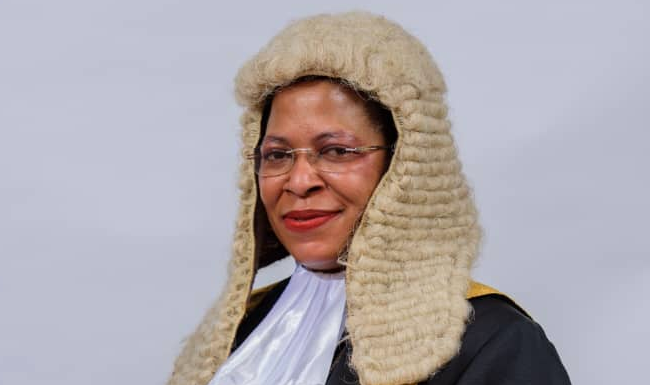
In modern governance, performance is measured not only by policies passed or infrastructure built, but by whether citizens can understand how government decisions affect their daily lives. As public debate increasingly shifts to digital spaces where claims can spread faster than official clarification, the role of government communication has evolved into a form of public service in itself. In Uganda, Marcella Karekye, Senior Presidential Assistant for Communications and Director of the Government Citizen Interaction Centre, works at the intersection of state systems and public expectation, helping translate complex institutional processes into information citizens can question, verify, and engage with.
On March 23, 2022, inside a radio studio in Kampala, conversation moved the way it often does on live afternoon radio: lightly structured, occasionally chaotic, held together by humor and familiarity. The segment was Ka Blue Chair, part of The Urban Edge on Power 104.1 FM, hosted by John Nkore and Laura Grace. The tone was informal. The subject was not.
Marcella Karekye, measured in speech and deliberate in phrasing, was introduced with titles that sounded administrative, almost distant: Executive Director of the Government Citizen Interaction Centre, and Vice Chairperson of the Government Communication and National Guidance Taskforce. But as the conversation unfolded, the work she described felt less bureaucratic than interpretive. It was about explaining how power moves through systems, and how systems appear to citizens who rarely see what happens inside them.
“I don’t have the easiest job,” she said at one point, describing a communications environment she encountered as already saturated with distrust, competing narratives, and public frustration. She spoke of entering a space she considered volatile, where correcting misinformation often meant responding to stories that had already hardened into public belief.
For Karekye, communication is not framed as messaging or image management. It is, in her description, closer to translation: converting institutional process into language citizens can understand, question, and evaluate for themselves.
A childhood shaped by departure and return
Karekye’s early life story, as she has described it publicly, begins outside Uganda. She was born in Kenya during a period when her family was living in exile. She returned to Uganda as a young child, at an age when memory tends to record impressions rather than chronology.
She has described the return as both practical and symbolic. The family initially stayed in temporary accommodation while searching for permanent housing, before eventually settling in Kampala. The experience, in her telling, was less about displacement and more about re-entry: learning to belong again to a place she would later describe as home.
Her education followed a path through some of Uganda’s most historically influential academic institutions. She attended Kampala Parents School for primary education, later joining St. Mary’s College Namagunga for secondary school, and King’s College Budo for advanced level studies. She has described these schools as academically demanding and structurally disciplined, environments that emphasized not only performance but behavioral structure.
In interviews, she has spoken about growing up alongside siblings, including one sister and two brothers, in what she has characterized as a family environment oriented toward education and professional direction.
Learning how information is built
Karekye later studied publishing at Oxford Brookes University in the United Kingdom. She has described publishing not as separate from journalism, but as one of its structural foundations: the architecture behind how information is assembled, verified, shaped, and distributed.
She has said she initially considered journalism, but that publishing offered a broader framework for understanding information systems. Editing, design, production, and distribution are, in her framing, different expressions of the same function: organizing information so that it can be understood by the public.
The distinction would later become central to how she would describe government communication, not as persuasion, but as structured explanation.
Editing as professional discipline
Before entering public sector communication, Karekye worked in publishing. She has described working as an editor at Fountain Publishers in Kampala, where the work centered on manuscript editing, production preparation, and publication coordination.
She later participated in a professional exchange connected to the World Bank’s Office of the Publisher. According to her description, the experience involved editorial collaboration and exposure to institutional publishing processes, including preparation and dissemination of policy and development reports across international networks.
The experience appears to have shaped how she understands institutional communication: structured, layered, and often slower than public expectation, but designed to ensure accuracy across multiple stakeholders.
Entering government communication during a period of public skepticism
Karekye has described her transition into government communication as occurring during a period of high public scrutiny and rapid digital information flow. In interviews, she has spoken about encountering an environment where public grievances circulated quickly, while institutional responses often required verification across multiple departments.
She has acknowledged institutional challenges, including corruption and inefficiencies, while also emphasizing structural pressures: resource constraints, demographic pressures, and the complexity of multi-agency service delivery.
In her explanation, public frustration often forms not only from service delays themselves, but from the absence of clear explanations for those delays.
She has described scenarios in which public claims about service failure spread faster than institutions can verify or correct them. By the time official clarification arrives, she has suggested, public opinion may already have hardened.
GCIC as an institutional bridge
As Executive Director of the Government Citizen Interaction Centre, Karekye has described the institution as a coordination point between citizens and government service providers.
She has emphasized that GCIC does not replace service-delivery institutions. Instead, it facilitates communication between citizens and ministries, departments, and agencies by seeking verified explanations and relaying them back to the public.
In her framing, citizen complaints function as operational feedback. They help identify where service delivery is breaking down, where communication gaps exist, and where institutional processes may need improvement.
Information as infrastructure
One of Karekye’s most consistent arguments is that information should be treated as part of governance infrastructure rather than as an afterthought or communications exercise.
She has linked public trust to public visibility: the extent to which citizens can see how decisions are made, how budgets are allocated, and how services move from policy to implementation.
She has also described the economic and social constraints that shape public service delivery, including competing infrastructure demands, limited fiscal space, and demographic realities.
Her position, as she has articulated it, is not that citizens should not question government, but that public debate is stronger when it is grounded in verifiable information.
The digital pressure on state credibility
Karekye has repeatedly described the digital information environment as fundamentally altering how governments are judged. In her view, the speed of public conversation now exceeds the speed of institutional verification.
In that environment, communication becomes less about messaging and more about maintaining institutional credibility in real time.
Private reading, public logic
Karekye has spoken about reading investigative fiction and espionage-style novels, particularly narratives built around hidden systems and layered motivations. While personal, the preference mirrors her professional framing: institutions are rarely simple, and public understanding often depends on how effectively hidden processes can be explained.
The central paradox of modern public communication
The work Karekye describes exists within a structural paradox. Citizens demand speed, clarity, and accountability. Institutions are built on verification, procedure, and multi-layered approval systems.
Her role, as she has described it, sits between those two realities: translating institutional pace into public explanation without simplifying complexity to the point of distortion.
Conclusion: The long work of explanation
In her roles within GCIC and the Government Communication and National Guidance Taskforce, Karekye operates inside systems designed to manage information flow between the state and the public.
Her public statements suggest an approach grounded less in defending institutions and more in making them legible. The goal, as she has described it, is not to present government as flawless, but to ensure citizens can see how decisions are made, where systems succeed, and where they fail.
In an era defined by accelerated information and declining institutional trust, the work she describes is slow, technical, and often invisible. But it is also foundational: the ongoing attempt to make governance understandable to the people it serves.
In the end, the work Marcella Karekye describes is not easily measured in announcements, policy papers, or public appearances. It exists in quieter moments: in the hours between a citizen’s complaint and an answer, in the distance between rumor and verification, in the slow reconstruction of trust where it has been worn thin by delay, doubt, or disappointment. Modern governance, she suggests, is no longer judged only by what governments build or fund, but by whether citizens can see the logic behind decisions that shape their daily lives. In a world where information moves faster than institutions were designed to move, the work of explanation has become its own form of public service, unfinished, often invisible, and continuously negotiated between expectation and reality.