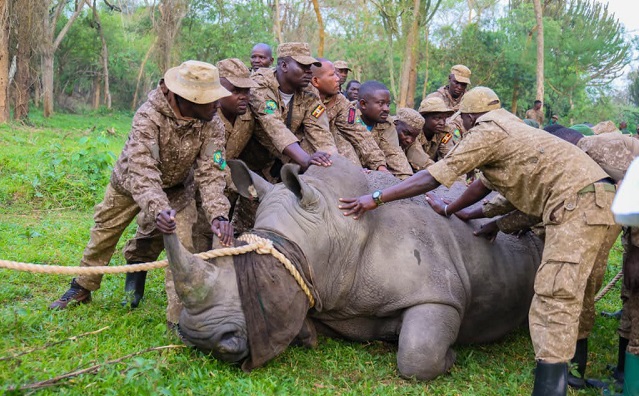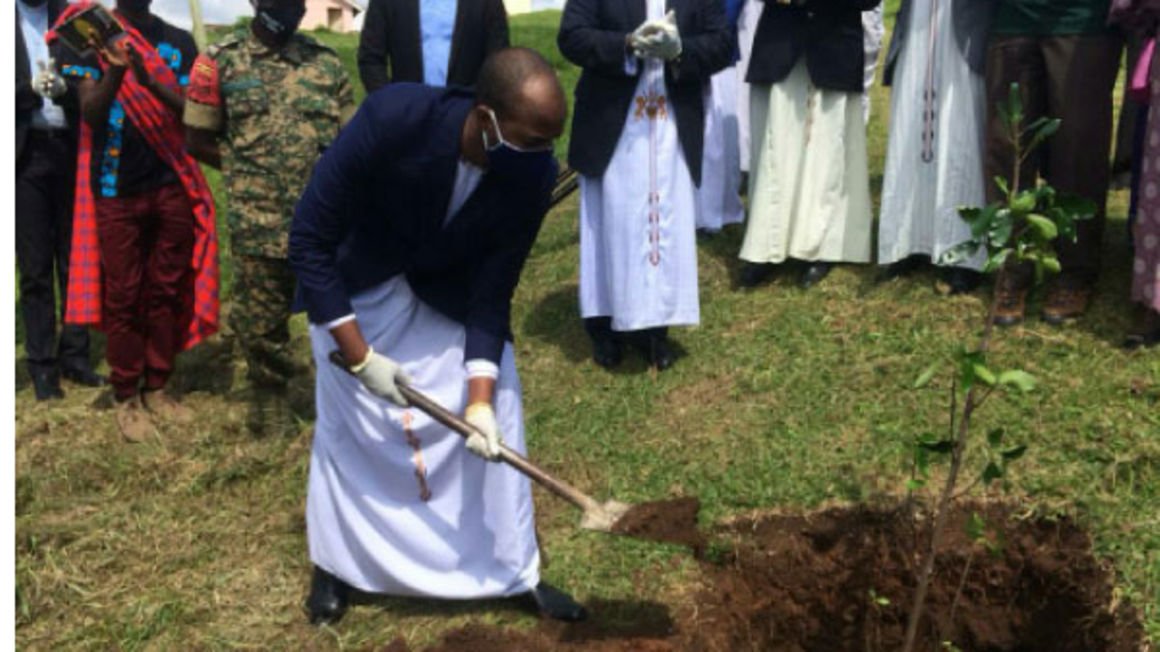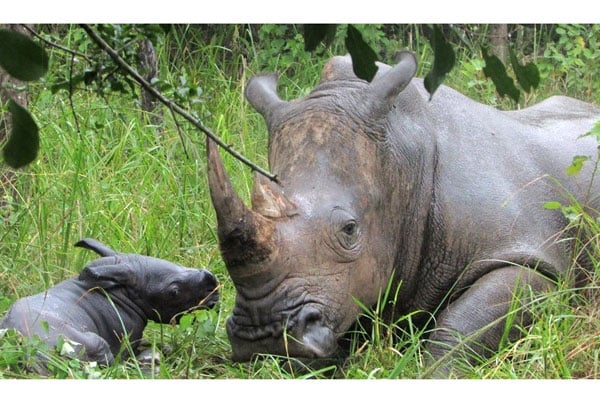
The Rhino Naming Drive has become a symbol of Uganda’s commitment to wildlife restoration, raising Shs490 million in support of rhino protection. The event, held on International Rhino Conservation Day at Ziwa Rhino Sanctuary, marked the naming of 17 southern white rhino calves. For Uganda Wildlife Authority (UWA) executive director James Musinguzi, this was not only a financial success but also a statement that rhino conservation is now irreversible.
Uganda’s rhino story has been a journey from loss to recovery. By the early 1980s, the country’s eastern black rhino had disappeared, leaving a void in the savannah ecosystem. In 2001, conservationists began reintroducing southern white rhinos, first at the Uganda Wildlife Education Centre and later at Ziwa Sanctuary. Since then, the sanctuary’s 72 square kilometres have provided a safe home, nurturing a population that has now produced 46 calves. The recent ceremony gave names to 17 of them, including Kiira, Jane Goodall, Pearl, and Ubuntu.
The Impact of the Rhino Naming Drive
According to UWA, the Rhino Naming Drive is more than an exercise in naming calves. It represents hope, resilience, and a pledge to restore a species once thought lost. This initiative has drawn wide support from business leaders, conservation partners, and international donors. Local philanthropist Sudhir Ruparelia, Sheraton Hotel, and USAID were among those recognised for their contributions.
The event’s fundraising success reflects how rhinos have become an anchor for community livelihoods. Each animal brings in tourism revenue, supports local guides, and creates opportunities for farmers and service providers who rely on conservation-driven tourism. As Musinguzi pointed out, rhinos are not only part of Uganda’s heritage but also engines of economic opportunity.
Conservation and Tourism Hand in Hand
Tourism leaders echoed these sentiments, stressing that wildlife protection directly strengthens Uganda’s global reputation. Juliana Kagwa, CEO of the Uganda Tourism Board, explained that without conservation there is no product to market. Rhinos, alongside gorillas and other iconic species, form the foundation of Uganda’s appeal to international travelers.
British High Commissioner Lisa Chesney also praised the country’s efforts, describing biodiversity as Uganda’s “superpower.” With half of Africa’s bird species and a large share of its mammals, Uganda has a natural advantage that needs strong protection. She cautioned, however, that threats like poaching, climate change, and inadequate funding still endanger wildlife survival. Her remarks underscored the need for more international cooperation in conservation efforts.
Government Strategy and Future Plans
Speaking on behalf of President Museveni, Public Service Minister Wilson Muruli Mukasa reaffirmed the government’s commitment to tourism as a pillar of economic growth. He highlighted a national strategy that positions tourism as a driver of jobs, foreign exchange, and cultural pride.
The Uganda Wildlife Authority has already developed a 10-year rhino plan that includes translocating white rhinos beyond Ziwa Sanctuary into Ajai Wildlife Reserve, Kidepo Valley National Park, and Murchison Falls National Park. These efforts, combined with educational initiatives and community engagement, are intended to ensure that rhinos thrive not just in sanctuaries but across protected landscapes.
Uganda’s Rhino Naming Drive demonstrates that conservation is about more than saving species. It is also about building livelihoods, protecting ecosystems, and inspiring pride in national heritage. As cultural leaders, conservationists, donors, and government officials joined forces at Ziwa, the message was clear: rhinos are back in Uganda, and their survival depends on a united commitment to protect them for generations to come.