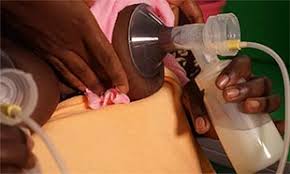
The government has set up a breast milk bank at Kawempe National Referral Hospital to help premature and vulnerable newborns. This facility, which costs Shs 200 million, aims to lower infant mortality by providing safe, nutritious milk to babies who cannot be breastfed.
A Critical Initiative for Newborn Survival
At the 2025 World Breastfeeding Month launch, Ms. Laura Ahumuza, a senior nutritionist at the Ministry of Health, stressed the importance of the new facility. The breast milk bank will help mothers who cannot breastfeed provide essential nutrients to their babies. This is vital for infant survival and growth.
“Kawempe currently registers early neonatal deaths at 45% and late neonatal deaths at 43%. These numbers are higher than other hospitals, making this a priority,” Ms. Ahumuza explained.
Addressing Nutritional Challenges in Newborns
The breast milk bank will support premature and vulnerable babies who cannot receive breast milk from their mothers. It will ensure they get the nutrients needed for healthy development.
Dr. Charles Olaro, Director General of Health Services at the Ministry of Health, explained that some newborns face unique nutritional challenges. For example, babies with cleft lip or palate may have difficulty feeding. This makes a breast milk bank essential.
Kawempe Hospital’s Role in Newborn Care
Kawempe National Referral Hospital handles many premature births and is a major hub for newborn care in Uganda. The breast milk bank will provide crucial support for these infants.
According to the Uganda Demographic Health Survey 2022, 81% of newborns are breastfed within the first hour, and 94% are exclusively breastfed for the first six months. However, challenges remain with complementary feeding after six months.
The Broader Impact of Breastfeeding
UNICEF’s country representative, Robin Nandy, highlighted the high rates of wasting and stunting in food-insecure and refugee-hosting regions. He called for nationwide action to address these gaps. Many mothers in these areas struggle to access adequate nutrition, which affects their ability to breastfeed.
Ms. Ritah Kabanyoro, Country Director of Action Against Hunger, emphasized that breastfeeding is essential for newborn protection. However, not all mothers can breastfeed due to malnutrition, stress, or difficult living conditions.
“You cannot give what you don’t have,” she said. “If a mother is malnourished, stressed, or living in challenging conditions, her ability to produce nutritious milk for her baby is greatly reduced.”
A Step Towards Closing Uganda’s Nutrition Gaps
Construction of the breast milk bank at Kawempe will begin later this year. The facility will serve as a model for other hospitals across Uganda. It aims to close the nutrition gaps for the country’s most vulnerable newborns and improve infant survival rates.
Conclusion
The breast milk bank at Kawempe Hospital is a major step forward in improving newborn care and nutrition in Uganda. This facility will provide life-saving breast milk to infants, giving them the best chance of survival. The government hopes this initiative will serve as a model for other hospitals in the country.