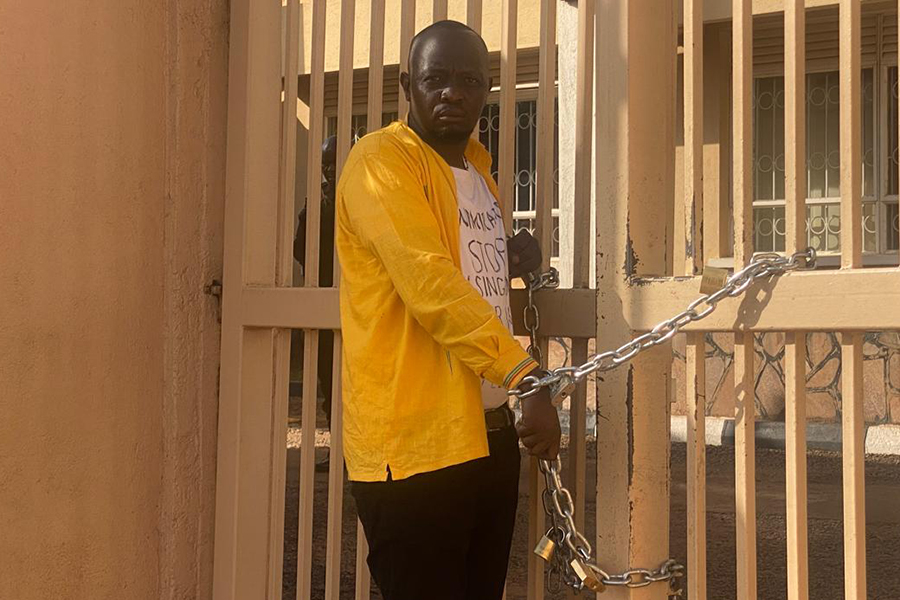
Former Isingiro North parliamentary aspirant James Atwine staged a dramatic UNEB disqualification protest on Monday at the Uganda National Examinations Board (UNEB) offices in Ntinda, Kampala. He chained himself to the main gate using metal locks to denounce what he called an unjust removal from the 2026 electoral race.
Atwine claims UNEB nullified and confiscated his academic documents during verification. He alleges the move was part of a deliberate scheme to benefit his rival, Bright Rwamirama. Wearing a yellow shirt and a white vest that read “Justice delayed is justice denied,” he wrapped chains around his waist and arms and vowed to expose what he described as electoral fraud and procedural abuse.
His protest halted traffic around the UNEB compound as crowds of motorists and pedestrians gathered. Security personnel at the gate appeared overwhelmed, forcing staff to use a smaller entrance to enter the building.
Atwine told reporters he strongly disagreed with the Electoral Commission’s decision to disqualify him. According to UNEB, he submitted forged academic papers during nomination. However, Atwine insists his documents are genuine. He said he had already filed a court application to compel UNEB to verify and return his credentials—but instead, the board canceled them outright.
Shortly after the protest began, police in tactical gear arrived with a metal cutter. They severed the chains and placed Atwine into a police vehicle for questioning. Authorities later confirmed his arrest and said they are investigating the incident.
UNEB officials refused to comment on the matter. They also declined to clarify the current status of Atwine’s academic records.
The protest highlights growing tensions ahead of Uganda’s 2026 elections. Candidates are closely scrutinizing verification processes, especially when disqualifications hinge on academic eligibility—a common requirement for parliamentary contests. Atwine’s public demonstration underscores concerns about transparency and fairness in the electoral system.