China AI Boycott tensions have surged as Beijing’s top scientific body challenges new restrictions at a leading AI conference. As a result, the dispute shows how quickly politics is reshaping global research.
At the center of the conflict is the Conference on Neural Information Processing Systems. For years, NeurIPS has served as a global hub for AI breakthroughs. However, it recently introduced a policy that blocks entities under U.S. sanctions from submitting research papers. Consequently, this decision triggered strong reactions across China.
In response, the China Association for Science and Technology acted swiftly. It announced it would stop funding members who plan to attend NeurIPS. Instead, it will support domestic conferences and other international events it considers fair. In addition, the organization framed this move as a defense of academic rights.
Notably, the policy directly affects firms such as Huawei and SMIC. These companies play a key role in China’s AI and semiconductor sectors. However, U.S. sanctions now limit their ability to participate in global platforms.
Previously, NeurIPS operated as an open platform. Researchers from different regions shared ideas freely. They presented findings, built partnerships, and recruited talent. Now, however, that openness faces growing pressure due to policy changes.
Moreover, CAST went beyond a symbolic protest. It declared that papers accepted at NeurIPS would no longer qualify for its funding programs. As a result, Chinese researchers now have fewer incentives to participate. Although the academic value of such papers remains, their practical importance in China has declined.
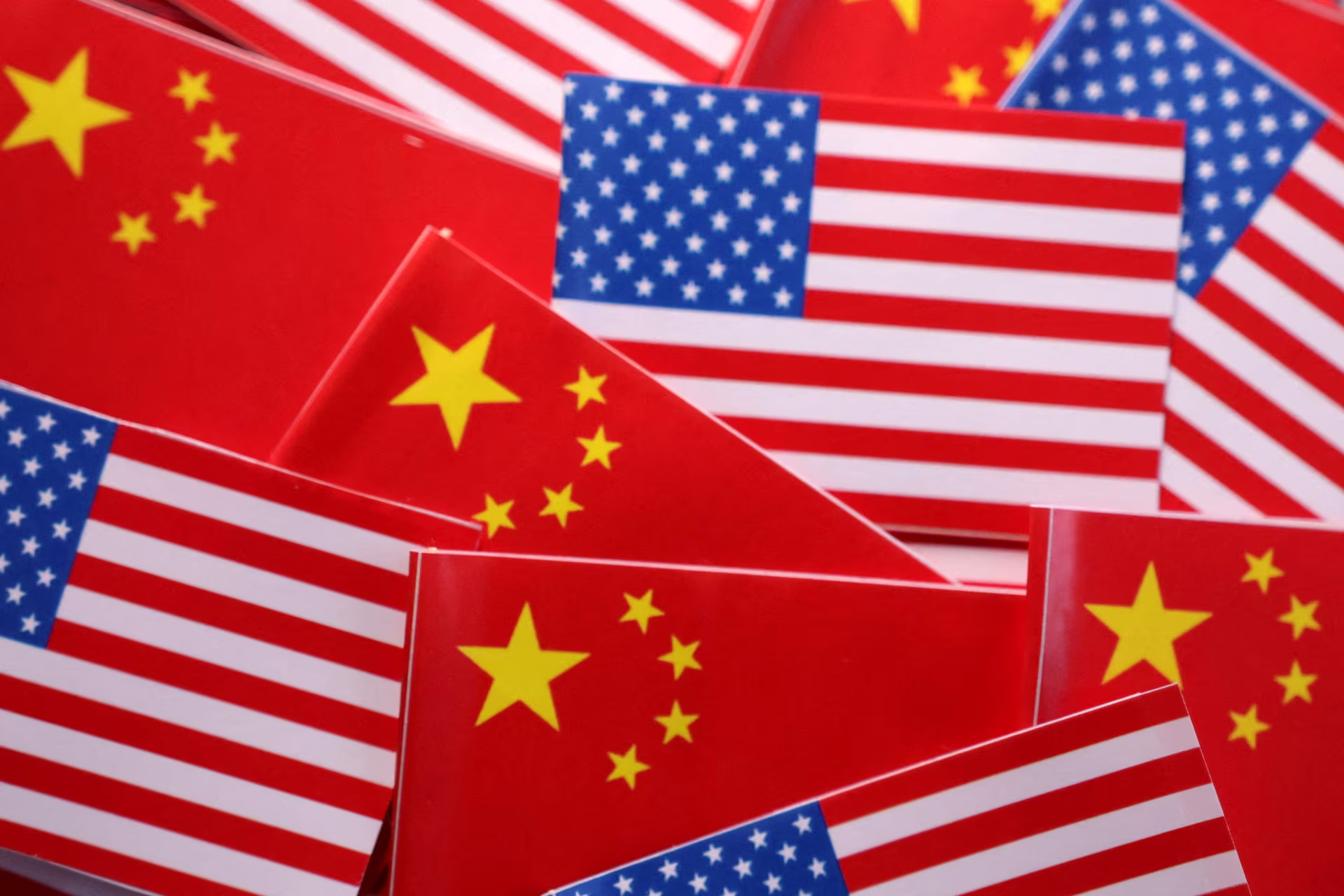
Meanwhile, the China AI Boycott reflects deeper tensions between the United States and China. Both nations view artificial intelligence as a strategic priority. Therefore, governments now shape research through policy and regulation.
On one hand, the U.S. has tightened controls on technology access. It has placed sanctions on many Chinese firms and institutions. As a result, these restrictions limit access to advanced chips and tools. Furthermore, authorities have increased scrutiny of Chinese researchers abroad.
On the other hand, China has responded by strengthening its domestic ecosystem. It continues to invest heavily in AI research and semiconductor development. In addition, it is expanding talent programs and innovation hubs. At the same time, regulators now review foreign partnerships more closely. For instance, recent scrutiny of deals linked to Meta Platforms highlights this cautious approach.
As a consequence, the China AI Boycott is already reshaping global research dynamics. Collaboration between Chinese and Western institutions may decline. Therefore, the exchange of ideas that once fueled rapid progress could slow down.
Nevertheless, China may use this moment to expand its own research platforms. New conferences and journals could rise in importance. Over time, the global AI landscape may split into parallel systems. In that case, each side would advance independently with limited collaboration.
At the same time, the private sector faces new challenges. Companies rely on conferences like NeurIPS for visibility and recruitment. However, losing access reduces their global exposure. Therefore, firms must find alternative ways to present their innovations.
Ultimately, the China AI Boycott highlights a major shift in global innovation. Science no longer operates independently from politics. Instead, it reflects national priorities and strategic competition.
In conclusion, artificial intelligence now plays a central role in global power. Decisions made in policy and research spaces will shape its future. As the China AI Boycott unfolds, it signals a new era where technology and geopolitics move closely together.