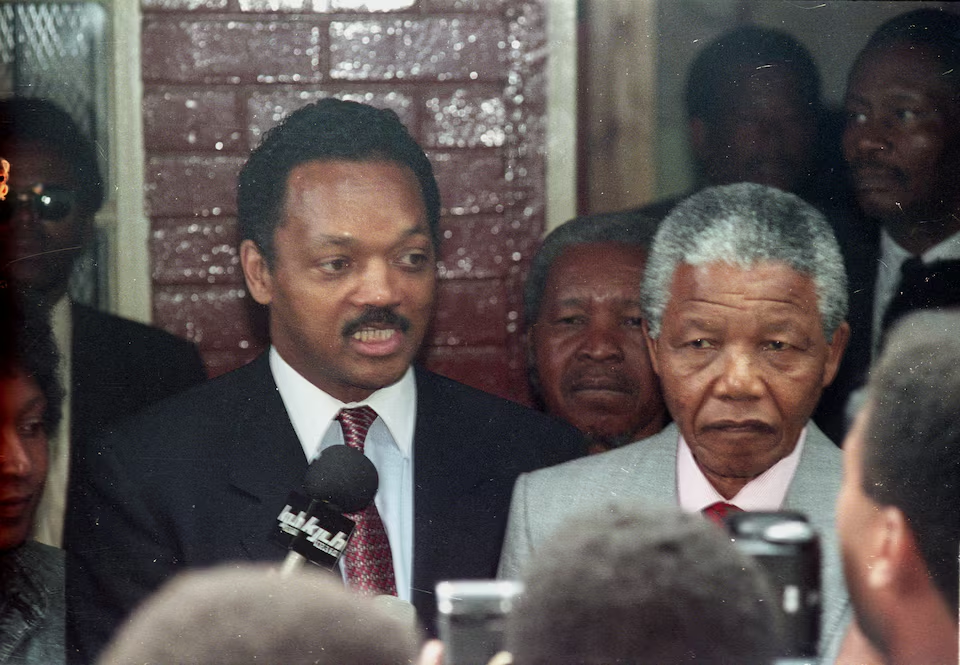
The Jesse Jackson civil rights leader has passed away at age 84, according to a family statement released Tuesday. Consequently, this loss marks the end of an era for American social justice movements. Indeed, Jackson’s legacy as an eloquent Baptist minister and tireless advocate for marginalized communities continues to inspire generations. Furthermore, his journey from the segregated South to national prominence reflects both personal resilience and collective progress. Therefore, remembering his contributions helps contextualize ongoing struggles for equality and dignity.
Moreover, the Jesse Jackson civil rights leader emerged during the turbulent 1960s as a close associate of Martin Luther King Jr. Specifically, Jackson served as a lieutenant in the Southern Christian Leadership Conference, traveling alongside King to advance economic opportunities for Black communities. Consequently, his early activism included arrests for challenging segregated facilities, demonstrating unwavering commitment to justice. Additionally, Jackson was present at the Lorraine Motel when King was assassinated in 1968, an experience that profoundly shaped his subsequent leadership. Indeed, these formative years established the foundation for decades of impactful advocacy.
Furthermore, the Jesse Jackson civil rights leader expanded his influence through founding Operation PUSH and the National Rainbow Coalition. Specifically, these Chicago-based organizations addressed economic empowerment, women’s rights, and LGBTQ+ inclusion alongside traditional civil rights priorities. Therefore, Jackson’s vision embraced intersectional advocacy long before such terminology became mainstream. Moreover, his merger of these groups in 1996 created a unified platform for sustained activism. Consequently, the Rainbow-PUSH Coalition remains a testament to his strategic approach to social change. Indeed, institutional legacy often outlives individual leaders, ensuring continued impact.
Additionally, the Jesse Jackson civil rights leader pursued presidential politics with groundbreaking campaigns in 1984 and 1988. Specifically, his 1984 run attracted 3.3 million Democratic primary votes, while his 1988 effort secured 6.8 million votes and 11 state victories. Therefore, Jackson demonstrated that Black candidates could build broad, multiracial coalitions at the highest levels of American politics. Moreover, his inspirational convention speeches, including the memorable “America is not a blanket woven from one thread” address, resonated with diverse audiences. Consequently, these campaigns paved the way for future leaders, including Barack Obama’s historic 2008 election. Indeed, political barriers often fall through persistent, principled effort.
In addition, the Jesse Jackson civil rights leader earned recognition for personal diplomacy and international humanitarian work. Specifically, he secured the release of American detainees in Syria, Cuba, Iraq, and Serbia through direct negotiations with foreign leaders. Therefore, Jackson leveraged his moral authority and communication skills to achieve outcomes beyond traditional diplomatic channels. Moreover, President Ronald Reagan publicly thanked him for a “mission of mercy” after the 1984 release of naval aviator Robert Goodman Jr. Consequently, these efforts demonstrated how civil rights leadership could extend globally. Indeed, compassion and dialogue often open doors that formal processes cannot.
Furthermore, the Jesse Jackson civil rights leader maintained relevance through evolving media platforms and continued advocacy. Specifically, his weekly CNN show from 1992 to 2000 amplified messages of economic justice and racial equity to national audiences. Therefore, Jackson adapted to changing communication landscapes while preserving core principles. Moreover, he received the Presidential Medal of Freedom from Bill Clinton in 2000, recognizing his lifetime of service. Consequently, such honors reflect broader societal appreciation for sustained commitment to justice. Indeed, public recognition can amplify messages and inspire continued action.
Additionally, the Jesse Jackson civil rights leader faced personal challenges while maintaining public service. Specifically, his 2017 Parkinson’s disease diagnosis did not diminish his advocacy, though it limited physical appearances. Therefore, Jackson continued speaking on issues like police violence and racial justice, including condemning George Floyd’s killing in 2020. Moreover, his family described him as a “servant leader” devoted to the oppressed and overlooked worldwide. Consequently, personal resilience often strengthens public credibility. Indeed, authenticity in both triumph and struggle deepens leadership impact.
Looking ahead, the legacy of the Jesse Jackson civil rights leader offers enduring lessons for contemporary movements. Specifically, his emphasis on coalition-building, economic empowerment, and moral clarity remains relevant amid current social challenges. Therefore, emerging activists can draw inspiration from his strategic patience and unwavering principles. Moreover, Jackson’s ability to bridge generational and ideological divides demonstrates the power of inclusive leadership. Consequently, preserving historical memory supports informed action in present struggles. Indeed, understanding past victories and setbacks helps navigate complex paths forward.
In summary, the Jesse Jackson civil rights leader leaves an indelible mark on American history through decades of principled activism. Consequently, his journey from segregated South to national prominence exemplifies both personal courage and collective progress. Furthermore, his presidential campaigns, humanitarian diplomacy, and institutional leadership expanded possibilities for marginalized communities. Therefore, stakeholders across movements benefit from studying his strategies and values. Moreover, Jackson’s emphasis on hope, faith, and perseverance continues to resonate in uncertain times. Indeed, the Jesse Jackson civil rights leader demonstrated that sustained commitment can transform societies. As a result, his legacy invites continued engagement with the unfinished work of justice, equity, and human dignity for all.
READ: Uganda Local Government Workers Seek Salary Increment in FY2026/27