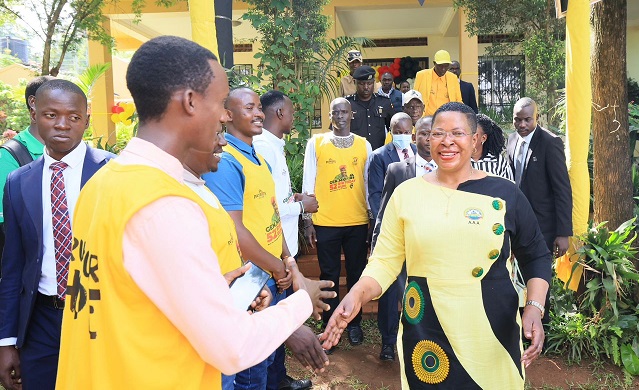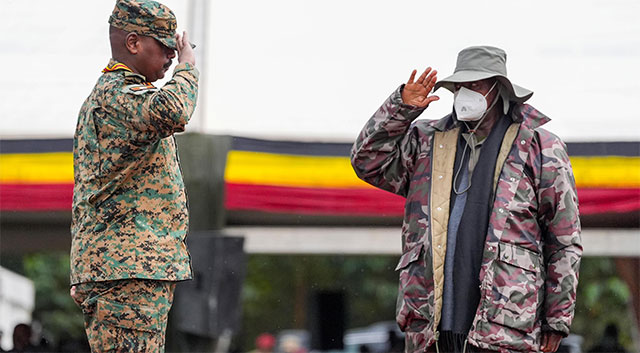
President Yoweri Museveni has commended Ugandan security forces for ensuring a peaceful general election. He praised the Uganda People’s Defence Forces (UPDF) and other agencies for neutralizing troublemakers during the recent polls. Museveni made these remarks while presiding over the 45th Tarehe Sita celebrations in Kabale District. He stated that certain groups planned “very bad things,” but the alert security forces foiled their attempts. Consequently, he described the election as secure and stable, allowing the country to now focus on development projects.
The Chief of Defence Forces, General Muhoozi Kainerugaba, echoed the president’s sentiments. He said agencies received credible intelligence about actors intending to instigate violence. However, the security forces contained these threats swiftly. General Muhoozi asserted that due to this vigilance, the 2026 general election was the most peaceful in Uganda’s history. This strong performance by the security forces provides a foundation for the government’s next phase: economic transformation through major infrastructure investments.
Major Infrastructure Projects Announced
President Museveni outlined several planned projects to boost tourism and trade. He announced the tarmacking of key tourism roads in the Kigezi sub-region. Additionally, the government will expand Kisoro Airfield. Plans also include constructing a standard airport in Kabale District, for which businessman Amos Nyezi has offered land. Most significantly, Museveni revealed intentions to build an international airport in Mbarara. This airport would enhance trade and position the region as a strategic midpoint between East Asia and South America.
The president urged residents to invest in commercial agriculture as well. He highlighted dairy farming, fish farming, and tourism as pathways to wealth creation. Museveni connected national security directly to this economic agenda. He argued that with peace secured by the security forces, the country must now focus on development. These infrastructure plans aim to translate political stability into tangible economic growth for the population.
Recognition for Military Excellence
The celebrations also included awards for exemplary service within the military. Lieutenant Moses Odongo received a Sh10 million cash prize as the Most Outstanding Junior Officer. He serves with the 203 Ground-Based Air Defence Regiment. A panel of senior officers selected him after a rigorous assessment, where he scored 86.71 per cent. Major General James Kilwana explained that the annual awards aim to recognize exceptional performance and inspire others.
Lieutenant Odongo’s journey reflects the professionalism the leadership promotes. He joined the UPDF in 2013 from Katakwi District. His recognition underscores the institution’s merit-based values. This award ceremony occurred alongside the broader commendation of the security forces. It highlights the government’s strategy to foster morale and discipline within the ranks. A motivated military is central to maintaining the stability the president praised.
Historical Tribute to Fallen Fighters
President Museveni also paid solemn tribute to fallen freedom fighters. He recalled individuals killed during the struggle for Uganda’s peace. Names included James Karambuzi, David Kagoro Kangyire, and Joseph Bitwari, who died under Idi Amin’s regime in 1973. Museveni mentioned others executed in Fort Portal, Mbarara, Kampala, and Jinja. This historical reflection anchored the Tarehe Sita celebrations in the nation’s legacy of conflict and sacrifice.
The president connected this past to the present role of the security forces. He argued that today’s stability honors those earlier sacrifices. This narrative reinforces the National Resistance Movement’s historical legitimacy. It also justifies the continued central role of the military in national life. By honoring both past fighters and current officers, the government blends history with contemporary policy, presenting a continuous thread of patriotic service.
The Path Forward: Security and Development
The government’s message presents a clear two-step plan. First, robust security forces guarantee peace and neutralize political threats. Second, that stability enables massive public investment in infrastructure and agriculture. The announced airports and roads are concrete examples of this second phase. President Museveni explicitly stated that with security assured, the focus must shift to socio-economic transformation.
This approach aims to address public desires for both safety and prosperity. However, it also concentrates significant economic initiative within state-led projects. The success of this model depends on effective implementation and inclusive growth. The coming years will test whether the security forces’ acclaimed peacekeeping directly translates into widespread economic improvement for ordinary Ugandans. The government is betting its legacy on this connection between security and development.