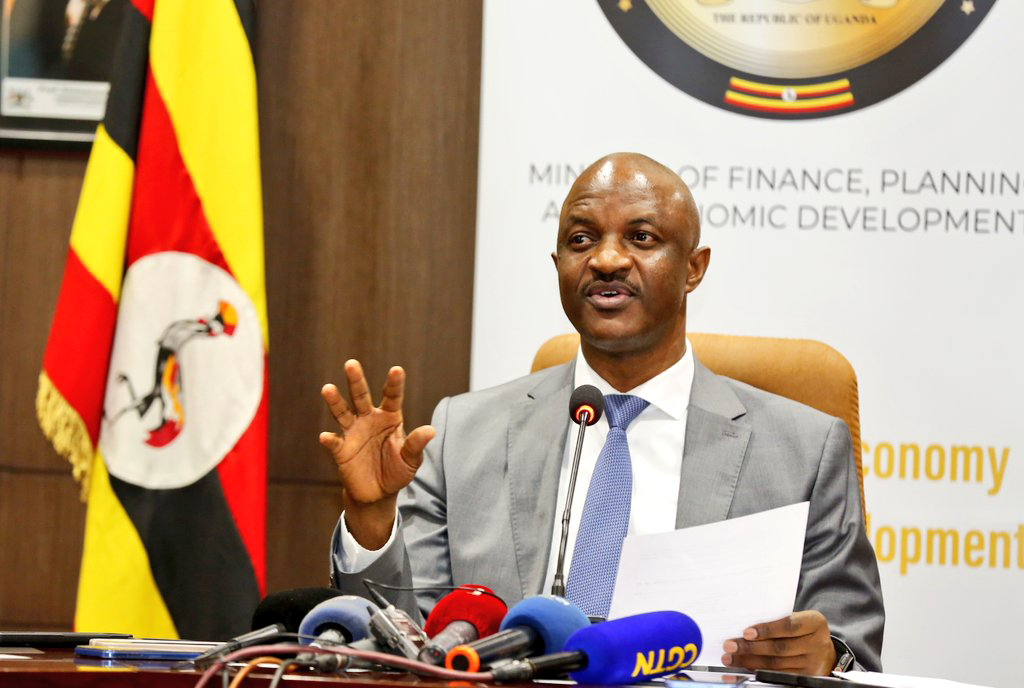
The Uganda budget 2025/26 is moving forward as planned, even during a heated election season. In fact, the Ministry of Finance has already released Shs16.537 trillion for the third quarter to keep public services running smoothly. Officials confirm that neither recurrent nor development programs have faced delays or funding diversions. Moreover, all spending continues to align with the Fourth National Development Plan (NDP IV).
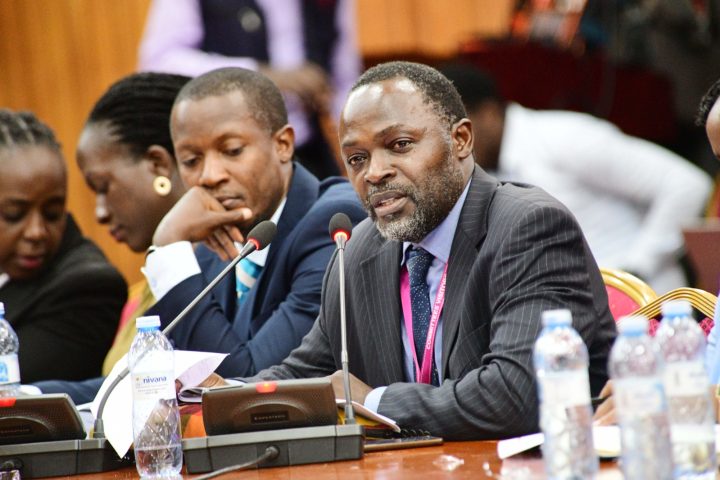
Recurrent expenditure covers day-to-day operations like salaries and facility maintenance, while development funds support long-term investments in roads, schools, and hospitals. On January 9, Permanent Secretary Ramathan Ggoobi addressed Accounting Officers during the Q3 disbursement briefing. He urged them to speed up implementation so the country can maintain momentum toward its ten-fold growth goals—especially those focused on job creation and wealth generation.
Ggoobi emphasized that the government will “live within its means” to protect macroeconomic stability. However, he also pointed out a serious issue: some offices still delay salary and pension payments, which violates Treasury guidelines. To address this, he is now working closely with the Ministry of Public Service to introduce clear sanctions for non-compliant officers.
So far, the Treasury has distributed the Shs16.537 trillion across key areas. Specifically, it allocated Shs2.175 trillion for wages, Shs2.898 trillion for non-wage recurrent costs, and Shs514 billion for domestic development projects. Additionally, Shs3.277 trillion came from external financing, while Shs7.591 trillion went to treasury operations—including debt servicing. Local revenue accounted for another Shs82 billion.
Furthermore, statutory obligations received full funding. For example, pensions and gratuities got Shs318.24 billion, Parliament received Shs91.65 billion, and the Judiciary was allocated Shs28.27 billion. The Office of the Auditor General also secured Shs18.35 billion. Altogether, these figures show that core institutions remain financially supported.
With half the financial year behind us, the Treasury has disbursed 58.1% of the total national budget and 63.4% of the Government of Uganda’s share. Importantly, election-related costs were fully budgeted from the start, so they have not disrupted service delivery. Workers have received their pay on time, and development programs continue without interruption. Notably, 77% of the Shs18.24 trillion development envelope has already been released.
Major allocations include Shs1.2 trillion for the Ministry of Works and Transport to advance road construction. Beyond infrastructure, the government is investing heavily in economic transformation. For instance, it set aside Shs469.69 billion for agro-industrialization and SMEs, Shs167 billion for tourism, and Shs166.15 billion for science, technology, and innovation. Meanwhile, security agencies like the Police and Defence Forces together received over Shs540 billion to maintain stability.
At the same time, Uganda’s broader economy shows strong resilience. Growth reached 6.3% in FY 2024/25 and is projected to hit 6.5–7% this year. Inflation remained unusually low at just 3.1% in November and December 2025—a rare feat during an election cycle. This stability stems from increased food production, prudent monetary policy, a steady shilling, and direct fuel imports by the Uganda National Oil Company. As a result, Uganda now holds Africa’s lowest inflation rate over the past decade.
Exports also tell a positive story. Goods and services exports totaled $13.4 billion in FY 2024/25, with goods alone reaching $12.79 billion by November. Consequently, the country recorded a balance of payments surplus of $2.37 billion—the highest in 15 years. Foreign direct investment climbed to $3.5 billion, portfolio inflows hit $1.7 billion, and remittances from abroad rose to $1.6 billion. Tourism earnings rebounded to $1.7 billion, thanks to better security, new infrastructure, and active economic diplomacy.
Business confidence remains high despite the election noise. By November 2025, the Business Tendency Index stood at 57.2, well into optimistic territory. Similarly, the Composite Indicator of Economic Activity rose to 183.5, and the Purchasing Managers’ Index hit 53.8—clearly above the 50-point expansion threshold.
Finally, Ggoobi invited citizens to monitor budget execution through official public platforms. He reaffirmed the government’s commitment to transparency and timely communication. “We are executing the Uganda budget 2025/26 exactly as approved,” he said, “to deliver real results for Ugandans and safeguard our economic future.”
READ: Uganda to Cut Domestic Debt Issuance by 21% in FY 2026/27