The UK Rwanda asylum dispute has escalated as London moves to dismiss Kigali’s claim for $134 million, arguing that the case lacks legal merit and stems from political tensions rather than contractual obligations. The disagreement now sits before an international tribunal, raising broader questions about migration policy, diplomacy, and financial commitments.
The United Kingdom insists that Rwanda’s claim does not arise from the asylum partnership agreement itself but from frustration over sanctions linked to the conflict in eastern Democratic Republic of Congo. British legal advisers argue that the timing of Rwanda’s claim reveals motives beyond the financial dispute. They maintain that Kigali acted in response to diplomatic pressure rather than any breach of agreement terms.
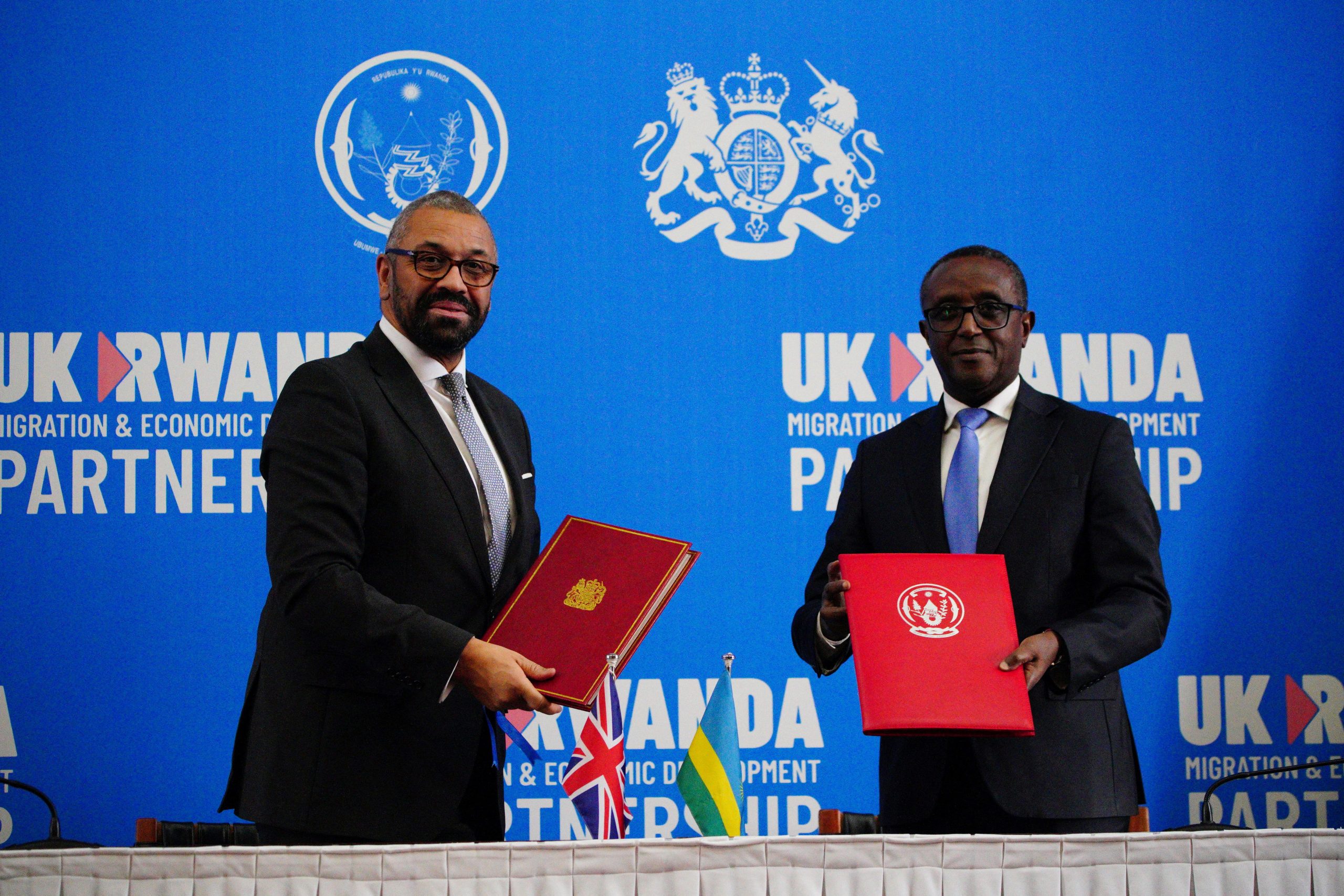
The UK Rwanda asylum dispute centers on a controversial migration deal first introduced in 2021 and later formalized in a binding treaty in 2023. Under the arrangement, the UK planned to transfer certain asylum seekers to Rwanda for processing and possible settlement. Rwanda, in turn, committed to handling these cases in line with international refugee law while integrating or resettling successful applicants.
The deal also included a financial framework. The UK pledged to provide $657 million through an Economic Transformation and Integration Fund to support Rwanda’s capacity to host relocated individuals. Payments were structured in phases, with initial installments tied to the arrival of asylum seekers in Rwanda.
London fulfilled part of its financial commitment. It paid an initial $161 million at the start of the agreement and later disbursed $134 million for the second year, followed by another $67 million in 2024. However, the second portion of the first installment never materialized because no asylum seekers arrived in Rwanda as planned. Legal challenges in the UK delayed implementation, and elections further disrupted the timeline.
The UK Rwanda asylum dispute intensified after Prime Minister Keir Starmer cancelled the agreement in November 2024. London argues that Rwanda accepted the termination process, which effectively ended all obligations under the deal. British officials maintain that once both parties acknowledged the termination, the financial and operational components ceased to apply.
Rwanda strongly disputes this interpretation. Kigali insists that it only agreed to begin discussions on termination rather than finalize the process. According to Rwandan officials, those discussions never occurred, leaving the agreement legally intact. As a result, Rwanda argues that the UK must honor its remaining financial commitments.
Rwanda also seeks to enforce another aspect of the agreement. The original deal included a reciprocal element in which the UK would resettle a portion of Rwanda’s most vulnerable refugees. Kigali now wants the tribunal to compel London to begin negotiations on this provision, arguing that the UK cannot selectively withdraw from its obligations.
British lawyers reject this claim. They argue that the provision only required both sides to make arrangements rather than guarantee outcomes. London insists that it has not refused to engage in discussions but does not accept that it must proceed under a terminated agreement.
The UK Rwanda asylum dispute has also drawn attention because of its geopolitical context. The UK imposed diplomatic measures against Rwanda in February 2025 over concerns about Kigali’s role in the conflict in eastern DRC. These measures included limiting trade promotion, pausing direct aid, and reducing diplomatic engagement.
According to the UK’s legal submission, Rwanda issued its rescission letter on the same day London announced these measures. British officials interpret this timing as evidence that sanctions triggered the dispute. They argue that Kigali’s claim reflects broader political tensions rather than a genuine contractual disagreement.
Rwanda rejects that characterization. Its legal team maintains that the claim focuses strictly on financial obligations under the agreement. Kigali argues that the UK cannot avoid payment simply because political circumstances have changed.
The UK Rwanda asylum dispute now places both countries under international scrutiny. The case highlights the risks associated with complex migration agreements, especially those tied to significant financial commitments and political considerations. It also raises questions about how governments manage policy shifts after changes in leadership.
For the UK, the dispute reflects the challenges of balancing domestic political priorities with international obligations. The decision to cancel the agreement marked a major shift in migration policy, but it also created legal uncertainty regarding existing commitments.
For Rwanda, the case represents an effort to secure funding that it believes remains due under the agreement. The outcome could influence how other countries approach similar partnerships in the future.
As the tribunal reviews the case, the UK Rwanda asylum dispute continues to evolve. The final decision will likely set a precedent for how governments handle the termination of international agreements and the financial obligations that follow.
Ultimately, the dispute underscores the importance of clear legal frameworks and consistent diplomatic engagement. Without these elements, agreements designed to address global challenges such as migration can quickly turn into complex legal battles with far-reaching consequences.