The UPDF’s expanding role in Uganda’s public and economic life now shapes the nation’s daily reality. While national defense remains its core duty, the military has steadily moved into civilian spaces. This shift began around 2000 when President Museveni reversed the army’s post-1995 retreat to the barracks. Since then, the UPDF has become a constant presence far beyond combat zones.
Private security offers one of the clearest examples. The National Enterprise Corporation (NEC)—the UPDF’s commercial arm—launched NEC Security Services (NSSL) to enter this market. During events like the African Nations Championship, NSSL staff wear grey trousers, orange vests, and brown caps. Their military backing gives them a strong advantage. They use government facilities and equipment, which cuts their costs significantly. Because of this, they have won major contracts, including security for the East African oil pipeline. Often, they secure these deals without open competitive bidding. The Uganda Private Security Association (TUPSA) strongly opposes this. They say it creates unfair competition for private firms.
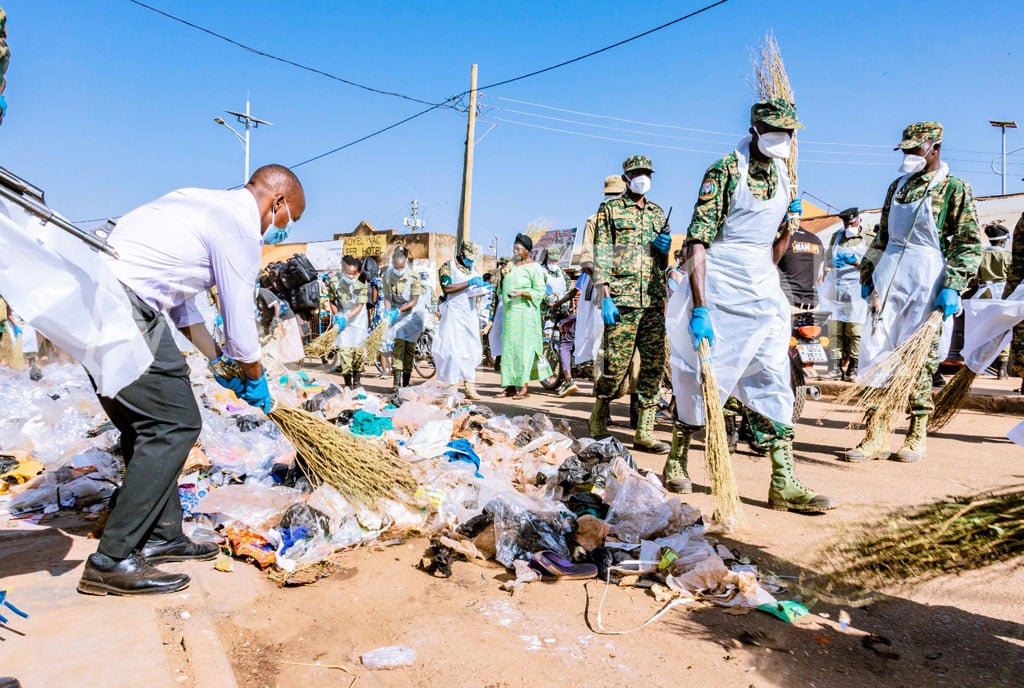
The UPDF also plays a deep role in law enforcement. In 2001, it launched Operation Wembley to fight robbery, led by a military brigadier. Later, two army generals served as Inspector General of Police. Although career police officers now lead the force again, joint operations with the military remain common—especially during emergencies like the Covid-19 lockdowns. Police officials openly acknowledge this partnership. They confirm that while the police take the lead, they work closely with the army.
Agriculture saw another major intervention through Operation Wealth Creation (OWC). The UPDF started OWC in 2013 to turn subsistence farmers into commercial ones. Soldiers distributed seedlings and gave farming advice. This effort sidelined civilian agencies like Naads. However, after nearly five years, the government scaled back OWC. Reports of corruption had mounted. Soldiers were selling seedlings meant for poor farmers or keeping them for personal gain.
The military also took over lake patrols in 2017. It replaced the civilian Fisheries Protection Unit to stop illegal fishing. But fishing communities soon reported human rights abuses. Last year, President Museveni responded by sacking several commanders and halting their operations. He said the government found better ways to manage the sector.
Yet, the UPDF’s involvement has brought clear benefits in some areas. For example, its 2018 deployment to the immigration directorate cut passport processing times dramatically. It also reduced corruption in the agency. These results show how military discipline can improve civil services.
Still, opinions on the UPDF’s civilian roles remain divided. Supporters say it brings order and efficiency to struggling sectors. They also believe it strengthens ties between soldiers and citizens. Critics, however, warn of overreach. They point to repeated human rights concerns—especially during the 2026 General Election. International observers from the African Union and IGAD documented intimidation and unlawful arrests by security forces. They urged all agencies to act within the law and respect basic freedoms.
Infrastructure projects further show the military’s reach. The UPDF engineering brigade often gets priority for construction contracts in health and education. It has upgraded Entebbe International Airport and renovated Mandela National Stadium. Through these efforts, the UPDF has become more than a defense force. It now actively shapes Uganda’s development. Ultimately, the debate over UPDF civilian roles is not just about jobs or security—it’s about where the military belongs in a democratic society.
READ: Uganda Visa Compliance: Navigating New US Restrictions