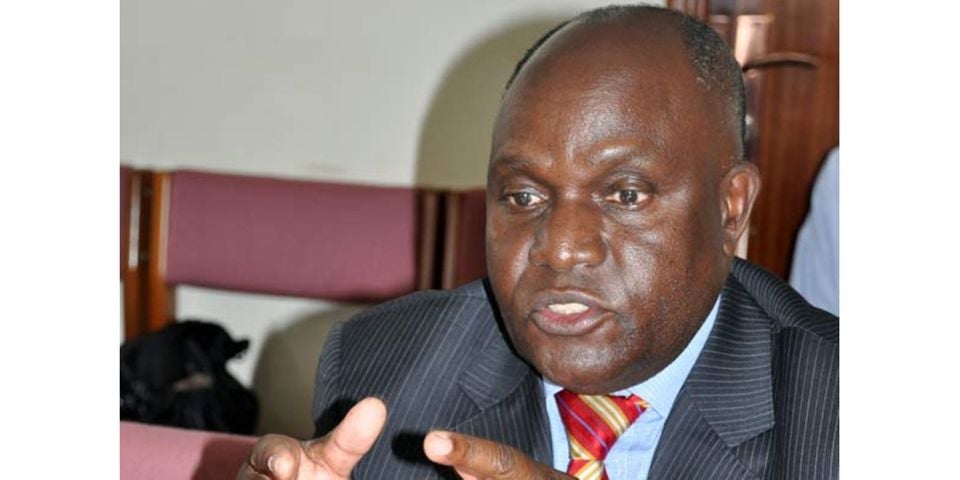
Dr. Chrispus Kiyonga has staged a decisive political comeback by winning the Bukonzo County West parliamentary seat in the January 15, 2026, elections. He secured 35,899 votes, defeating Forum for Democratic Change (FDC) candidate Godfrey Atkins Katusabe, who received 26,399 votes. Consequently, this victory marks his return to Parliament after a ten-year absence.
Initially, Kiyonga first entered Parliament in 1994 and served multiple terms before losing in 2016. Later, he tried again in 2021 but failed to reclaim the seat. Ultimately, his 2026 win breaks that losing streak and reestablishes his influence in Kasese politics. Analysts agree that this success stems from smarter strategy, deeper community engagement, and a message that resonated with local needs.
His previous defeats had clear turning points. Specifically, in 2016, Katusabe won with 31,126 votes against Kiyonga’s 28,289. Moreover, a complicating factor was the independent run by Kiyonga’s nephew, Justus Sausi Capson, who drew 4,024 votes—many of them likely from NRM supporters. Following that loss, President Museveni offered Kiyonga the ambassadorship to China, which he declined. Instead, he chose to focus on public advocacy, especially around food security and coffee farming.
In 2021, Kiyonga lost again, polling 26,520 votes to Katusabe’s 36,386. Meanwhile, the National Unity Platform (NUP) candidate added minimal pressure with just 993 votes. That defeat, however, pushed Kiyonga to rethink his approach. Although he lost the NRM district chairperson position in July 2025 to Ambassador James Mbahimba, he stayed active. Furthermore, he continued rallying NRM supporters and sharpened his campaign focus.
Bukonzo County West covers eight sub-counties and town councils: Bwera, Karambi, Kitholhu, Ihandiro, Nyakiyumbu, Isango, Mpondwe-Lhubiriha, and Kithoma-Kanyatsi. With over 130,000 registered voters, it is a key border constituency next to the Democratic Republic of Congo. Additionally, it hosts Bwera General Hospital, the only public hospital in Kasese District. Notably, Kiyonga won six of the eight areas, securing a margin of nearly 9,500 votes—the largest lead either candidate has seen in three election cycles.
His campaign message remained consistent across all three races: food security, peace, unity, child nutrition, and household income. At rallies, he stressed balanced diets to fight malnutrition, which remains high in Kasese. “Our children must be fed well,” he often said. He also encouraged families to rear goats, rabbits, and poultry for both nutrition and income. While this message appealed strongly to rural households, critics noted it sidestepped broader economic issues like inflation or unemployment.
What truly shifted the tide in 2026 was Kiyonga’s renewed focus on youth. In past campaigns, he admitted, he overlooked young voters. This time, however, he directly engaged boda boda riders and other youth groups. As a result, they became his grassroots force—mobilizing neighbors, spreading his message, and transporting people to rallies. Their energy gave his campaign unprecedented reach.
He also launched a practical initiative that built trust: a district-wide cassava project. After noticing that Kasese imported large amounts of cassava flour from Hoima and exported it to Kasindi in the DRC, he saw an opportunity. Therefore, he rallied three fellow NRM MPs—Sowedi Kitanywa, Ferigo Kambale, and Gideon Thembo Mujungu—to each contribute Shs6 million. Together, they bought cassava cuttings and distributed them through churches for propagation. From there, the cuttings reached thousands of households. “Now many families have cassava gardens,” Kiyonga said proudly. The project addressed immediate food shortages and showed tangible leadership.
His stance on cross-border trade further boosted his appeal. Traders at the Mpondwe-Lhubiriha border welcomed his promise to ease restrictions and improve access to the Kasindi market. For a business-oriented electorate, this mattered deeply.
The opposition reacted with frustration. After losing all three Kasese parliamentary seats, FDC leaders—including Katusabe, Florence Kabugho, William Nzoghu, and Sylvester Masereka—blamed the political environment. Specifically, Katusabe claimed government officials and NRM coordinators unfairly influenced the vote. “We did not lose because people rejected us; we lost because the government feared us,” he said on local radio. Similarly, FDC district chair Ronald Bwambale Kabuku echoed this view. Yet, others argue Katusabe’s message simply failed to connect with voters focused on livelihoods, not just politics.
In conclusion, Kiyonga’s political comeback reflects more than personal ambition. It demonstrates how grounded, community-driven strategies can rebuild support—even after repeated setbacks. By listening, adapting, and delivering visible action, he turned past losses into a mandate for renewal. Moving forward, his success may serve as a model for other veteran politicians seeking to reconnect with changing constituencies.
READ: UPDF’s Expanding Role in Uganda’s Civil and Economic Life