Nakivubo Channel Redevelopment is reshaping one of Kampala’s most important drainage corridors. It is also changing the structure of the city’s central business district. For decades, the channel ran through busy trading zones as an open drainage trench. During heavy rains, stormwater often spilled into nearby streets and markets. In dry seasons, debris and waste collected inside the channel. This buildup slowed water flow and worsened flooding risks.
The redevelopment now marks a major shift for Kampala’s infrastructure. The city no longer treats Nakivubo only as a drainage utility. Instead, planners now integrate drainage with urban development. As a result, the corridor supports both water management and organized commercial activity.
The original Nakivubo Channel measured about six meters wide. It carried stormwater and wastewater through the city toward wetlands connected to Lake Victoria. However, Kampala’s rapid urban growth increased pressure on the drainage system. Informal waste disposal and sediment buildup reduced water flow. At the same time, the narrow structure struggled to handle rising runoff volumes. These challenges pushed the channel close to its operational limits.
The Nakivubo Channel Redevelopment addresses those structural weaknesses. Engineers doubled the channel width from six meters to twelve meters. Instead of a single corridor, the system now includes two parallel six-meter lanes. This design increases the amount of water the system can carry during heavy rains.
The dual-lane structure improves flow efficiency across the drainage corridor. Stormwater now moves faster and more evenly through the system. As a result, the risk of overflow into nearby commercial areas decreases significantly. The wider corridor also provides redundancy. If debris slows water in one lane, the second lane continues carrying flow.
Engineers also strengthened the structure of the drainage corridor. Reinforced concrete walls stabilize the channel and support the surface structures above it. The design includes silt traps and catchment sections that capture debris before it blocks water flow. These systems reduce the buildup of sediment that once restricted the channel.
Maintenance teams now access the corridor more easily. Lighting systems illuminate the interior and simulate daylight conditions. Engineers can inspect the drainage system safely and efficiently. Access points along the corridor allow regular monitoring and technical inspections. This approach replaces the old system of emergency clearing after flooding events.
The Nakivubo Channel Redevelopment also shifts drainage management toward preventive maintenance. City engineers now monitor water flow conditions inside the corridor. They can identify potential problems early and address them before blockages form. This structured approach improves long-term reliability for the drainage system.
Recent rainfall events already provide early signs of improved performance. Kampala experiences seasonal downpours that often overwhelm drainage systems. In the past, heavy rainfall caused flooding along Nakivubo and nearby trading areas. Water frequently spilled into streets and disrupted commercial activity.
Recent storms have produced a different outcome. Heavy rains during December and continuing through January, February, and early March did not trigger flooding along the redeveloped corridor. The expanded drainage lanes absorbed water volumes that previously caused overflow. These results suggest the system now handles stormwater more effectively.
Engineers caution that long-term performance still requires observation. Drainage systems must perform consistently across several rainy seasons. However, the early evidence suggests the Nakivubo Channel Redevelopment has improved flood resilience in central Kampala.
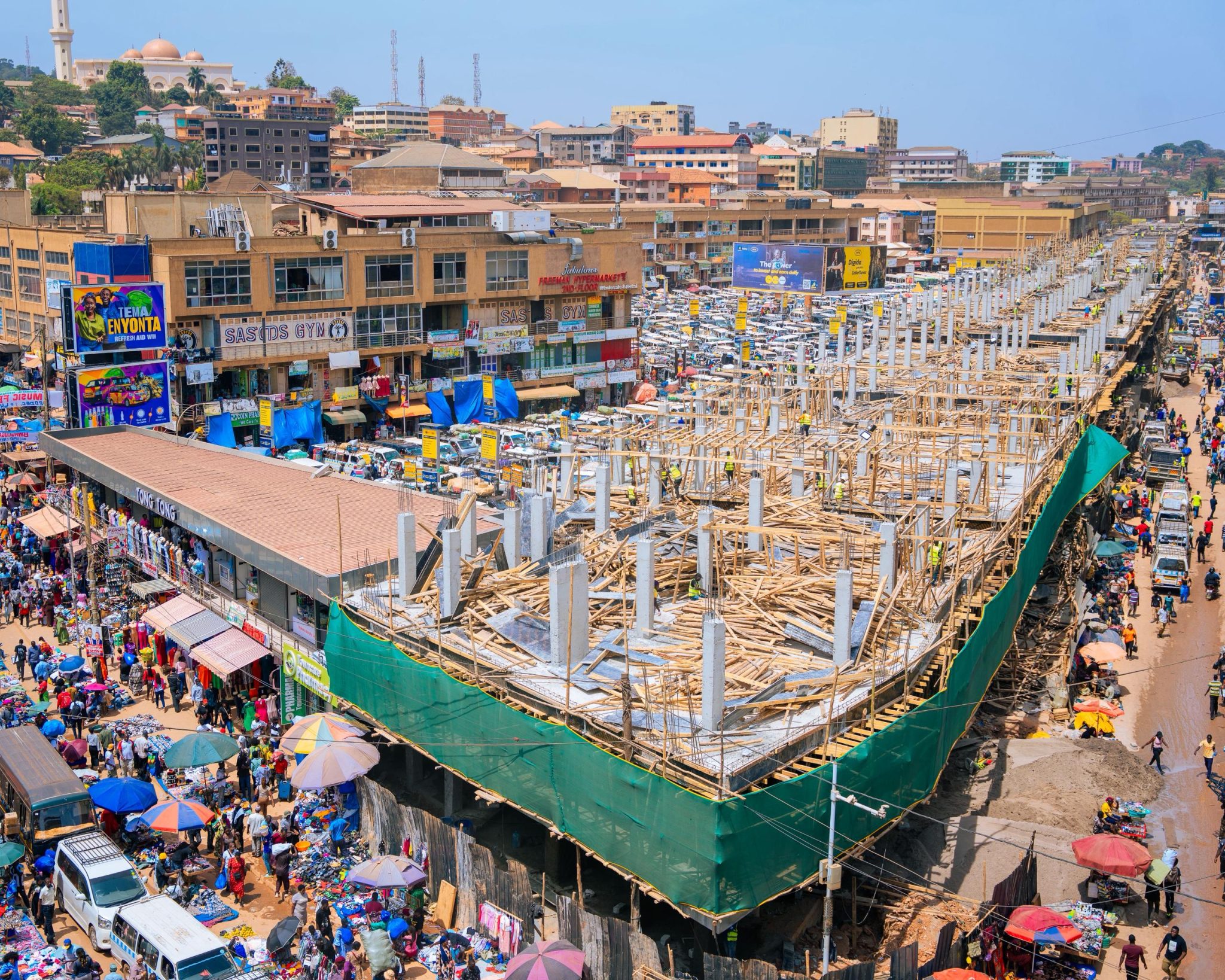
The transformation above ground is also significant. The redevelopment allows commercial structures to rise above the covered drainage corridor. Nearly 1.5 kilometers of commercial buildings now line the corridor through Kampala’s central business district.
Where the open channel once limited movement, modern commercial blocks now support organized retail activity. These buildings typically include multiple levels that maximize the use of urban land.
The ground floors host dense clusters of retail shops. Traders operate within structured spaces that replace informal trading zones. Upper floors expand business capacity and create additional commercial space. Rooftop areas provide parking for tenants and visitors.
The Nakivubo Channel Redevelopment therefore combines infrastructure with economic development. It turns previously underutilized space into a productive commercial corridor. This approach allows the city to upgrade drainage while expanding economic activity in the CBD.
The project also creates new revenue streams for Kampala. Every shop inside the redevelopment requires licensing through city authorities. As the number of businesses increases, licensing revenue rises as well. This process strengthens municipal revenue collection.
The economic impact extends beyond the city level. Retailers operating inside the new corridor import goods into Uganda. These imports generate customs duties and taxes. National tax authorities collect these revenues through the country’s trade system.
Employment opportunities also increase along the corridor. Shop owners, sales workers, cleaners, and security staff now work inside the commercial blocks. Logistics workers handle deliveries and inventory movement. Transport operators and food vendors benefit from the increased customer flow.
These economic effects create what economists call a multiplier effect. Construction creates temporary jobs during the building phase. Retail operations create long-term employment once businesses open. Trade activity expands tax revenue and strengthens economic circulation.
The Nakivubo Channel Redevelopment also reflects a broader change in urban planning. Cities increasingly integrate infrastructure with commercial development. Planners no longer treat drainage corridors as isolated utilities. Instead, they design projects that combine flood control with urban land use.
Kampala’s flooding challenges still require broader solutions. Wetland encroachment, upstream construction, and heavy rainfall continue to affect drainage systems across the city. Expanding one channel cannot solve every flooding problem.
However, widening Nakivubo from six meters to twelve meters creates a strong defensive measure. The expanded corridor improves water flow through the busiest commercial district. It also reduces pressure on surrounding streets during peak rainfall.
The current redevelopment focuses on the CBD section of the Nakivubo system. This phase serves as a starting point for broader improvements. The drainage network extends far beyond the central corridor.
Future phases could replicate the dual-lane drainage model along other sections of the channel. If planners apply the same design across the wider system, the hydrological benefits could expand across Kampala.
The transformation of Nakivubo is visible at street level. The open trench that once divided the trading district has disappeared beneath commercial structures. Organized retail corridors now dominate the landscape.
Beneath the surface, however, the redesigned drainage system continues its essential work. Two wide reinforced lanes carry stormwater through the city in a controlled environment. Engineers monitor the system regularly to maintain flow efficiency.
The Nakivubo Channel Redevelopment therefore represents more than a drainage upgrade. It reflects Kampala’s effort to modernize infrastructure while supporting urban economic growth. If maintenance remains consistent and commercial activity continues to expand, the corridor may become one of the city’s most successful examples of integrated infrastructure development.