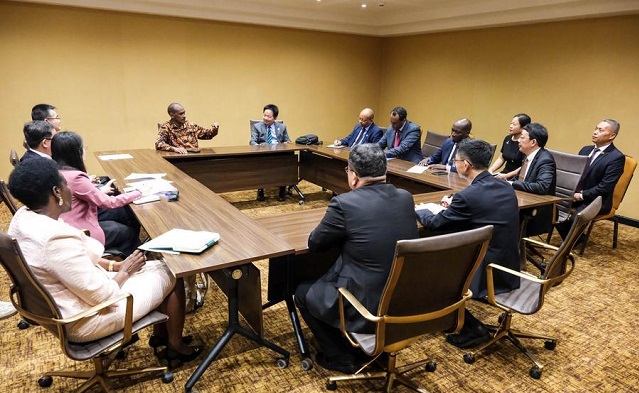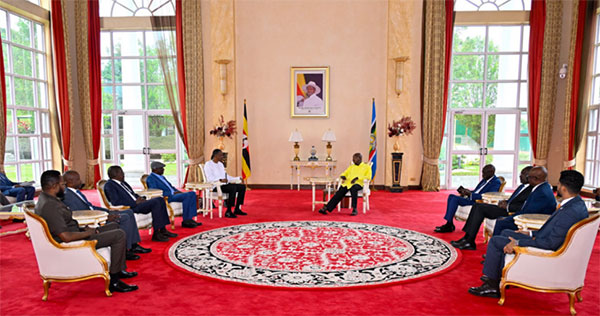
Uganda’s role as mediator in Sudan’s devastating civil war has come under intense scrutiny following President Yoweri Museveni’s recent hosting of Rapid Support Forces commander Mohamed Hamdan Dagalo. The February 20 meeting at State House Entebbe drew sharp condemnation from Sudan’s foreign ministry, which described the action as “an unprecedented move that is an affront to humanity.” The incident has fundamentally damaged perceptions of Uganda’s Sudan mediation neutrality, with analysts questioning whether Kampala can genuinely serve as an honest broker between warring factions. The conflict, which began in April 2023, has claimed approximately 24,000 lives and displaced more than 13 million people.
The African Union formally appointed Museveni as mediator in November, tasking him with bridging the divide between the Sudanese Armed Forces led by Gen. Al-Burhan and the RSF commanded by Dagalo. However, Burhan has not visited Uganda since fighting erupted, while Dagalo has made multiple trips to Kampala. This imbalance in access has fueled concerns that Uganda’s Sudan mediation efforts tilt toward the paramilitary group, which faces widespread international sanctions and accusations of genocide in Darfur and El Fasher. Museveni defended the engagement, stating that “dialogue and a peaceful political solution are the only sustainable paths to stability.”
Mixed Signals From Ugandan Leadership
Adding complexity to the situation, Uganda’s Chief of Defence Forces Gen. Muhoozi Kainerugaba launched aggressive rhetoric against the RSF just one day before Dagalo’s Entebbe visit. In a series of social media posts, Muhoozi threatened military action, stating the Uganda Peoples Defence Forces could attack the RSF for allegedly killing Black Sudanese civilians. “When they captured El Fasher last year they killed our black brothers and sisters worse than you would kill a dog. They are going to pay for that,” he wrote. This stark contradiction between presidential hospitality and military threats has created confusion about Uganda’s actual position.
Analysts interpret this dynamic as strategic ambiguity rather than policy incoherence. Tsega’ab Amare, a researcher writing in the Horn Review, characterized the approach as a “good-cop/bad-cop dynamic” that undercuts Kampala’s credibility while maximizing maneuvering room. “For SAF-aligned actors, this duality is not benign pluralism but strategic ambiguity,” Amare wrote. The Museveni track maintains diplomatic space and mediation credentials, while the Muhoozi track sustains leverage through coercive signaling. This duality leaves Uganda’s Sudan mediation efforts perceived as de facto recognition of the RSF, even as bellicose statements muddy the narrative.
Geopolitical Entanglements
Yusuf Serunkuma, a political analyst and researcher, argues that Uganda’s position reflects alignment with American and Emirati interests in Sudan. He suggests the United States sought to prevent Muslim Brotherhood influence through democratic elections, similar to the Egyptian experience after Mubarak’s fall. “That is why Museveni works seamlessly with the UAE-American player in the conflict, Hamdan Dagalo,” Serunkuma said. The United Arab Emirates has faced persistent accusations of supplying weapons to the RSF through its financial and logistical infrastructure, with Dagalo reportedly maintaining significant business interests in Dubai.
Uganda’s close ties with the UAE further complicate perceptions of its mediation role. Museveni spent four days on a working visit to the UAE in January 2025, signing multiple bilateral agreements. Two months later, Uganda contracted UAE-based Alpha MBM Investments to build a crude oil refinery in Hoima, with the Emirati firm taking a 60 percent stake. The countries also recently signed a visa waiver agreement for diplomatic and service passport holders. These deepening economic relationships occur alongside accusations that Uganda facilitates UAE weapons shipments to the RSF, though Kampala denies such claims.
Normalization of Paramilitary Actors
Amare argues that Dagalo’s State House reception represents a qualitative shift in Sudan’s conflict political economy. For Burhan’s government, this constitutes “political normalization of a paramilitary group accused of grave international crimes.” The RSF faces sanctions from the United States, United Kingdom, United Nations, and European Union for atrocities committed during the conflict. Most recently, the UN Security Council sanctioned four RSF leaders on February 26 for their actions in El Fasher, where a UN fact-finding mission determined atrocities pointed to genocide.
The Entebbe meeting, Amare suggests, accelerates movement toward “a state of normalized fragmentation, whereby an armed non-state actor seeks and attains not only territorial control but also diplomatic recognition.” This precedent carries significant implications for regional stability across the Horn of Africa. Kenya similarly granted diplomatic recognition to the RSF in February 2025, when the group and allied militias gathered in Nairobi to form a parallel government. Both Uganda and Kenya find themselves simultaneously engaged in peace processes for Sudan while participating in the African Union Support and Stabilisation Mission in Somalia.
Historical Baggage Complicates Relations
Uganda and Sudan share a lengthy history of mutual recriminations and accusations of backing armed groups against each other. During Omar El Bashir’s presidency, diplomatic exchanges frequently turned acrimonious. Sudan accused Uganda of supporting the Sudan People’s Liberation Army under John Garang, which ultimately led to South Sudan’s secession in 2011. Uganda played a crucial role in that separation and has remained intimately involved in the world’s youngest nation’s security affairs. Conversely, Uganda accused Sudan of sponsoring the Lord’s Resistance Army, Joseph Kony’s rebel group that devastated northern Uganda for two decades.
This historical context informs current distrust. Burhan’s government views Uganda’s Sudan mediation through a lens of past interference and perceived alignment with forces seeking to weaken Khartoum. The decision to host Malik Agar, Deputy Chairman of Sudan’s Transitional Sovereignty Council, a week before Dagalo’s visit did little to balance perceptions, as Agar represents the internationally recognized government caught between SAF and RSF fighting. The cumulative effect leaves Uganda’s mediation role seriously compromised in the eyes of one belligerent, potentially undermining any peace initiative launched from Kampala.
Museveni has previously engaged in Sudan mediation efforts predating his AU appointment. In January 2024, he hosted regional heads of state from the Horn of Africa, Nile Valley, and Great Lakes region under Intergovernmental Authority on Development auspices. That summit included leaders from Kenya, Djibouti, South Sudan, and Somalia, along with delegations from Saudi Arabia, UAE, Egypt, EU, UN, and US. Notably, IGAD extended an invitation to Dagalo while snubbing Burhan, demonstrating longstanding patterns of partiality that now complicate Uganda’s formally mandated role. The path to credible Uganda Sudan mediation appears increasingly obstructed by accumulated political baggage and competing geopolitical interests.