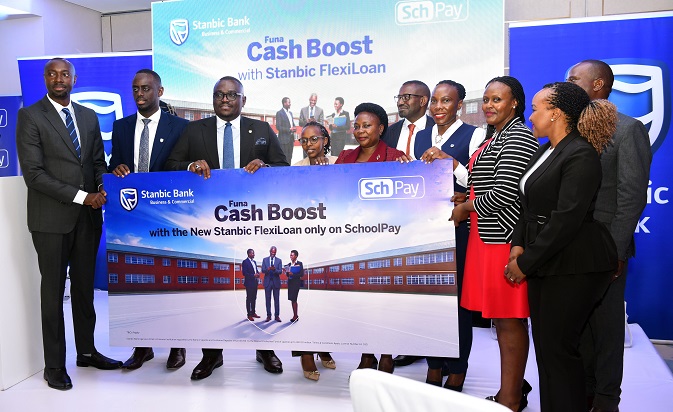
In a groundbreaking move aimed at modernizing the financing of private schools, Stanbic Bank Uganda has entered into a partnership with FinCom Technologies, the creators of the SchoolPay platform. This collaboration introduces Uganda’s first fully digital lending solution for schools, providing private educational institutions with direct access to tailored financing based on real-time cashflow data. The initiative is a significant leap forward in a sector historically hindered by manual financial processes, slow loan assessments, and the financial setbacks caused by the Covid-19 pandemic.
Through this innovative partnership, Stanbic Bank becomes the first financial institution to integrate a credit facility directly into the SchoolPay platform, which is already in use by more than 15,000 schools across Uganda. This milestone positions both Stanbic Bank and FinCom as leaders in the digital transformation of education finance in Uganda.
Digital Lending: A Game Changer for Schools
The new digital lending solution promises to change the way private schools access credit. Schools will no longer have to go through lengthy, cumbersome loan application processes. Instead, they can secure financing of up to UGX 1 billion directly through SchoolPay, a platform already used by many private schools to manage tuition payments. The integration of this new functionality simplifies the entire process, making it faster, more transparent, and accessible from anywhere.
This partnership directly addresses some of the most pressing challenges faced by Uganda’s educational institutions. For years, schools have struggled with slow credit approval processes, a lack of cashflow-based financing options, and the financial instability caused by long periods of school closures during the pandemic. With the introduction of this digital lending feature, Stanbic Bank and FinCom aim to provide schools with the tools they need to thrive despite these challenges.
Key Features and Benefits of the Digital Lending Partnership
This partnership introduces several benefits to private schools in Uganda:
- Access to Credit Without Branch Visits
Schools can now access financing of up to UGX 1 billion without ever stepping foot in a bank branch. This fully digital solution removes the barriers of traditional banking, which often involve waiting in long queues and dealing with paperwork. - Real-Time Loan Monitoring
Schools will be able to track the status of their loans in real time, ensuring complete transparency and better financial planning. This eliminates the guesswork often associated with traditional loan processes. - Cashflow-Aligned Financing
The financing provided is directly aligned with the schools’ cashflow, which means that the loan terms reflect the schools’ revenue patterns. This makes it easier for schools to repay the loan without straining their operations. - Faster Access to Funds
The traditional loan approval process in Uganda often takes weeks or even months. With this new digital solution, schools can access funds almost immediately, ensuring that they can act quickly to address any financial needs, whether it’s upgrading facilities, expanding ICT capabilities, or paying staff.
Addressing the Challenges of Post-Pandemic Recovery
The Covid-19 pandemic caused unprecedented disruption to Uganda’s education system, with schools closing for nearly two years—one of the longest shutdowns in the world. The financial impact of these closures has been severe, leaving many schools struggling to recover. For schools already facing cashflow challenges, the idea of securing credit has often felt out of reach, especially when traditional processes are slow and difficult to navigate.
Tunde Thorpe, Executive Head of Business and Commercial Banking at Stanbic Bank Uganda, acknowledged these struggles during the launch of the partnership. He emphasized that the new digital lending solution is specifically designed to address these gaps: “During the Covid-19 shutdown, Uganda’s schools faced enormous financial strain. Many are still recovering. This partnership allows us to extend credit that is simple, digital, and aligned with the real cashflow patterns of schools.”
This solution not only supports schools in their recovery from the pandemic but also fosters long-term financial stability, providing them with the resources to make much-needed investments in their infrastructure, teaching materials, and other essential services.
The Role of Technology in Empowering Schools
Joseph Ndiho, the Chairman of FinCom Technologies, expressed that the partnership aligns with the company’s mission to use technology to solve real-world challenges. “This partnership marks an important step in our journey to create technology that addresses structural challenges within the education sector,” Ndiho stated. “By combining FinCom’s expertise with Stanbic’s banking capabilities, we are making it easier for schools to access credit and align their financial management with the realities of their day-to-day operations.”
The integration of SchoolPay with Stanbic’s digital lending solution also introduces an element of financial visibility that was previously lacking. For many schools, managing cashflow and budgeting for future expenses can be challenging without a clear understanding of their financial status. By digitizing school finance, the platform offers a solution that reduces financial leakages and improves long-term planning.
Government Support for Digital Education Transformation
Harriet Senkaali, the Commissioner for Private Schools and Institutions at the Ministry of Education, praised the partnership as a major step forward for the private education sector. Senkaali emphasized that the Ministry of Education has long been committed to enabling the digital transformation of private schools, which serve a significant portion of the country’s students. “Integrating affordable and timely credit onto platforms like SchoolPay is a natural progression. It will improve efficiency, transparency, and the overall stability of schools,” she said.
The Ministry’s support for this initiative demonstrates a shared vision between the government and the private sector to use technology to strengthen the education system, particularly as the country continues to recover from the effects of the pandemic.
A Commitment to Uganda’s Future Growth
This partnership is part of Stanbic Bank’s broader Positive Impact Framework, which focuses on driving financial inclusion, enterprise development, and social investment. Stanbic’s involvement in the education sector is especially significant as the bank has been a longstanding supporter of Uganda’s economic growth. The bank is keen to play a role in strengthening the education sector, which is one of the most critical pillars of Uganda’s economic resilience and development.
By enabling schools to access the capital they need for infrastructure upgrades, ICT expansion, and operational stability, Stanbic Bank is helping to build a stronger foundation for the country’s future. The partnership with FinCom Technologies is a perfect example of how financial institutions can support the growth of key social sectors, driving inclusive and sustainable development.