Historic Ukraine peace talks will begin in Abu Dhabi on Friday. For the first time since Russia’s full-scale invasion nearly four years ago, representatives from Ukraine, Russia, and the United States will meet together. This marks a significant diplomatic shift amid ongoing war.
The talks follow a recent meeting in Moscow between President Vladimir Putin and U.S. envoys. The Kremlin confirmed Russian officials will attend the UAE discussions. It called the earlier talks “useful in every respect.” However, it stressed that lasting peace requires resolving territorial issues first.
Kremlin aide Yuri Ushakov said the Moscow dialogue was “substantive, constructive, and very frank.” He added that Putin is “sincerely interested” in a diplomatic solution. Yet, he insisted no long-term deal is possible without agreement on land—especially in eastern Ukraine.
Notably, three Americans met with Putin: Steve Witkoff, Jared Kushner, and another envoy. They discussed a framework first outlined at the 2025 Anchorage summit between Trump and Putin. Ushakov said any settlement must follow that formula.
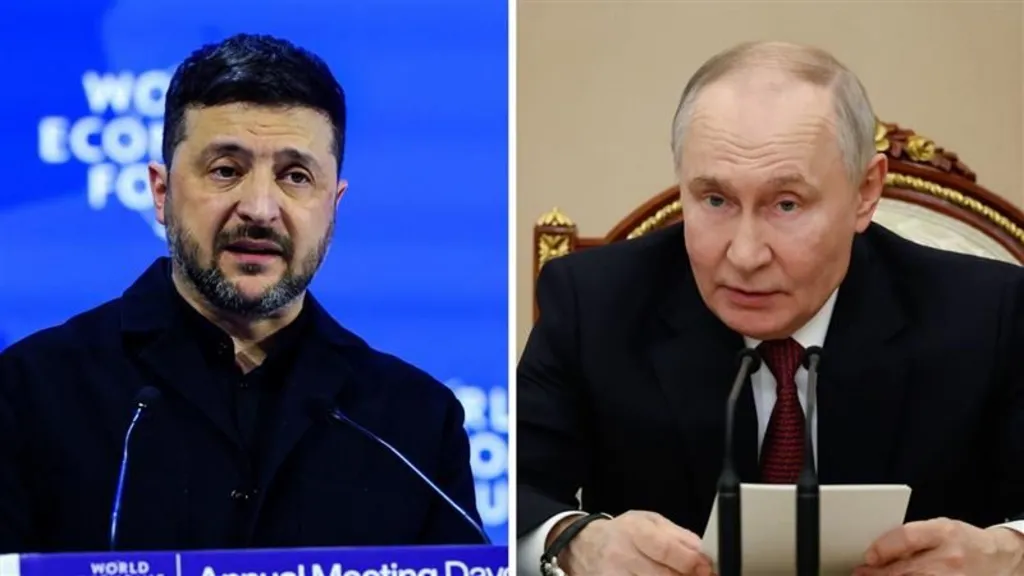
Meanwhile, Ukrainian President Volodymyr Zelensky spoke at the World Economic Forum in Davos. He urged Western allies to show stronger resolve against Russia. “Europe lacks political will,” he said. He also made clear that territory remains the central issue.
“It’s all about the land,” Zelensky told reporters. “This is the issue which is not solved yet.” He emphasized that Russia must compromise too—not just Ukraine. One major dispute involves Donetsk, where Russia demands Kyiv surrender its last 25% of control.
In response, Zelensky proposed a mutual troop withdrawal. Both sides would pull back up to 40km to create a demilitarized economic zone in Donbas. In exchange, Ukraine would receive strong U.S. and European security guarantees. Witkoff has said Russia previously accepted this idea in principle.
Zelensky also confirmed a preliminary deal with Donald Trump on future U.S. security commitments. He gave no details but noted it would need approval from both the U.S. Congress and Ukraine’s parliament.
Originally, Zelensky canceled his Davos trip due to Russian strikes on Kyiv’s power grid. The attacks left much of the capital without heat or water during the coldest winter in years. Still, he joined once the peace talks gained momentum.
Another key issue is the Zaporizhzhia nuclear plant. Russia seized it in March 2022. Zelensky insists its future status must be part of any agreement. In Davos, he joked that he hoped the UAE knew about Friday’s meeting—but quickly turned serious.
He named his top negotiating team: Rustem Umerov, head of Ukraine’s National Security Council; Kyrylo Budanov, chief of the presidential office; negotiator David Arakhamia; and General Staff Chief Andrii Hnatov. All are already in talks with U.S. officials.
On the Russian side, General Igor Kostyukov—head of military intelligence (GRU)—will lead the delegation. Separately, investment envoy Kirill Dmitriev will meet Witkoff to discuss economic terms.
Although deep divides remain, this trilateral format offers new hope. These Ukraine peace talks could become the first real step toward ending Europe’s deadliest conflict in decades. Ultimately, success depends on whether all sides choose peace over position.
READ: NUP Leader Kivumbi Arrested Over Uganda Election Violence