Bobi Wine wife recounts a violent raid on her home as Uganda’s post-election tensions deepen, raising concerns over human rights and political repression.
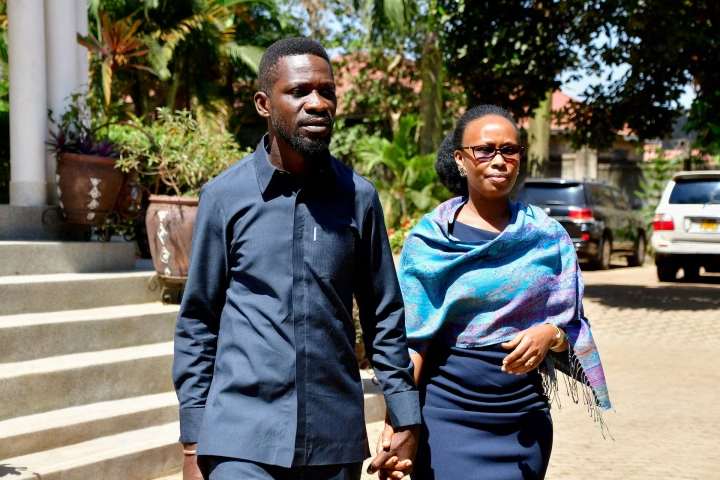
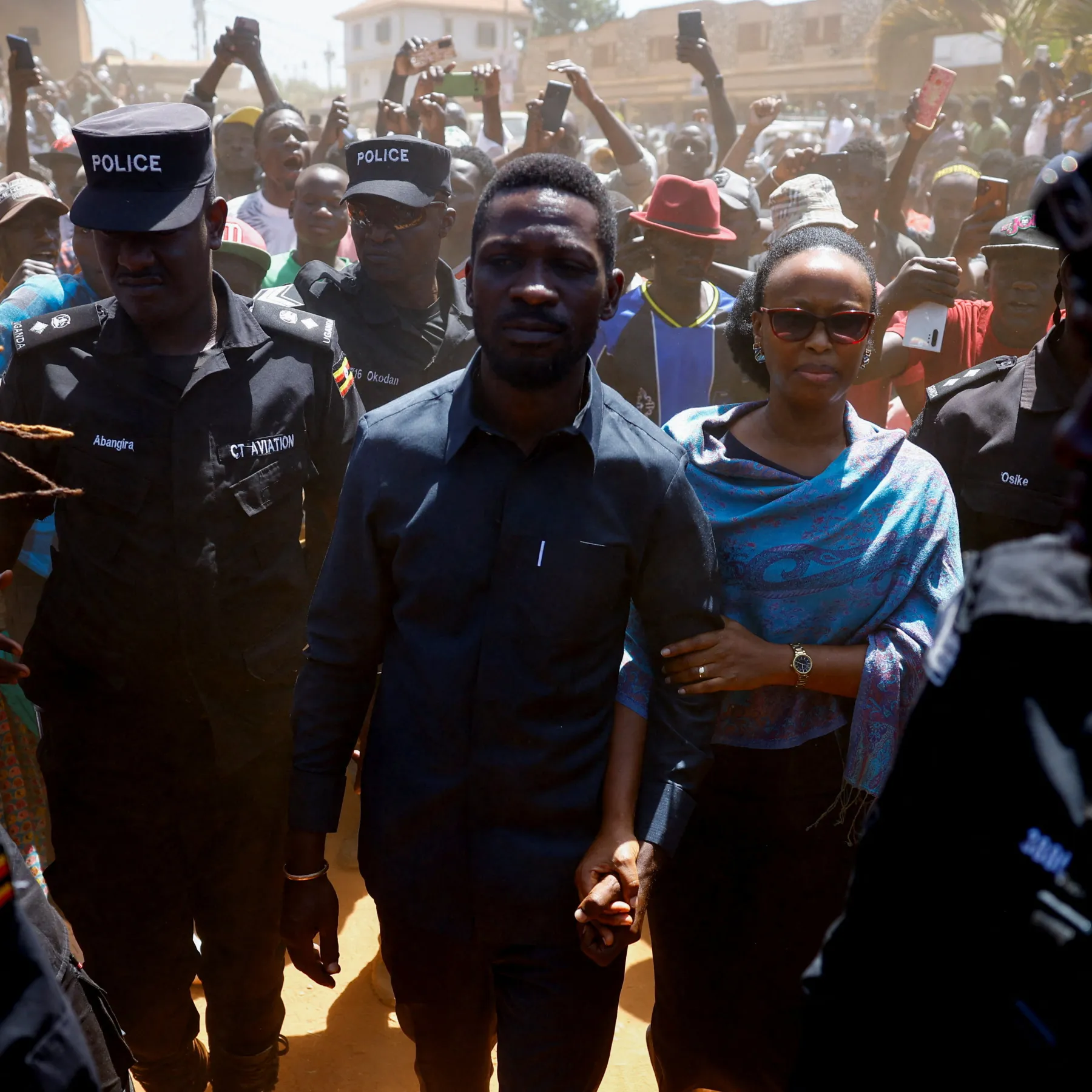
Bobi Wine wife Barbara Kyagulanyi has described a terrifying ordeal from her hospital bed, alleging that armed men forced their way into her home and attacked her while demanding to know the whereabouts of her husband. The incident, which occurred just days after Uganda’s disputed presidential election, has heightened domestic and international concern over the treatment of opposition figures and their families in the country.
Speaking to reporters while receiving treatment in hospital, Bobi Wine wife said she was alone at home on Friday night when dozens of men in military uniform stormed the property. She said the intruders aggressively questioned her about her husband’s location and ordered her to unlock her mobile phone. Despite the intimidation, she told them she did not know where he was and refused to comply with their demands.
The attack comes amid escalating tensions following the declaration of victory for President Yoweri Museveni in the January 15 election. Bobi Wine, whose official name is Kyagulanyi Ssentamu, has rejected the results, alleging widespread fraud. Since the announcement, he has remained in hiding, citing fears for his personal safety.
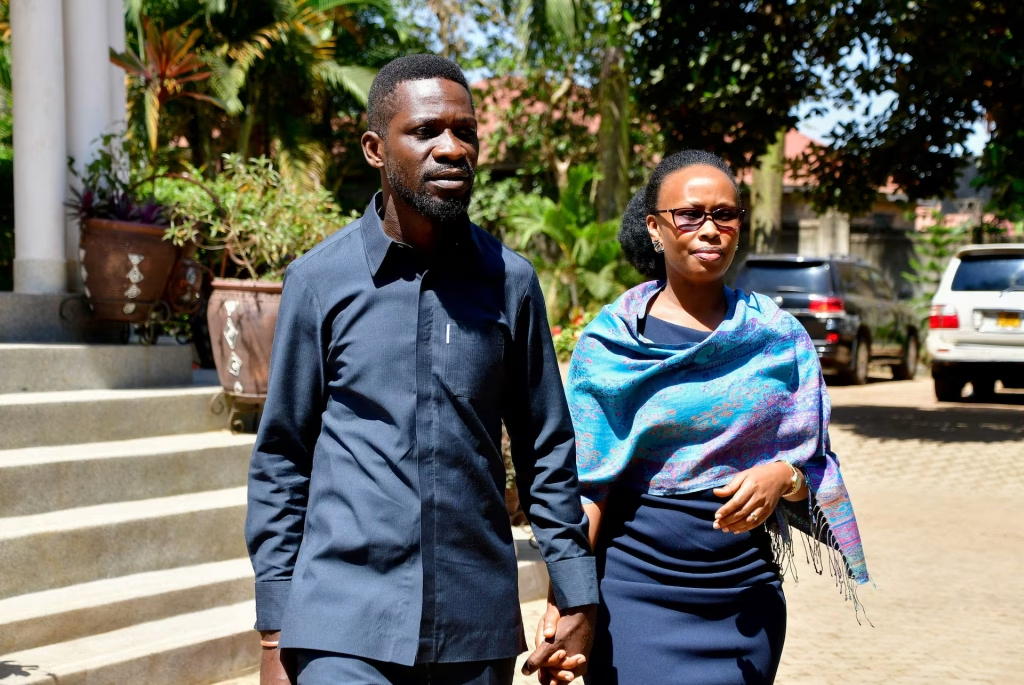
Barbara Kyagulanyi, known widely as Barbie, said the men insulted and harassed her, questioning her marriage to the opposition leader and mocking his political challenge. Her account paints a disturbing picture of intimidation extending beyond political actors to their families, raising alarms about the broader climate of fear facing opposition supporters.
Bobi Wine Wife Recounts Violent Home Invasion
According to Barbara Kyagulanyi, the armed men arrived late at night when the couple’s children were not at home. Apart from a guard stationed at the front gate, she was alone inside the house. She described seeing a “swarm of men” force their way onto the property, prompting her to call a relative and warn that she feared for her life.
During the raid, Bobi Wine wife said two men restrained her while others searched the house. One of the attackers demanded access to her phone. When she refused, she said she was lifted off the ground and assaulted. She recounted kicking one of the men in self-defense, after which another grabbed her, tearing her clothing.
She said some of the intruders averted their eyes during the assault, while others appeared indifferent. Later, she alleged, one gunman pulled her by the hair and slammed her head against a pillar before several men forced her to the ground and sat on her. She said she lost consciousness and was taken to hospital in the early hours of the morning.
At Nsambya Hospital in Kampala, she was treated for bruises and anxiety. Medical staff confirmed she was admitted around 1 a.m., following the incident.
Video Evidence and Public Reaction
Bobi Wine wife managed to record part of the raid on her phone. The footage, later shared on social media platform X, sparked widespread outrage among Ugandans and international observers. Many described the images as shocking, with calls for accountability and independent investigations growing louder.
The video intensified scrutiny of Uganda’s security forces and the broader conduct of authorities following the election. Civil society groups and opposition figures argue that such incidents reflect a systematic effort to intimidate political dissent.
Allegations Against Military Leadership
Barbara Kyagulanyi said she believes the raid was ordered by Muhoozi Kainerugaba, the chief of the armed forces and son of President Museveni. She cited repeated threats he has made against her husband on social media as the basis for her belief.
Kainerugaba has frequently posted inflammatory messages online, including insults directed at Bobi Wine, whom he has labelled a terrorist and used demeaning language against. Some of these posts are later deleted. Military spokesperson Col. Chris Magezi did not respond to requests for comment regarding the alleged raid.
Wine’s lawyer, Robert Amsterdam, urged the international community to demand immediate and verifiable guarantees for his client’s safety. He described the threats issued by the army chief as reckless, noting that police have not accused Bobi Wine of committing any crime.
Opposition Says Attacks Are Escalating
Leaders of the opposition National Unity Platform have described the incident as part of a broader campaign of persecution. Party secretary-general David Lewis Rubongoya said the movement is under sustained attack, with several leaders reportedly missing or detained.
He said Bobi Wine remains in hiding, while other senior figures face arrest or harassment. The party has rejected the official election results, which gave Museveni 71.6 percent of the vote, with Bobi Wine securing 24.7 percent. The opposition claims the figures are fabricated and do not reflect the will of voters.
Disputed Election and International Response
Uganda’s election process faced widespread criticism, including a prolonged internet shutdown and technical failures involving biometric voter identification machines. Voting delays were reported in several areas, including the capital, Kampala. Bobi Wine has also alleged ballot stuffing in regions considered strongholds of the ruling party.
President Museveni has accused the opposition of attempting to incite violence, an allegation opposition leaders deny. Ugandan security forces maintained a heavy presence throughout the campaign, with reports of tear gas used against opposition supporters.
International reaction has been swift. In the United States, Senator Jim Risch, chair of the Senate Foreign Relations Committee, called on the administration to reassess security cooperation with Uganda and consider sanctions against specific individuals. At the United Nations, Secretary-General António Guterres urged restraint, respect for the rule of law and adherence to international human rights obligations.
Political Climate and Long-Term Implications
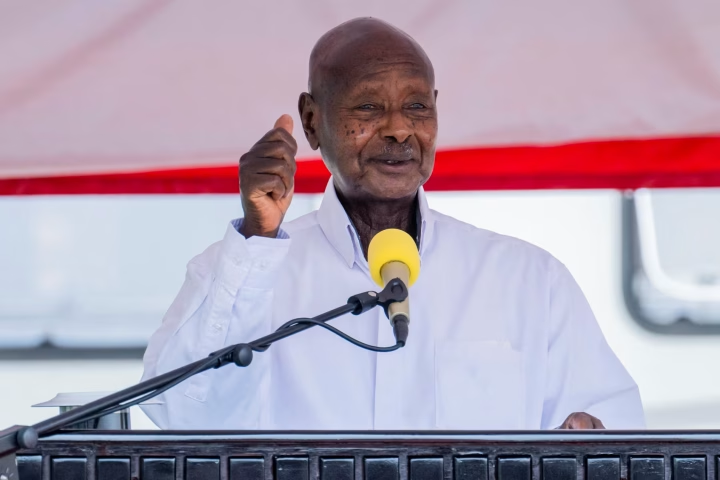
Museveni, now 81, is set to begin a seventh term in office, extending his rule toward five decades. Supporters credit him with maintaining relative stability in a region affected by conflict. Critics, however, argue that the cost has been the erosion of democratic space and civil liberties.
The account given by Bobi Wine wife has become a powerful symbol of the risks faced by political opposition and their families in Uganda’s current climate. As calls for accountability grow, the incident adds pressure on authorities to address allegations of abuse and to reassure both citizens and the international community that the rule of law will be upheld.