President Yoweri Museveni declared that 70% of Ugandans now participate in the money economy. He made the announcement during celebrations marking 40 years of National Resistance Movement rule. The milestone, he said, results from decades of state wealth-creation programs. Speaking at Kololo National Ceremonial Grounds, Museveni outlined Uganda’s economic progression. The event followed his recent electoral victory with 71% of the vote. The President credited initiatives like Operation Wealth Creation and the Parish Development Model. He contrasted the figure with a mere 9% participation at independence in 1962. This shift represents a core achievement of his long tenure, despite acknowledged ongoing challenges.
Economic Transformation and Growth Metrics
Museveni presented a detailed narrative of economic change. At independence, only 9% of Ugandans were in the money economy. By 2013, that figure had risen to just 32%. The launch of Operation Wealth Creation in 2013 moved the needle to 61% by 2019. The current 70% figure is attributed to the Parish Development Model. Uganda’s economy is now growing at about 7% annually, he stated. Museveni projected double-digit growth once oil production begins this year. He emphasized resisting external control over petroleum resources. The President acknowledged that 30% remain in subsistence farming and poverty. His goal is full inclusion in the money economy for all citizens.
The Parish Development Model and Corruption Challenges
The Parish Development Model is the latest vehicle for inclusion. It channels funds directly to communities at the parish level. Museveni admitted serious implementation problems. He cited “elite capture” where local officials divert money. Parish chiefs and focal persons have monopolized resources in some areas. The President warned that violators would be arrested. Officials in Buwambo, Maracha, and Iganga already face apprehension. He announced planned amendments to PDM guidelines. Funding will increase, especially for urban parishes with larger populations. The government will enforce strict accountability. Museveni’s stern tone highlighted corruption as a major threat to the program’s success.
Political Context and Voter Turnout Concerns
The economic speech followed Museveni’s recent electoral victory. He expressed concern over low voter turnout among NRM supporters. Internal data suggested 21 million registered party supporters. Only about 14 million were verified on the Electoral Commission register. Museveni received 8 million votes. He asked where the remaining millions were. The President blamed two factors: opposition intimidation and NRM indiscipline. He alleged opposition threats discouraged some supporters. He also criticized selfishness within some NRM leadership circles. Museveni claimed if all supporters voted, there would be “no opposition in Uganda.” This statement underscored the tense political climate.
Future Priorities: Infrastructure, Health, and Justice
Beyond wealth creation, Museveni outlined other government priorities. Improving household income remains the first emphasis. Then, investment will focus on education and health. He highlighted the need to address curative health challenges. Preventive programs like immunization are performing well. Infrastructure, especially rural road maintenance, is also critical. “We don’t want any unrepaired roads,” he stated. On governance, Museveni promised an anti-corruption drive extending to the judiciary. He praised new Chief Justice Flavian Zeija for a firm stance. The fight against court corruption is now a declared priority.
Read Also
New Bill Aims to Boost Solar Panel Manufacturing in the US
Utilities Adapt Grid for Rising Renewable Energy Input
Historical Reflection and Industrial Showcase
Museveni reflected on Uganda’s turbulent past. He referenced the 1972 expulsion of Asians by Idi Amin. At that time, Amin seized about 4,000 Asian-owned properties. Today, Museveni said, millions of properties are owned by Ugandans. He questioned the rationale behind Amin’s actions. The President showcased video footage of modern economic sectors. These included commercial agriculture, manufacturing, services, and ICT. He highlighted large-scale farms and industrial parks like Namanve and Mbale-Sino. Museveni noted that 65% of supermarket products are now made in Uganda. He also cited the Kiira Motors project, with locally assembled vehicles traveling to South Africa.
Ceremony and Broader Significance
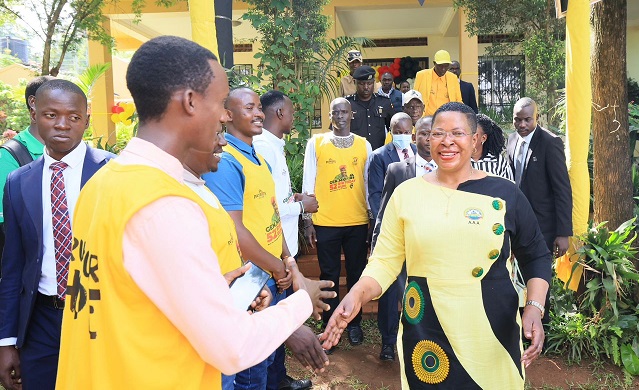
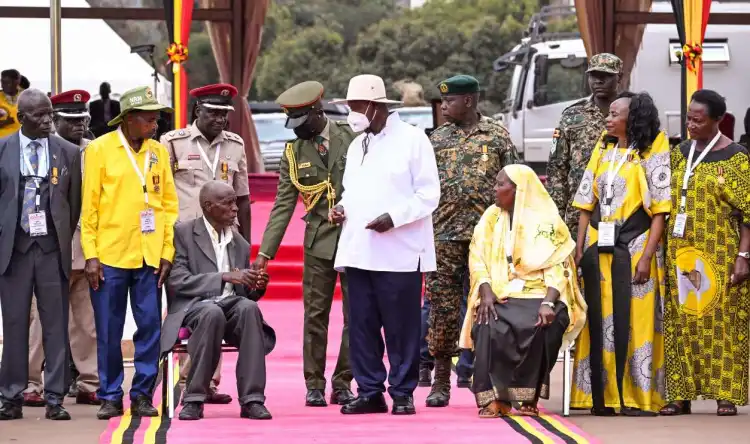
The celebration honored 40 years since the NRM captured Kampala. Thirty-three Ugandans received national medals for their contributions. The event was attended by top government and military officials. Minister Babirye Milly Babalanda praised Museveni’s transformative leadership. She called for unity and shared national purpose post-election. The theme was “Tribute to the Patriots who ushered in a fundamental change.” The anniversary serves to cement the NRM’s historical legacy. It frames current economic data as the fruit of a long liberation struggle. The narrative directly counters opposition claims that “nothing has changed” in four decades.
President Museveni’s address wove economic data with political narrative. The claim that 70% of Ugandans are now in the money economy is a central pillar of that story. It justifies continued NRM rule while acknowledging persistent poverty and corruption. The success of the Parish Development Model is critical for his legacy. However, his own admissions of elite capture reveal deep implementation flaws. The speech also revealed political tensions beneath the surface of a decisive victory. As Uganda begins oil production, the promise of double-digit growth faces the test of governance. The next phase will determine if wealth creation reaches the remaining 30%.