Uganda’s Ministry of Works and Transport will reintroduce the Automatic Express Penalty System. The government suspended the Express Penalty System previously after public outcry over high fines. A recent surge in fatal road accidents has forced a policy reversal. The tragic deaths of an entire family in December catalyzed public opinion. The Express Penalty System will pilot in high-risk locations before a national rollout. It will monitor speeding, red-light running, and lane discipline. Officials promise revised penalty levels and public sensitization campaigns. This move signals a shift toward technology-led enforcement to save lives. Public sentiment now cautiously supports stricter measures amid growing road safety fears.
Catalyst for Change: A Nationwide Tragedy
The decision follows a horrific crash on December 27 along the Kampala-Mbarara highway. Ivan Niwagaba, his wife, brother, and four children all died instantly. Their Toyota Fielder collided head-on with a truck. The death of an entire family became a national symbol of road safety failure. It amplified anxiety over speeding and reckless driving. This tragedy, among others, shifted public and government sentiment. Mourners at a memorial service grappled with the sudden loss. The incident demonstrated that warnings alone are insufficient. The government now argues the cost of weak enforcement is measured in lives lost.
System Design and Phased Rollout Plan
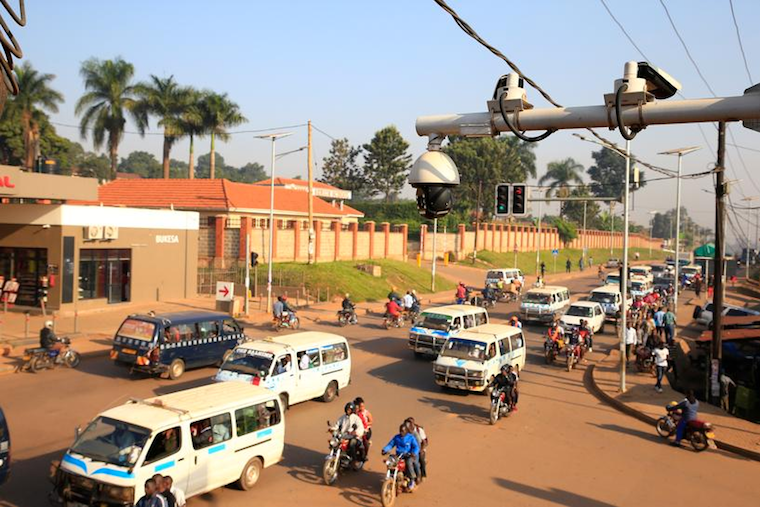
The Express Penalty System will return in a careful, phased manner. A pilot program will first deploy in selected high-risk zones. These include accident-prone corridors in Kampala and major highways. The pilot aims to fine-tune penalty thresholds and assess public response. A full national rollout is planned for later this year. The system will use cameras and sensors to record violations. Data will feed directly into the EPS framework for automated processing. Officials emphasize pairing enforcement with public education and road signage improvements. This approach seeks to build acceptance and prove the technology’s life-saving potential.
Public Sentiment Shifts from Resistance to Acceptance
Street interviews in Kampala reveal changing attitudes. Initial public outcry focused on high fines and poor communication. Now, many citizens see automated enforcement as necessary. Taxi driver Clinton Tumanye stated cameras will help establish facts after incidents. Pedestrian Roseline Babirye called for smart enforcement in dangerous areas. She emphasized that drivers change behavior only when consistently monitored. Concerns about privacy and fairness remain, but are secondary for many. The prevailing mood is that road rules must apply to everyone, always. This shift provides crucial political cover for the government’s reintroduction decision.
Global Precedents and Technological Promise
Internationally, technology-led enforcement has proven effective. Helsinki, Finland, recorded zero road fatalities in 2025. Its strategy integrated automated enforcement with safer street design. Sweden’s Vision Zero policy halved road deaths using similar methods. Singapore, Australia, and the UAE also show measurable safety gains from cameras. Uganda faces a stark contrast, with 4,434 road deaths in 2024 alone. The Express Penalty System aims to replicate global success locally. The ministry believes digital monitoring is essential for modern traffic policing. It offers consistent accountability, especially on long, poorly patrolled highways.
Addressing Past Failures and Future Safeguards
The previous EPS failure stemmed from implementation flaws. Fines were perceived as excessively punitive and revenue-focused. Public sensitization was virtually nonexistent. The revised framework promises lower, more rational penalty levels. It also commits to nationwide education campaigns before activation. Officials acknowledge the system must prove it prioritizes safety over revenue. A senior transport official anonymously stated the public wants safety, not surveillance. The pilot phase is designed to build trust and demonstrate life-saving intent. Safeguards against abuse and corruption will be strengthened before scaling.
Broader Road Safety Context in Uganda
Uganda’s roads are among Africa’s most dangerous. Factors include speeding, overtaking, driver fatigue, and weak enforcement. Nighttime travel on highways is particularly lethal. The return of the Express Penalty System is one part of a needed multi-pronged approach. Citizens like Roseline Babirye urge focusing on repeat offenders and drunk driving. High-speed zones near schools and trading centers also need priority. Physical road upgrades and better signage must accompany digital monitoring. The government’s challenge is to show tangible results quickly to sustain public support.
The reintroduction of the Express Penalty System marks a pivotal moment for Ugandan road safety. It is a direct response to unbearable tragedy and public demand for action. The phased, pilot-based approach seeks to avoid past mistakes. Success hinges on transparent communication, fair penalties, and visible safety improvements. If implemented credibly, the system could significantly reduce fatalities and injuries. It represents a critical step toward modern, accountable traffic management. The nation will watch closely to see if technology can deliver the safer roads its citizens desperately need.