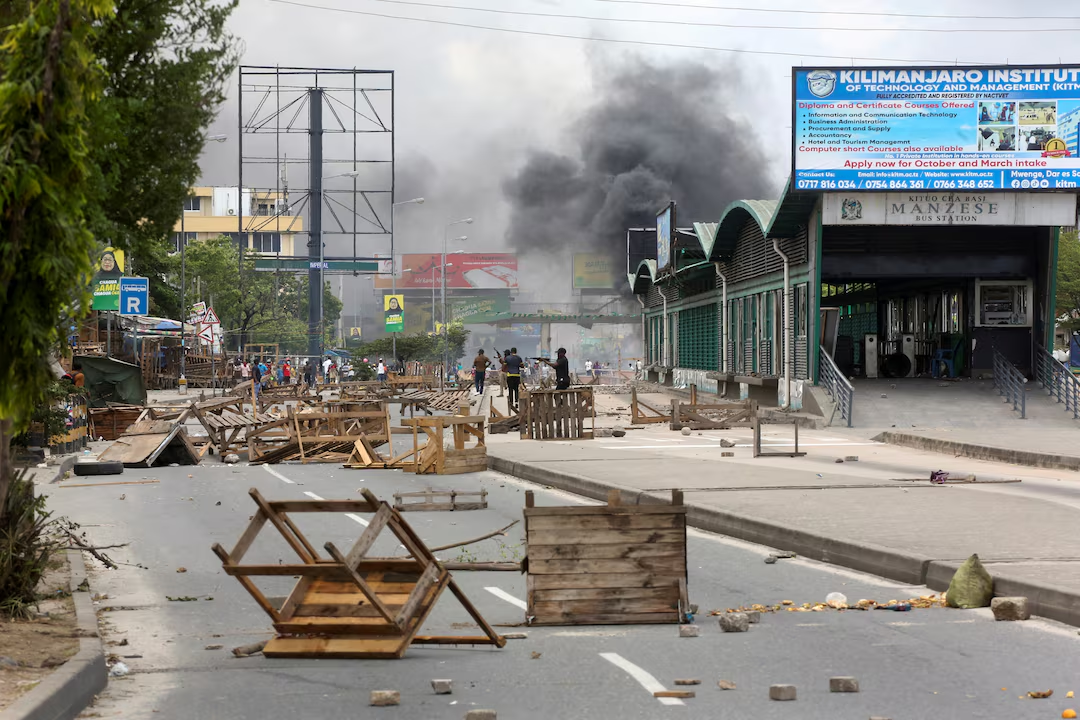
On the evening of October 31, 2025, residents of Mjimwema—a neighborhood in Mwanza, Tanzania—were going about their daily routines. Some shopped, others sipped coffee. Then, without warning, a group of police officers opened fire in multiple directions. Panic erupted instantly.
Witnesses told Reuters that officers ordered men hiding in a local café to lie on the ground—and then shot them. When the gunfire stopped, more than a dozen people lay dead. A video verified by Reuters shows 13 lifeless bodies sprawled on blood-soaked ground near the café entrance. This massacre, reported in detail for the first time, stands as one of the deadliest episodes of election violence surrounding Tanzania’s October 29 polls.
This was not an isolated event. Reuters interviewed nine witnesses across Mwanza, Dar es Salaam, and Arusha who described similar scenes. In each case, police allegedly fired on civilians far from any protest—sometimes kilometers away. Many victims were not demonstrating at all.
The unrest followed the exclusion of major opposition candidates and a wave of arrests targeting government critics. For many young Tanzanians, the elections felt illegitimate. Their demands for accountable governance echoed Gen-Z-led movements in Kenya, Madagascar, and Nepal—movements that have already forced political change elsewhere.
Charles Kitima, secretary-general of the Tanzania Episcopal Conference, said police deliberately targeted civilians. “We have witnessed lots of people killed in their houses,” he told Reuters. “That’s why we say it was intended killings.” He acknowledged some looting occurred but stressed most protesters were peaceful citizens expressing legitimate grievances.
The Tanzanian government denies systemic abuse. Palamagamba Kabudi, Minister of State in the President’s Office, stated that security forces act within legal limits. “The Government does not recognise a policy or practice of intentional brutality against civilians,” he wrote in response to Reuters’ questions. He added that a commission of inquiry is investigating the violence.
Still, the scale of casualties is alarming. The U.N. Human Rights Office estimates hundreds died; independent U.N.-appointed experts suggest up to 700 extrajudicial killings—or possibly thousands. The U.S. government has begun reviewing its relationship with Tanzania in light of these reports.
President Samia Suluhu Hassan, re-elected with nearly 98% of the vote, defended the police response as necessary to counter violent unrest. After initially promoting reforms following her 2021 rise to power, she has recently cracked down on dissent, accusing opponents of trying to destabilize the country.
In the days after the election, authorities cut internet access nationwide for over five days—severely limiting information flow. When service resumed, police warned citizens against sharing images that “cause panic” or “degrade dignity.”
Witnesses consistently described indiscriminate shootings. In Mjimwema, six residents confirmed there had been no local protests. Yet around 8:30 p.m., police arrived and began firing. One survivor recalled crawling out of the café as ordered, hearing insults but no explanation. “They would shoot again if they noticed you were moving,” he said.
Minutes later, officers loaded bodies into a large vehicle and drove away. At Sekou Toure Hospital, staff received one wounded man around 10 p.m., followed shortly by about 15 young men—only one still alive.
Families are still searching for loved ones. Raphael Magige, 39, and his nephew Johnson Deus, 27, went to the café just to watch the news. Neither was politically active. Both were buried on November 4 after family members identified their bullet-riddled bodies. Another victim, 20-year-old Juma Shaban Joseph, remains missing—his body never recovered despite extensive searches.
The U.N. has cited “disturbing reports” that security forces removed bodies to hide evidence. Kabudi denies any such policy exists. Meanwhile, the café where the massacre occurred has been dismantled, leaving no physical trace.
This wave of election violence has shattered Tanzania’s long-held image as a stable democracy in East Africa. With a government commission yet to release findings, survivors and families await answers—and accountability.
READ: NUP Supporters Decry Blocked Kyagulanyi Rally in Kanungu