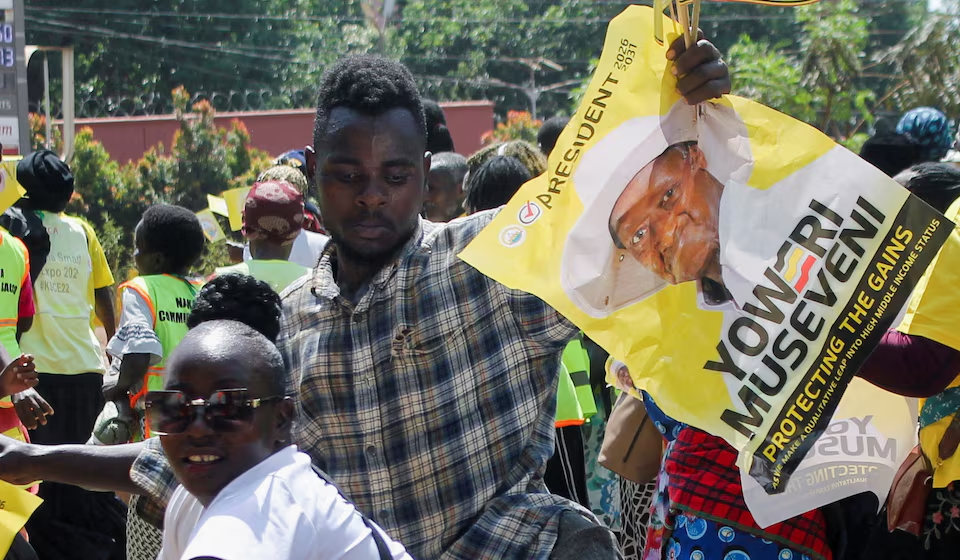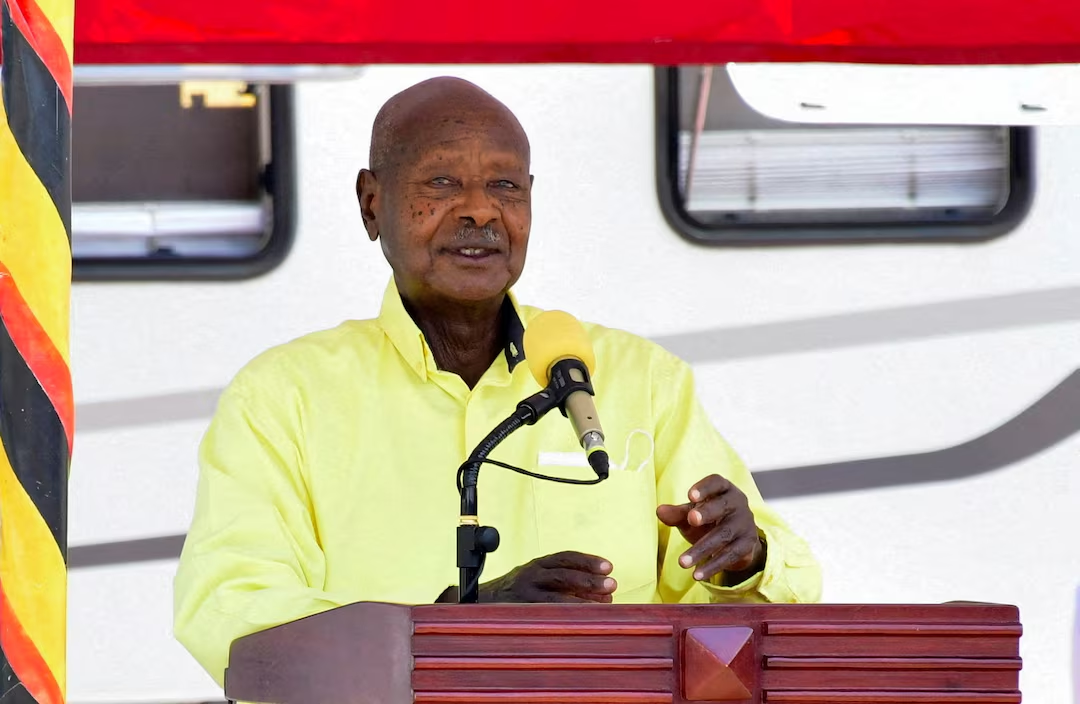
Uganda’s government has imposed a ban on live media coverage of public unrest ahead of Thursday’s vote. The Ministry of Information Communication and Technology announced the prohibition on Monday. It specifically bans live broadcasts of riots, “unlawful processions,” and violent incidents. Authorities claim such coverage can escalate tensions and spread panic. This move comes just days before a highly contentious Uganda election. President Yoweri Museveni, 81, seeks to extend his 40-year rule against challenger Bobi Wine. The ban is widely seen as an attempt to control the narrative and suppress dissent.
The government’s statement also prohibits disseminating content deemed “inciting, hateful or violent.” Critics argue these terms are deliberately vague. They allow authorities to criminalize standard opposition reporting. Historically, Ugandan authorities have labeled anti-government protests as riots. Therefore, this ban effectively gags independent media during a critical period. Hundreds of opposition supporters have already been detained ahead of the Uganda election. This media blackout aims to prevent the world from witnessing potential state violence or electoral irregularities.
Context of Repression and Past Violence
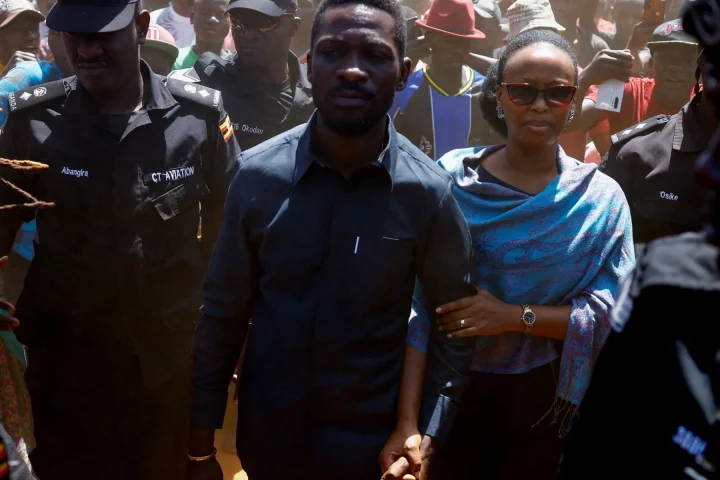
This Uganda election is a repeat of the violent 2021 contest. More than 50 people were killed in crackdowns before that vote. Security forces targeted supporters of Bobi Wine, who accused Museveni of stealing the election. The current campaign has followed a similar pattern. Amnesty International issued a statement on Monday condemning a “brutal campaign of repression.” The group detailed arbitrary arrests, beatings, and torture of opposition supporters. The government and police did not immediately respond to these allegations.
The ban on live broadcasts must be understood within this repressive context. It prevents real-time documentation of security force actions. Without live footage, the government can more easily deny or downscale reports of violence. It also hinders the ability of opposition groups to mobilize supporters by showing widespread unrest. This control over information is a key tactic for maintaining power. The upcoming Uganda election thus occurs in a tightly managed information environment, skewed heavily in favor of the incumbent.
Impact on Media Freedom and Electoral Integrity
The directive represents a severe blow to press freedom. Ugandan journalists now face a dangerous dilemma. Broadcasting live footage of a protest, even as a news event, could be deemed illegal. This creates a chilling effect that leads to self-censorship. International observers have long criticized Museveni’s government for intimidating journalists. This formal ban institutionalizes that censorship under the guise of maintaining public order. Consequently, the world may receive a sanitized version of events on and after election day.
Electoral integrity depends on transparency. Live media coverage is a crucial tool for monitoring polling stations and tallying votes. By banning live streams, the government removes an independent verification mechanism. This raises serious concerns about the fairness of the electoral process. Opposition candidates like Bobi Wine have already urged supporters to guard ballots against rigging. Preventing live coverage makes such citizen monitoring much harder to coordinate and verify. The ban thus undermines both the reality and perception of a free and fair Uganda election.
Broader Political Landscape and Key Players
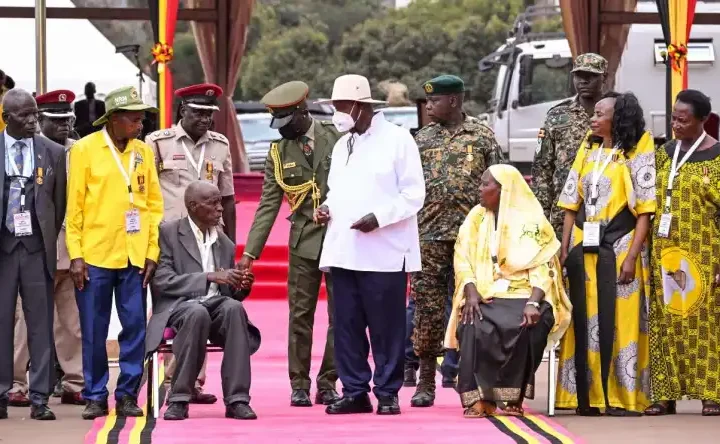
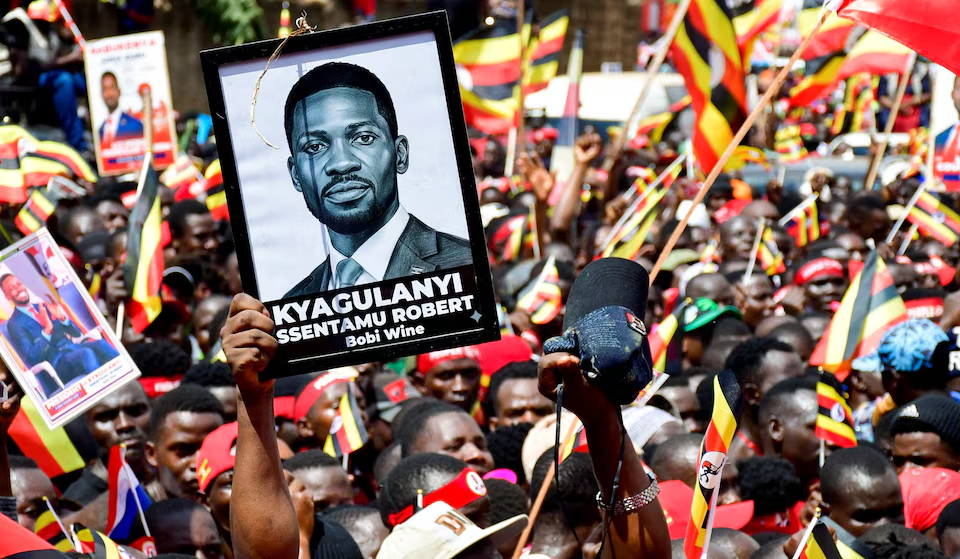
President Yoweri Museveni is Africa’s third-longest ruling head of state. He took power by force in 1986 after a guerrilla war. His main challenger, Bobi Wine (Robert Kyagulanyi), is a 43-year-old former pop star. Wine’s National Unity Platform (NUP) became the largest opposition party after the 2021 election. Another major opposition figure, Kizza Besigye, remains imprisoned on treason charges. The political field is heavily tilted against the opposition through legal and extralegal means.
The government’s latest move aligns with its historical playbook. Ahead of previous votes, it has shut down the internet and social media. The live broadcast ban is a more targeted version of that strategy. It aims to control the flow of information during a period of high tension. With the Uganda election just days away, the stage is set for a disputed outcome. The international community watches closely, but the government’s restrictions make independent observation exceptionally difficult. The true story of election day may struggle to get out.